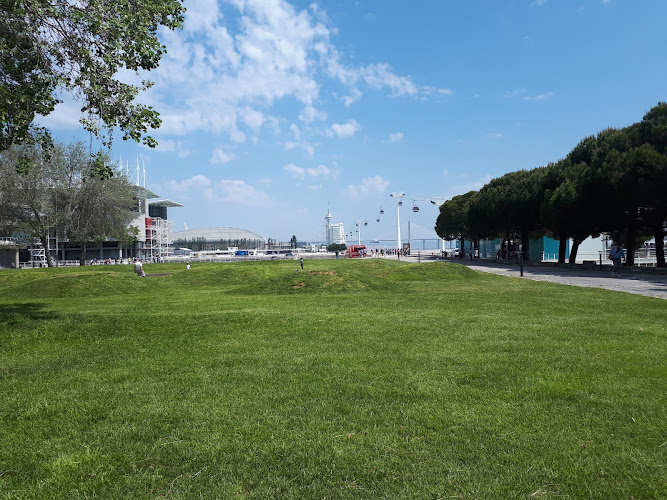
Parque do Tejo, as most locals call it, is a long, flat ribbon of lawns, tree groves and waterfront promenade at the eastern edge of Lisbon, laid out along the Tagus estuary where the Trancão river meets the water. It grew out of the redevelopment for Expo 98, replacing an industrial shoreline with open parkland, and today it reads as the city’s big outdoor living room for the eastern districts: joggers, cyclists, families with grills, skaters and dog walkers share the same wide spaces.
What sets it apart from Lisbon’s hillside miradouros is scale and openness. There are no steep climbs here, just broad views across the estuary toward the Vasco da Gama Bridge, plenty of grass to spread out on, and a riverside path that lets you cover kilometres without a single cobblestone. Visitors rate it highly (around 4.7 across thousands of reviews), and the recurring praise is for shade, space to play sports, the river outlook and an easy, unhurried atmosphere. Entry is free and public.
Standout Highlights & What Not to Miss
The park is best understood as a chain of different zones rather than one single attraction. These are the parts worth building your visit around:
- The Tagus riverside promenade: The wide waterfront path is the park’s backbone, with open views over the estuary and the long silhouette of the Vasco da Gama Bridge on the horizon. Walk it toward sunset, when the light turns the water golden and the crowds thin.
- Shaded tree groves and lawns: Shade is one of the most mentioned features by visitors. Mature trees cluster in several areas, making them the obvious choice for a picnic or a midday rest during summer heat.
- The skatepark: A dedicated skate area draws local skaters and scooter riders and is fun to watch even if you do not ride. Expect a mix of beginners and confident regulars.
- Cycling and running routes: Flat, continuous paths make this one of the easiest places in Lisbon to cycle or jog without traffic. It connects naturally with the riverside cycle route running through the Parque das Nações area.
- Sports and play areas: Open fields, play equipment for children and informal pitches mean weekend afternoons often feature pick-up football, kite flying and birthday gatherings.
- Picnic spots with a view: Grassy slopes near the water are popular for picnics. Bring your own food and a blanket, as this is a park experience rather than a dining destination.
Visitor Strategy & Planning Snapshot
| Planning Factor | What to Expect | Practical Strategy |
|---|---|---|
| Ideal Arrival Window | Mornings are calm and used by runners and walkers; late afternoon brings families and golden light over the water. | Arrive mid to late afternoon in warm months and stay through sunset; choose mornings for exercise or quiet. |
| Typical Time Needed | A relaxed riverside stroll takes one to two hours; a picnic or cycling session can fill half a day. | Plan around 90 minutes if pairing with nearby sights, longer if you bring food or bikes. |
| Booking / Queue Reality | Free public access with no tickets, timed entries or queues. Weekends and sunny holidays are busier, especially around grills and play areas. | No reservation needed. For quieter lawns, visit on weekdays or earlier in the day. |
| Terrain & Accessibility | Largely flat, paved paths and open grass. The entrance and parking lot are listed as wheelchair accessible. | Stick to the main promenade for smooth rolling; grassy areas can be uneven or soft after rain. Distances are long, so pace yourself. |
| Weather / Seasonal Fit | Exposed to estuary breezes and sun. Summer can be hot in open areas; winter is mild but can be windy and damp. | Bring water, a hat and sunscreen in summer, and a windproof layer in cooler months. Seek tree groves for shade. |
Honest Trade-Offs: Best For vs. Who Might Skip
This park suits travelers who want to live like a local for an afternoon: families needing room for kids to run, cyclists and runners wanting traffic-free distance, picnickers, skaters and anyone who values wide river views over postcard-style historic scenery. It is also a good reset on a trip packed with hills, trams and museum queues, and the free, flat, step-free layout makes it friendly for strollers and wheelchair users.
It is less compelling if you have only one short day in Lisbon and want the classic old-town sights, since the park is far from the historic centre and has a modern, open character rather than monuments or heritage buildings. Cafe and kiosk options inside are limited compared with the busier Parque das Nações waterfront, so you should bring snacks and water. Shade is good in the tree areas but scarce elsewhere, and the open layout can feel windswept on cooler days.
Neighborhood Context & How to Pair Your Visit
The park sits in Lisbon’s eastern riverfront zone, directly connected to the modern Parque das Nações district. A logical half-day is to start at the Oriente area with its landmark station and shopping, then follow the waterfront south or north into the park for a long riverside walk. From there you can add the Oceanário, the cable car along the waterfront, or the Vasco da Gama shopping and dining options for a proper meal before or after your time on the grass.
Getting here is straightforward by metro to Oriente and then a walk or short ride along the water, and cycling from the Parque das Nações side is especially pleasant. Treat it as the green, easygoing end of an afternoon out east: eat or visit an attraction first, then let the park absorb the rest of the day while the light softens over the Tagus.
When planning your Lisbon travel guide or browsing verified parks in Lisbon, pair this stop with standout local spots including Pestana Palace Lisboa, Solar 31 da Calçada, Santiago de Alfama – Boutique Hotel, and Garcia de Orta (1.7 km away).