
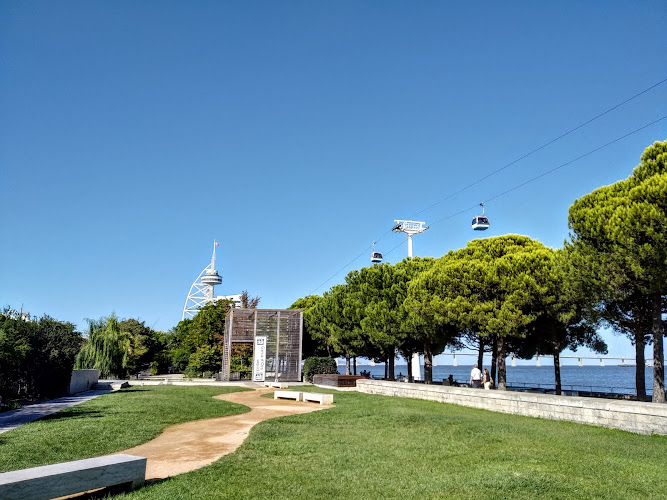
Jardim Garcia de Orta is a 1.3-hectare municipal botanic garden on Rua Alfredo Pimenta (postal code 1990-096) in the Parque das Nações district of eastern Lisbon, a short walk from the Tagus waterfront. Named for Garcia de Orta, the 16th-century Portuguese physician and naturalist who published his study of Indian medicinal plants, spices, and drugs in Goa in 1563, the garden is laid out as a living tribute to the Age of Discovery’s botanical exchange. Visitors come for the plant collection from several continents, the calm paths, and a free green pause in a district otherwise defined by contemporary architecture.
What to Expect at Garcia de Orta
The garden follows the theme of Orta’s own work, Colóquios dos Simples e Drogas da Índia, which catalogued the spices and medicinal plants Portuguese ships carried between Asia and Europe. Species from Africa, Asia, and the Americas are grouped along winding walkways, with plantings of aromatic and medicinal specimens that reflect the Portuguese maritime trade routes. Because it was created for the 1998 Expo grounds, the layout is deliberately open and easy to read, with clear sightlines between beds and shaded benches placed at regular intervals.
At 1.3 hectares, the garden is small enough to cover in a single unhurried loop, which makes it a practical stop between the Oceanário and the riverfront promenade. Botanists and amateur plant lovers tend to read the species labels; casual visitors treat it as a quiet corridor of greenery with the smell of herbs and flowering shrubs on warm days. Its Google rating of 4.5 across more than 4,000 reviews reflects steady local appreciation for a garden that stays tidy and calm.
- Medicinal and spice plantings: Beds that echo the herbs, spices, and drug plants Garcia de Orta described in his 1563 treatise on the flora of India.
- Global species collection: Plants gathered from Africa, Asia, and the Americas, a reference to the botanical exchange of the Portuguese maritime empire.
- Winding walkways: Paved paths connect the planting areas and keep the route simple for walkers of all ages.
- Shaded benches: Seating spread through the garden gives reading, picnicking, and people-watching spots away from the plaza crowds.
- Round-the-clock access: The garden is listed as open 24 hours daily, so early morning walks and evening strolls are both possible, though lighting after dusk is more limited than in the main Expo plazas.
Garcia de Orta at a Glance
| Detail | Information |
|---|---|
| Address | R. Alfredo Pimenta, 1990-096 Lisboa, Portugal |
| Neighborhood / Area | Parque das Nações, eastern Lisbon |
| Operating Hours | Open 24 hours, Monday through Sunday |
| Admission / Price Range | Free; municipal public garden ($) |
| Recommended Visit Duration | 30 to 60 minutes |
| Nearest Transit / Parking | Oriente station (Red Line metro, CP rail, and bus terminal) within a short walk; paid parking at the nearby Vasco da Gama shopping centre and Parque das Nações streets |
| Official Website & Phone | Lisbon City Council garden page; no dedicated phone line listed |
Visiting Tips, Getting There & Nearby Pairings
The easiest route is the Lisbon Metro Red Line to Oriente, which also connects to CP regional and long-distance trains and a major bus terminal, then a walk of roughly ten to fifteen minutes through Parque das Nações. Morning and late afternoon light is the most comfortable for walking in summer, when Lisbon’s midday heat makes the shaded benches especially useful. Paths are paved and the district is flat, so wheelchair users and families with strollers can move through the garden without stairs, though surfaces and gradients vary from section to section, so confirm access details with the city council before a visit if step-free routing is essential.
Pair the garden with the Oceanário de Lisboa, one of Europe’s largest aquariums, and the riverside promenade along the Tagus, both within a 10 to 15 minute walk. The Vasco da Gama shopping centre and the Pavilhão do Conhecimento science museum are also close by, and the cable car (Telecabine) offers a river-edge view of the district. Cafes and casual restaurants cluster around the Expo plazas, so a coffee or lunch stop is easy to add before or after the garden.
Frequently Asked Questions
What are the opening hours and best time to visit Garcia de Orta?
The garden is listed as open 24 hours every day of the week. Mornings and late afternoons are the most pleasant, particularly in summer, when shade matters and the light is softer for photography.
Is there an entry fee or reservation requirement?
No. Jardim Garcia de Orta is a free municipal public garden with no tickets or reservations. Details are published on the Lisbon City Council website.
How much time should I budget for a visit?
Plan 30 to 60 minutes for a full loop of the 1.3-hectare garden, longer if you want to read the plant labels or sit on a bench. Combined with the Oceanário and the waterfront, it fits easily into a half-day in Parque das Nações.
Is the garden accessible and suitable for families?
Yes. The garden has paved walkways, benches, and flat surrounding streets, making it comfortable for strollers, wheelchairs, and children. There is no dress code, and the open layout lets families keep sight of one another easily.
When planning your Lisbon travel guide or comparing verified attractions and garden in Lisbon, pair this stop with standout local spots including Fado Museum, Lisbon Tu e Eu, Estaminé art food drink, and Parque das Nações (0.4 km away).


