
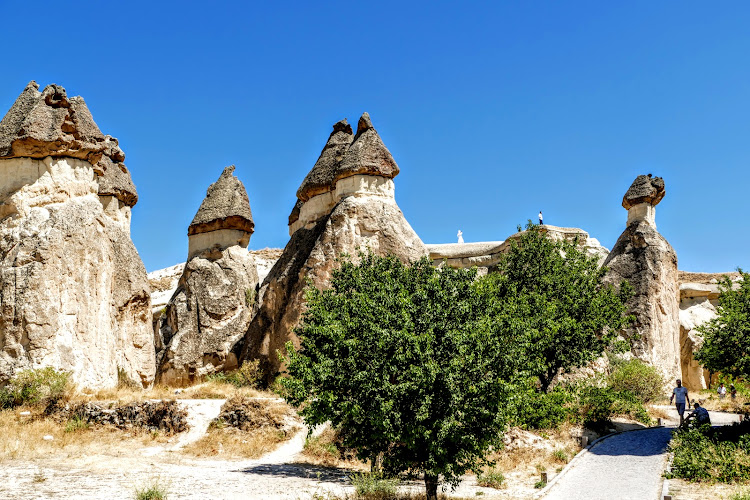
Pasabag, usually written Paşabağ or Paşabağı and known as Monks Valley, is a ticketed fairy-chimney landscape at Paşabağı Örenyeri, Zelve Yolu, Çavuşin, Avanos, Nevşehir, Turkey. Outside Göreme town, this Cappadocian archaeological site combines mushroom-shaped volcanic pillars with rock-cut refuges associated with Christian ascetic life. Travelers come for its unusually thick, multi-headed chimneys and the chance to see how religious communities adapted the soft rock into secluded living spaces.
What to Expect at Pasabag
The main experience is a walk among freestanding pillars rather than a conventional museum visit. Cappadocia’s volcanic deposits hardened into layers of differing resistance; erosion removed softer material while tougher capstones sheltered the columns beneath. At Paşabağ, several pillars carry two or three caps, making the geological process particularly easy to read. Follow the established valley-floor paths first, then explore permitted side routes for changing views of the chimney clusters against the surrounding pale slopes.
A three-headed chimney contains a chapel and hermit accommodation associated with the tradition of Saint Simeon. The fifth-century Simeon Stylites himself practiced asceticism in Syria; the connection here is to religious followers and traditions, not proof that he lived in Cappadocia. Small openings, carved chambers and restricted access points reveal the practical demands of retreat within these formations. Chamber access can change, so treat the exterior architecture as the dependable highlight rather than expecting every interior to be open.
- Multi-headed fairy chimneys: Double and triple caps distinguish Paşabağ from many neighboring valleys.
- Saint Simeon chapel: A rock-cut religious space associated with the area’s ascetic tradition.
- Hermit cells: Carved accommodation shows how natural pillars became places of withdrawal and shelter.
- Visible erosion layers: Contrasting capstones and softer shafts explain the formations without needing a geology background.
- Valley-floor photography: Established paths offer close views and broader compositions without climbing fragile rock.
Pasabag at a Glance
| Detail | Information |
|---|---|
| Address | Paşabağı Örenyeri, Zelve Yolu, Çavuşin, Avanos, Nevşehir, Turkey; use the archaeological-site entrance pin. |
| Neighborhood / Area | Çavuşin–Zelve corridor, northeast of Göreme, Cappadocia. |
| Operating Hours | Generally open daily; seasonal opening, closing and last-entry times appear on the official museum portal. |
| Admission / Price Range | Paid admission; $$ sightseeing budget. Check current Zelve–Paşabağ ticket coverage and visitor categories before paying. |
| Recommended Visit Duration | 60 to 90 minutes. |
| Nearest Transit / Parking | Göreme–Avanos minibuses via Çavuşin; taxi onward is simplest. Visitor parking is beside the entrance; check posted charges. |
| Official Website & Phone | Turkish Museums official portal; consult its site directory for telephone enquiries. |
Visiting Tips, Getting There & Nearby Pairings
Arrive near opening for cooler walking and fewer tour groups, or choose the final daylight hours while allowing for last admission. Summer shade is limited; carry water, a hat and sunscreen. Spring and autumn usually offer more comfortable walking, while winter ice can make exposed paths slippery. From Göreme, a taxi or rental car is more straightforward than public transport: regional minibuses serve Çavuşin, not a dedicated rail or metro stop at the entrance. Confirm the return pickup before setting out. Entrance-area toilets and refreshments are useful before exploring, but this is an outdoor archaeological landscape, not a serviced hiking park.
The entrance and principal routes include constructed walking surfaces, but gradients, rough sections and narrow rock-cut thresholds prevent a fully step-free experience. Wheelchair users should arrange assistance; a compact stroller is less practical on uneven side paths. Stay on authorized routes, avoid scrambling on the chimneys, and ask staff about dogs before entering. Do not plan an after-dark circuit. Within a 5–15-minute walk of the entrance, pair the three-headed chapel chimney with the surrounding freestanding clusters. For a longer outing, drive to Zelve Open-Air Museum, Çavuşin’s old rock-cut settlement or Avanos’s pottery workshops; these are onward stops, not short pedestrian extensions along a comfortable urban sidewalk.
Frequently Asked Questions
What are Pasabag’s hours, and when should I visit?
Paşabağ generally opens daily, with seasonal schedules and a last-entry cutoff before closing. Check the official museum portal shortly before visiting; opening time is a sensible choice for summer heat and photography.
Is admission free, and do I need a reservation?
Admission is paid, and independent visitors normally do not need a guided-tour reservation. Check the official Zelve–Paşabağ listing for current prices, combined-site coverage and museum-pass eligibility rather than assuming every pass is accepted.
How long should I spend at Pasabag?
Allow 60 to 90 minutes for the principal formations, chapel exterior and photographs. Budget a separate visit for Zelve, whose larger rock-cut settlement requires more walking.
Is Pasabag suitable for children and wheelchair users?
Children can enjoy the outdoor formations, but supervision is essential around uneven ground and openings. Wheelchair access is partial rather than comprehensive; wear sturdy shoes, and expect steps or restrictive thresholds at rock-cut spaces.
When planning your Cappadocia travel guide or browsing verified attractions in Cappadocia, pair this stop with standout local spots including Cappadocia Art & History Museum, Kapadokya Yaşayan Miras Müzesi, Kappo, and Azure Cave Suites – Hotel (0.5 km away).


