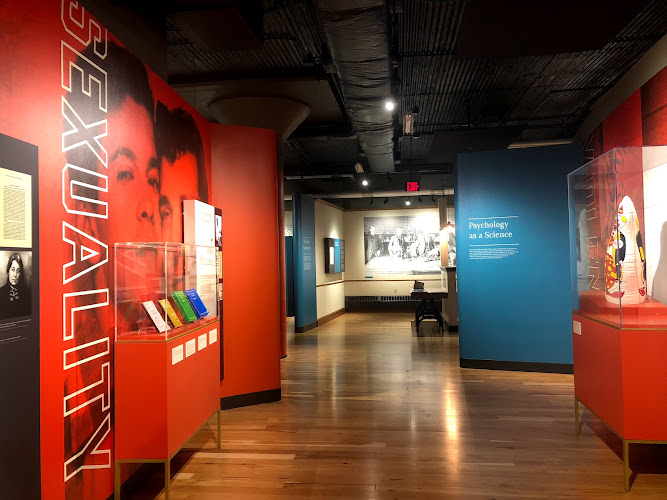
Cummings Center for the History of Psychology is a free University of Akron museum and research archive at 73 S College St, Akron, OH 44325, on the university’s central campus south of downtown. Built around the Archives of the History of American Psychology, founded in 1965, it traces how psychology moved from laboratory experiments and intelligence testing to psychotherapy, behaviorism, and contemporary mental-health practice. Travelers come for rare scientific instruments, influential psychologists’ papers, and a compact, thoughtful gallery that makes the discipline’s human stories tangible.
What to Expect at Cummings Center for the History of Psychology
The public-facing National Museum of Psychology combines object displays with interpretive panels that put famous ideas in context. Look for historic experimental apparatus associated with Wilhelm Wundt’s early laboratory tradition, B. F. Skinner’s teaching-machine work, intelligence-testing materials, and examples of psychological testing and therapeutic tools. The displays address both psychology’s breakthroughs and its difficult ethical questions, making this an engaging stop whether you know the field through Freud, Skinner, Maslow, or a first college course.
Behind the galleries is the internationally important Archives of the History of American Psychology, established by John A. Popplestone and Marion White McPherson. Its holdings preserve personal papers, photographs, films, books, oral histories, and artifacts connected to psychologists and professional organizations. This is a museum visit rather than a hands-on science center: allow time to read labels and follow the story chronologically, then ask staff about research access or group tours. The center is in an academic building, with a focused gallery setting rather than a monumental standalone museum.
- National Museum of Psychology: A public gallery introducing key people, experiments, instruments, and debates in the discipline’s development.
- Archives of the History of American Psychology: The 1965-founded archive preserves primary-source records, images, films, books, and professional history.
- Experimental apparatus: Historic lab tools show how sensation, perception, learning, and behavior were measured before digital research methods.
- Skinner-era learning materials: Teaching-machine and behaviorist-era objects connect laboratory research to classroom practice and popular culture.
- Psychological testing history: Testing materials and interpretive displays examine intelligence, personality, diagnosis, and the changing ethics of assessment.
Cummings Center for the History of Psychology at a Glance
| Detail | Information |
|---|---|
| Address | 73 S College St, Akron, OH 44325 |
| Neighborhood / Area | University of Akron campus, near downtown Akron |
| Operating Hours | Tue 11 a.m.–4 p.m.; Wed 1–8 p.m.; Thu–Sat 11 a.m.–4 p.m.; closed Sun–Mon |
| Admission / Price Range | Free admission; donations welcome. Budget-friendly ($). |
| Recommended Visit Duration | 45 to 75 minutes; longer for a scheduled research or group visit |
| Nearest Transit / Parking | METRO RTA stops on and around the University of Akron campus; use university visitor parking and confirm the current designated lot before arrival. |
| Official Website & Phone | uakron.edu/chp | +1 330-972-7285 |
Visiting Tips, Getting There & Nearby Pairings
Arrive near opening on Tuesday, Thursday, Friday, or Saturday for the quietest gallery time; Wednesday evening is useful for visitors exploring after work or class. Admission is free, but call ahead for docent-led group visits, archive research, or any visit involving a class-sized party. Start with the permanent displays, then return to the cases that interest you rather than rushing through the chronology. Photography, access to archival material, and handling rules can vary by object and research appointment, so follow staff direction.
METRO RTA serves the university area, while drivers should consult the University of Akron’s current visitor-parking guidance because campus lots and permits are controlled during the academic year. The center’s campus building has elevator access; contact the center before visiting to arrange the most convenient accessible entry or research-room assistance. Pair the visit with the Victorian Hower House Museum, about a five-minute walk away, or walk roughly 10 minutes to E. J. Thomas Hall and the university’s cultural district. Downtown’s Lock 3 civic space is about 15 minutes on foot and makes a natural next stop for events and seasonal programming.
Frequently Asked Questions
When is the Cummings Center for the History of Psychology open?
The center is open Tuesday 11 a.m.–4 p.m., Wednesday 1–8 p.m., and Thursday through Saturday 11 a.m.–4 p.m.; it is closed Sunday and Monday. Weekday mornings and the first hour after opening are particularly calm for close reading of the displays.
Does the museum charge admission or require reservations?
General museum admission is free. Individuals can normally visit during public hours, while guided groups, archival research, and special visits should be arranged in advance by phone or through the official website.
How much time should I budget for a visit?
Plan 45 to 75 minutes for the museum gallery. Give yourself more time if you are studying psychology, want to discuss the collection with staff, or have a scheduled appointment in the archives.
Is the center suitable for families and accessible visitors?
Older children, teens, and curious adults will get the most from the interpretive displays, especially those interested in science, medicine, and social history. The campus building has elevator access; visitors needing step-free-entry guidance, seating, or research-room accommodations should call ahead.
When planning your Akron travel guide or comparing verified attractions and museums in Akron, pair this stop with standout local spots including Virtues, F.A.T.S, F.A. Seiberling Nature Realm, and Hower House Museum (0.3 km away).