Borstplaat in brons is one of Amsterdam’s most easily missed public artworks: a small bronze relief set directly into the cobbles beside the Oude Kerk. Rather than rising above the square on a plinth, it asks visitors to look down. The image—a hand resting on a bare breast—has a deliberately intimate, provocative presence within the everyday pavement.
The work sits on Oudekerksplein in De Wallen, Amsterdam’s historic Red Light District, where medieval lanes, canals, sex-work windows, cafés, and the Gothic mass of the Oude Kerk meet at close quarters. It is an anonymous artwork, reported to have appeared in 1993, and works best as a short, observant pause while exploring the neighborhood rather than as a stand-alone museum visit.
Standout Highlights & What Not to Miss
This is a small-scale encounter with unusually strong context. Its interest lies as much in its placement as in the bronze itself: a tactile, pavement-level intervention in an area whose history, architecture, and nightlife are all visible within a few steps. Give yourself permission to slow down, scan the ground, and take in the square before moving on.
- The pavement-level reveal: The relief is embedded among the stones, not displayed as a conventional monument. Looking down carefully is essential.
- An anonymous gesture: No substantial on-site explanation resolves the artist’s identity or intended meaning, leaving room for observation rather than a fixed reading.
- Bronze texture and light: Moisture, shade, and low-angled daylight can bring out the modeled hand and rounded forms more clearly than a straight-on glance.
- The Oude Kerk backdrop: Amsterdam’s oldest parish church gives the tiny work a striking architectural counterpoint and makes the square worth studying as a whole.
- A De Wallen detail: The sculpture rewards travelers interested in public art, urban stories, and details that are easy to overlook amid the district’s better-known sights.
Visitor Strategy & Planning Snapshot
| Planning Factor | What to Expect | Practical Strategy |
|---|---|---|
| Ideal Arrival Window | The square can feel quieter earlier in the day; later hours bring more foot traffic and nightlife activity. | Visit in daylight if you want to examine and photograph the relief, then return later only if De Wallen’s evening atmosphere interests you. |
| Typical Time Needed | This is a compact outdoor artwork; most visitors need about 10 to 15 minutes. | Build it into a longer walk around the Oude Kerk rather than allocating a separate major sightseeing block. |
| Booking / Queue Reality | There is no museum-style entry, timed visit, or dedicated queue for the pavement relief. | Simply locate it while circulating around Oudekerksplein; allow flexibility for crowding in the narrow surrounding streets. |
| Terrain & Accessibility | No entrance steps are required, but cobbles and paving joints can be difficult for wheels and unsteady walkers. | Approach slowly, use the smoother edges of the square where possible, and avoid treating the artwork as an essential stop if surface conditions are uncomfortable. |
| Weather / Seasonal Fit | Rain can make the stones slick, while changing light alters how visible the bronze’s details appear. | Wear footwear suited to wet cobbles and use a low, oblique viewing angle; daylight is generally best for close looking. |
Honest Trade-Offs: Best For vs. Who Might Skip
Borstplaat in brons is best for public-art enthusiasts, architecture walkers, urban photographers, and Amsterdam history buffs who enjoy finding meaning in small details. It is free to encounter and unusually memorable once found, but it is not a large sculpture, an exhibition, or a fully interpreted attraction. Travelers seeking a formal museum experience, extensive historical information, or a calm setting away from De Wallen’s crowds may prefer to make this a quick optional detour. The subject matter is also overtly anatomical, so it may not suit every group’s preferences.
Neighborhood Context & How to Pair Your Visit
Pair the relief with an unhurried circuit of Oudekerksplein and the lanes around the Oude Kerk. Pause to read the church’s exterior, notice the contrast between old brickwork and canal-side commerce, then continue on foot through De Wallen toward nearby central Amsterdam streets and metro connections. This is a particularly good stop between larger sights: it adds a sharp, local-scale observation to a walk without demanding a ticket, a fixed schedule, or much time. Stay aware of pedestrians, bicycles, uneven paving, and the fact that the district is both a residential neighborhood and an active nightlife area.
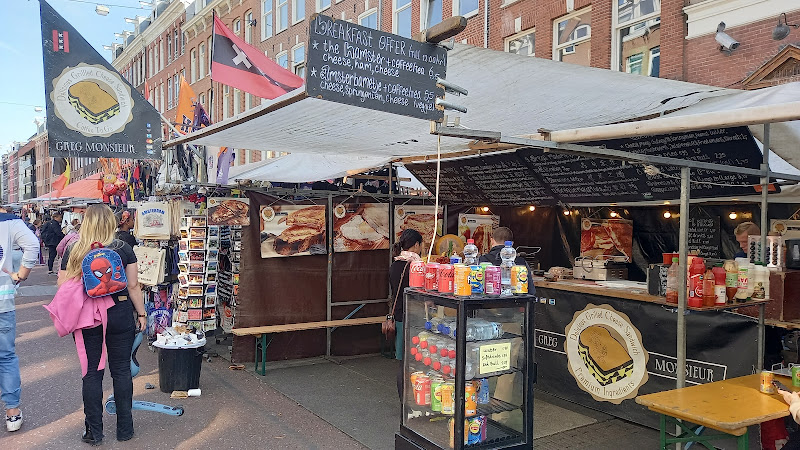
When planning your Amsterdam travel guide or comparing verified attractions and museums in Amsterdam, pair this stop with standout local spots including Greg Monsieur, De Gooyer, Laseur Antiquairs Amsterdam, and Oude Kerk Amsterdam (nearby).