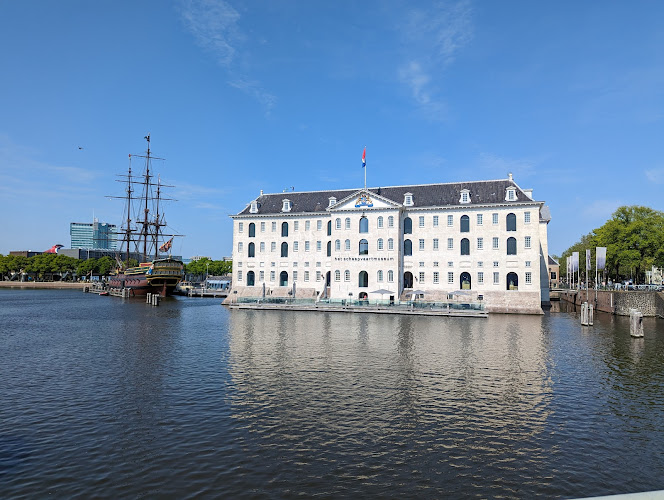
The National Maritime Museum (Het Scheepvaartmuseum), at Kattenburgerplein 1 in the Kattenburg/Plantage district, occupies a 17th-century naval storehouse and holds roughly 400,000 maritime objects, including the full-scale East Indiaman Amsterdam replica moored outside. Expect 2-3 hours covering Dutch trade, naval warfare, and exploration, with admission around €18.50 for adults and free entry for children under 12.
Quick Facts
| Address | Kattenburgerplein 1, 1018 KK Amsterdam, Netherlands |
| Neighborhood | Kattenburg / Plantage |
| Operating Hours | Daily 09:00–17:00 (last entry 16:00); check website for seasonal adjustments and holiday closures |
| Price Range / Admission | Adults ~€18.50; children under 12 free; discounts for students and Museumkaart/I amsterdam City Card holders |
| House Specialties / Core Highlights | Replica East Indiaman Amsterdam, Royal Barge, Dare to Discover VR experience, historic globe and instrument collections, maritime paintings |
| Nearest Public Transit | Tram 22/48 to Kattenburgerplein; 15-minute walk from Amsterdam Centraal |
| Reservations / Booking Policy | Online booking recommended for weekends and school holidays; walk-ins accepted subject to capacity |
Deep Profile & Background
The museum building dates to 1656, constructed as the Amsterdam Admiralty’s storehouse (‘s Lands Zeemagazijn) to hold sails, rope, and equipment for the Dutch navy. The structure itself, a rectangular sandstone-and-brick building around a central courtyard, reflects the scale of Dutch naval ambition during the Golden Age, when Amsterdam controlled trade routes stretching to Batavia and beyond. The building’s conversion into a museum happened in 1973, consolidating collections that trace back further, some pieces originating from 19th-century naval academies and private donations.
The Kattenburg location places the museum on a former shipbuilding island, physically separated from the mainland canals by water on three sides. This isolation was deliberate; naval stores needed protection from fire and theft. Today the neighborhood connects to the Plantage district’s cluster of cultural institutions, including Artis Zoo and the Dutch Resistance Museum, forming a corridor of 19th-century civic architecture and green squares.
The museum’s curatorial focus covers both the commercial success and moral cost of Dutch maritime power. Recent exhibitions address the VOC’s role in colonial exploitation and slavery, a shift from earlier, more celebratory displays of exploration and trade. This reframing responds to broader Dutch cultural reckoning with colonial history playing out across national institutions since the early 2020s.
What to See, Do, and Prioritize
- East Indiaman Amsterdam replica: A full-scale reconstruction of a 1749 VOC cargo ship, moored beside the museum. Visitors climb through cramped crew quarters, cargo holds, and the captain’s cabin. Interpretive staff in period dress appear on weekends and school holidays. Budget 30-45 minutes; the ship’s narrow ladders make it awkward for anyone with mobility limitations.
- Royal Barge (Koninklijke Barge): An ornate gilded vessel built in 1818 for royal ceremonial use, displayed in a dedicated glass pavilion. One of the collection’s genuine showpieces, worth 10 minutes of close inspection for its woodcarving detail.
- Dare to Discover VR experience: A modern add-on simulating 17th-century seafaring conditions, including storms and shipboard hazards. Entertaining for families with children aged 8+; skip it if traveling with toddlers or short on time, as it adds a 20-30 minute queue during peak hours.
- Globe and instrument galleries: Cartography enthusiasts should linger here. The collection of celestial and terrestrial globes, some dating to the 1600s, ranks among the most complete in Europe.
- Colonial history galleries: Direct, unflinching displays on the VOC’s role in slavery and exploitation. Not a quick walkthrough section; allocate genuine reading time if this history interests you.
Honest critique: the museum’s layout across multiple wings can feel disjointed, and English-language signage, while present, is less thorough than in Amsterdam’s larger museums like the Rijksmuseum. The audio guide (available in 11 languages) fills these gaps and is worth the small extra cost.
How It Compares
| Venue | Admission | Style | Crowd Level | Best For |
|---|---|---|---|---|
| National Maritime Museum | ~€18.50 | Naval history, ship replica | Moderate | Maritime history, families |
| Rijksmuseum | ~€22.50 | Fine art, Dutch Golden Age | High, frequently sold out | Art lovers, first-time visitors |
| NEMO Science Museum | ~€19.50 | Interactive science exhibits | High, especially weekends | Children, hands-on learners |
| Amsterdam Museum | ~€17.50 | City history, urban development | Low to moderate | Local history enthusiasts |
Practical Logistics & Crowd Strategy
Arrive at opening (09:00) or after 15:00 to avoid tour-bus groups that dominate mid-morning through early afternoon, particularly June through August. School holiday periods in the Netherlands (check the Dutch academic calendar) bring higher volumes of local families, especially on the ship replica. Cards are accepted everywhere; cash acceptance is limited, standard for Amsterdam museums in 2026. No strict dress code, but wear closed shoes for the ship’s steep ladders and uneven decking. The main museum building is wheelchair accessible with elevators between floors; the ship replica is not fully accessible due to its historic construction. Photography is permitted without flash in most galleries.
Nearby Itinerary Pairings
- Artis Royal Zoo (12-minute walk): The Netherlands’ oldest zoo, good pairing for families needing an outdoor break after museum galleries.
- Hermitage Amsterdam (10-minute walk along the waterfront): Rotating exhibitions from the Russian State Hermitage collection, a strong follow-up for art-focused itineraries.
- Café-Restaurant De Plantage (8-minute walk): A restored 19th-century greenhouse restaurant, suited for a sit-down lunch after the museum.
- Dutch Resistance Museum (Verzetsmuseum) (10-minute walk): Complements the maritime museum’s colonial history sections with a focused look at WWII-era Dutch resistance.
FAQs
Is the East Indiaman Amsterdam replica included in general admission?
Yes, access to the ship is included with the standard museum ticket; no separate charge applies.
How much time should I budget for a full visit?
Plan for 2 to 3 hours to cover the main galleries, ship, and Royal Barge without rushing.
Is the museum suitable for young children?
Yes, particularly the ship replica and VR experience, though some colonial history galleries contain mature themes better suited to children aged 10 and up.
Does the I amsterdam City Card cover admission?
Yes, the card grants free entry, making it a cost-effective option if visiting three or more museums during a stay.