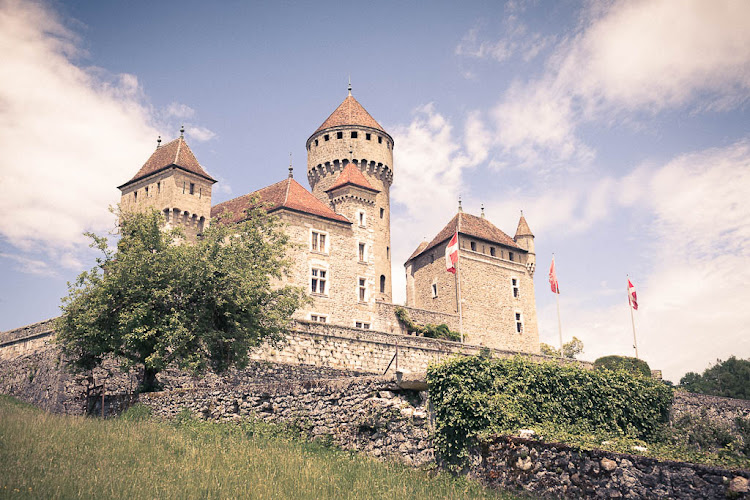
Château de Montrottier is a compact medieval fortress-museum in Lovagny, a rural village west of Annecy in the Haute-Savoie. Its stone walls, enclosed courtyard and tall cylindrical keep create the kind of silhouette visitors expect from a Savoyard stronghold, but the experience is as much about rooms and objects as ramparts. This is a castle to explore at a deliberate pace, noticing defensive architecture outside and the character of a turn-of-the-century private collection within.
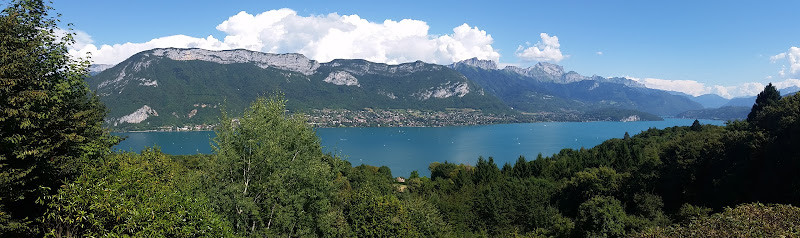
The setting is part of the appeal. Montrottier occupies raised ground near the dramatic Gorges du Fier, with countryside visible beyond the fortress walls. Built in stages between the 13th and 15th centuries, it brings together the older Tour des Religieuses, the keep, residential buildings and later details in a compact circuit. It makes an especially rewarding half-day escape from Annecy for travelers who prefer historic places with texture, irregularity and a strong sense of place.
Standout Highlights & What Not to Miss
Montrottier works best when you treat it as two connected visits: first read the architecture from the courtyard and outer walls, then give the interiors enough time to reveal their unusually broad collections. Léon Marès acquired the château in 1906 and left it, with its amassed objects, to the Académie Florimontane in 1916. The result is not a sparsely staged castle but a dense, personal museum environment.
- The cylindrical keep: Rising roughly 35 metres, the tower is the château’s defining landmark. Look at its mass, narrow openings and position within the defensive ensemble before heading indoors; it makes the site’s medieval purpose immediately legible.
- Tour des Religieuses: This older tower helps show that Montrottier was built over centuries rather than as one uniform project. Compare its character with the keep and adjoining residential wings.
- The courtyard circuit: Pause here rather than rushing directly to the rooms. The close arrangement of towers, walls and logis explains how the castle combined protection, circulation and domestic life.
- Léon Marès’s collections: Arms, armour, ceramics, tapestries, furniture and objects from Asia and Africa give the rooms their layered visual richness. The variety rewards visitors who enjoy looking closely rather than simply photographing architecture.
- Renaissance bronze reliefs: Seek out the four reliefs associated with the Nuremberg metalworking tradition. They are a useful reminder that the collection reaches well beyond local medieval history.
- The Gorges du Fier pairing: The nearby gorge supplies a dramatic natural counterpoint to the château’s masonry and is the most logical companion stop for a fuller outing in Lovagny.
Visitor Strategy & Planning Snapshot
| Planning Factor | What to Expect | Practical Strategy |
|---|---|---|
| Ideal Arrival Window | The compact grounds and rooms are more enjoyable before the day’s main sightseeing flow builds. | Arrive near the beginning of the visitor day when possible, leaving time to linger in the courtyard and collections. |
| Typical Time Needed | Most visitors need about 1.5 to 2 hours for a satisfying castle circuit. | Allow the full two hours if decorative arts and historic objects interest you; do not try to squeeze it into a quick photo stop. |
| Booking / Queue Reality | Entry arrangements and any guided or family-oriented activities can vary by season and date. | Check the current visitor information before setting out, particularly during school holidays or if a guided format matters to you. |
| Terrain & Accessibility | Historic stairs lead to upper rooms and the keep; surfaces and circulation reflect the age of the fortress. | Wear stable footwear. Wheelchair users should contact staff in advance to discuss which portions can be accessed. |
| Weather / Seasonal Fit | Much of the interest is indoors, while the courtyard and views are exposed to the elements. | It is a useful mixed-weather stop, but bring a layer for the outdoor approach and save the Gorges du Fier pairing for suitable conditions. |
Honest Trade-Offs: Best For vs. Who Might Skip
Choose Montrottier if you are drawn to medieval architecture, historic interiors and the slightly eccentric pleasure of a collector’s museum. It suits families with school-age children who can engage with armour, towers and stories of fortification, as well as Annecy day-trippers wanting more than lakeside scenery. The trade-off is that this is not a vast palace with broad galleries or a highly polished, linear interpretation. Rooms can feel densely filled, and the vertical, stair-led route is inherent to the building. Travelers seeking barrier-free sightseeing, extensive English-language interpretation, or a long menu of hands-on activities may find a larger modern museum more comfortable. The charm here lies in the castle’s compact scale and accumulated detail.
Neighborhood Context & How to Pair Your Visit
Plan Montrottier as the historic anchor of a Lovagny outing rather than an isolated detour. Begin with the château while your attention is fresh, then continue to the Gorges du Fier for a striking change from enclosed stone rooms to a narrow natural gorge. The two sites create a coherent route: medieval walls and elevated rural views first, geology and moving water second. Annecy is the natural base for many visitors, but build in transport time and avoid treating this as a walkable extension of the old town. In Lovagny itself, the appeal is the small-scale countryside setting, so leave room for a slower approach, a short scenic pause and a visit paced around the castle rather than a packed urban itinerary.
When planning your Annecy travel guide or browsing verified museums in Annecy, pair this stop with standout local spots including Les Terrasses du Lac, NUANCE, Vinistrot, and Le Bistro du Rhône (6.0 km away).