The Bell Museum is Minnesota’s official natural history museum and a working part of the University of Minnesota, set on the St. Paul campus along Larpenteur Avenue West. The current building opened in 2018, replacing the old Minneapolis campus museum with a modern structure that pairs gallery space with a full-dome planetarium. It sits close to the State Fairgrounds, so the area feels more like a research campus than a typical downtown museum district.
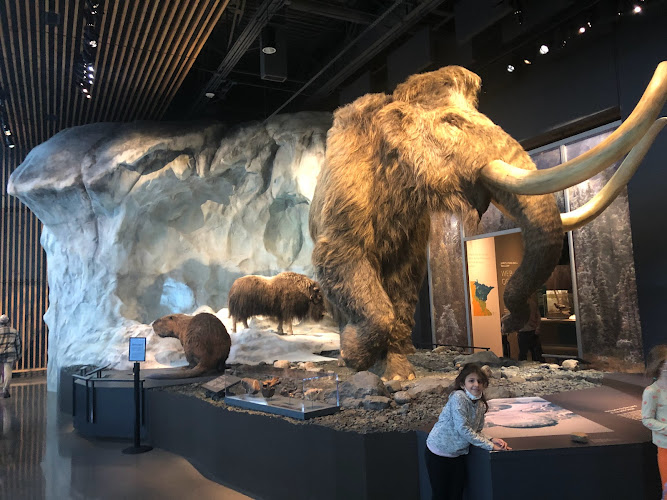
What sets it apart is the focus on Minnesota itself. Visitors tend to remember the classic wildlife dioramas, the woolly mammoth, the hands-on Touch and See Lab, and the planetarium, which turns a science museum visit into something closer to a two-part outing. Reviewers consistently describe the exhibits as informative and approachable for both kids and adults, which fits its 4.6 rating across more than 700 reviews.
Standout Highlights & What Not to Miss
Plan your route around a handful of anchors rather than trying to read every label. These are the stops visitors mention most often.
- Wildlife dioramas: The painted-backdrop habitat scenes are the museum’s heritage collection, showing Minnesota landscapes and animals in carefully composed settings. They reward a slow look at the foreground detail.
- Woolly mammoth: A crowd favorite and a natural photo stop, it gives a sense of scale for the Ice Age history that shaped the state.
- Touch and See Lab: A tactile space where visitors can handle natural specimens and examine them up close. It is especially good for children and for anyone who gets restless in look-but-don’t-touch galleries.
- Planetarium show: The dome theater is ticketed separately from general admission. Check the show lineup, since programs vary in length and suit different ages.
- Interactive exhibits: Hands-on stations scattered through the galleries explain ecology, geology, and biodiversity without requiring a science background.
- Building and grounds: The architecture, including its use of natural light and the surrounding native landscaping, is worth a few minutes before or after your visit.
Visitor Strategy & Planning Snapshot
| Planning Factor | What to Expect | Practical Strategy |
|---|---|---|
| Ideal Arrival Window | Weekday mornings are calmer; weekends and school holidays bring families and field trips. | Arrive near opening, see the galleries first, then catch a midday planetarium show. |
| Typical Time Needed | About 1.5 to 2 hours for the galleries; add the length of a planetarium show. | Budget 2.5 to 3 hours if you want the dome, the Touch and See Lab, and unhurried diorama viewing. |
| Booking / Queue Reality | Paid admission, with planetarium shows ticketed separately and able to sell out at busy times. | Reserve show tickets online ahead of time, especially on weekends and during school breaks. |
| Terrain & Accessibility | Level, modern building with a wheelchair accessible entrance, parking, and restrooms; wheelchair rental and assisted listening devices are available. | Ask at the front desk about assisted listening for the planetarium and request a wheelchair if you need one. |
| Weather / Seasonal Fit | Almost entirely indoors, so it works in any season. | A strong cold-day or rainy-day option in Minnesota winters; summer visits pair well with time outside. |
Honest Trade-Offs: Best For vs. Who Might Skip
It is best for families with school-age children, curious adults who like natural history, and anyone who wants a regional focus rather than a generic science center. The mix of old-style dioramas and modern interactives gives it range, and the accessibility features make it easy for mixed-ability groups. Travelers who want enormous dinosaur halls or a sprawling, all-day museum may find it compact. It is also a drive or transit trip from downtown St. Paul and Minneapolis, so visitors with only a short stay may prefer something closer to the center. Paying separately for the planetarium adds to the cost, so decide in advance whether the dome is a priority.
Neighborhood Context & How to Pair Your Visit
The museum sits on the edge of the University of Minnesota’s St. Paul campus, near the Minnesota State Fairgrounds. That makes it an easy half-day anchor: start with the galleries and a planetarium show, then spend the rest of the time on campus or nearby. Campus grounds and agricultural research areas offer quiet walking, and the fairgrounds area is a short drive away, though it is busiest during the late-summer fair. Because the immediate surroundings are more institutional than commercial, plan your meal before or after the visit and check nearby dining options in advance. If you are combining stops across the Twin Cities, pair this with another cultural stop in St. Paul or Minneapolis the same day by car or transit.
When planning your Anoka travel guide or comparing verified attractions and museums in Anoka, pair this stop with standout local spots including Wyndham Garden Otsego-Minneapolis (formerly Holiday Inn), The Hotel Landing, Wingate by Wyndham Coon Rapids, and Weisman Art Museum (4.4 km away).