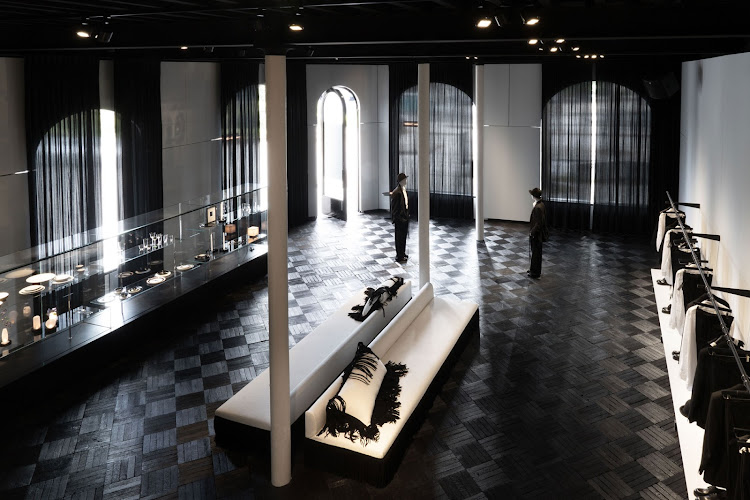
Antwerp built its global reputation on stones cut and polished within a few blocks of its cathedral, and DIVA, the museum for diamonds, jewellery and silver, sits inside that same square kilometer of trading history. Housed on Suikerrui, a two-minute walk from the Grote Markt, DIVA translates five centuries of goldsmith work, gem cutting and courtly commissions into a single, tightly curated visitor route rather than a sprawling encyclopedic collection.
DIVA occupies a modern building at Suikerrui 17-19 in Antwerp’s historic center, telling the story of the city’s 575-year diamond trade through roughly 600 objects spanning jewellery, silver and gemstones. Standard admission runs €12-14 for adults, a visit takes 1.5-2 hours, and the museum sits within walking distance of the Cathedral of Our Lady and Grote Markt.
At A Glance
| Category | Details |
|---|---|
| Address | Suikerrui 17-19, 2000 Antwerp, Belgium |
| Operating Hours | Tuesday-Sunday 10:00-17:00 (last entry 16:00); closed Mondays |
| Price Range / Admission | Adults €14, seniors/students €12, under 19 free; Antwerp City Card accepted |
| Highlights | Diamond vault display, historic silverware guild pieces, contemporary jewellery design gallery, courtly commission archives |
| Transport/Transit Access | Tram 4/10/11 to Groenplaats; 10-minute walk from Antwerpen-Centraal via Meir; Grote Markt parking garage nearby |
Deep Origins, Architectural Evolution and Cultural Significance in Antwerp
Antwerp’s relationship with precious materials predates the modern diamond trade by centuries. From the fifteenth century onward, the Grote Markt and the streets radiating from it functioned as Europe’s central marketplace for gold, silver and gemstones, drawing merchants from Lisbon, Venice and later Amsterdam. Guild records show goldsmiths and silversmiths organizing formal trade associations in Antwerp as early as the 1400s, decades before the city’s diamond-cutting industry reached its later global dominance. DIVA inherited the collections of two earlier institutions, the Provincial Diamond Museum and the Museum Vleeshuis’s silver holdings, consolidating them into a single narrative when it opened in its current form in 2018. The building itself replaced an earlier structure on the same site, with architects designing a compact, vault-like interior that echoes the secured storage spaces historically used by diamond dealers along nearby Hoveniersstraat and the Diamond District near Centraal Station. Rather than a converted mansion or repurposed church, DIVA reads as a purpose-built container for scrutiny: low ambient lighting, controlled humidity, and display cases engineered for close inspection dominate the architectural brief. This distinguishes it from Antwerp’s older museums like the Rubens House or Museum Mayer van den Bergh, which retain domestic-scale rooms. DIVA’s cultural weight rests less on monumental architecture and more on its role as custodian of a trade identity: Antwerp still processes a significant share of the world’s rough and polished diamonds through the Antwerp World Diamond Centre, and the museum functions as the public-facing interpretive counterpart to an industry largely conducted behind closed doors a few streets away.
Signature Highlights and Detailed Offerings
The permanent route unfolds across several themed sections rather than strict chronology. Early rooms display guild silver from the sixteenth and seventeenth centuries, including ceremonial cups produced for Antwerp’s civic guilds, marked with the city’s hallmark system that historians use to authenticate provenance. A dedicated gallery addresses the mechanics of diamond cutting, showing rough stones alongside polished results and explaining the brilliant cut refinements Antwerp cutters contributed to international standards in the twentieth century. Visitors encounter court jewellery associated with the Habsburg and later Belgian royal circles, including tiaras and brooches on loan or acquired from private collections, displayed with attribution notes on the original jewellers where documentation survives. A contemporary design wing rotates pieces from working Antwerp jewellers and graduates of the Antwerp Royal Academy’s jewellery design program, connecting the historic trade to current studio practice. The museum also maintains a small but pointed exhibit on diamond trade ethics and the Kimberley Process, addressing the industry’s more difficult history directly rather than omitting it. Temporary exhibitions occupy a ground-floor gallery and change roughly twice a year, often partnering with international jewellery houses or private collectors; recent programming has included focused shows on Art Deco jewellery design and single-artisan retrospectives. The museum shop, positioned at the exit, sells silver-plated reproductions, designer jewellery from regional makers, and reference books on gemology, with prices ranging from under €20 for small accessories to several hundred euros for limited-edition pieces.
Sensory and Spatial Walkthrough
Entering from Suikerrui, visitors pass through a narrow reception area finished in dark stone and brushed metal, a material palette that recurs throughout the galleries and reinforces the vault association. Natural light barely penetrates the display floors; instead, directional spot lighting picks out individual gems and metalwork against black or deep-gray backdrops, a curatorial choice that maximizes sparkle and readability of fine engraving but requires eyes to adjust between rooms. The acoustic environment stays deliberately hushed, with carpeted floors in several galleries dampening footsteps and no piped music, which suits close examination of small objects but can feel austere on a quiet weekday morning. Seating is limited and functional, mostly benches positioned opposite major display cases rather than lounge areas, so visitors plan to stand for most of the route. Late morning on weekdays brings the calmest atmosphere, since school groups tend to arrive after 13:00 and weekend crowds peak between 14:00 and 16:00. By late afternoon near closing, the galleries empty out again, giving photographers a second quiet window, though guards do enforce a no-flash policy near the most valuable pieces.
Insider Visitor Strategy and Pro Tips
- Book timed tickets online in advance during July-August and around Christmas markets, when Grote Markt foot traffic spikes and walk-up queues can stretch 20-30 minutes.
- Arrive at opening (10:00) on Tuesday or Wednesday for the emptiest galleries and best unobstructed photos of the crown jewellery displays.
- Bags larger than a small daypack must go into lockers near the entrance; cameras without flash are permitted, tripods are not.
- Pair the visit with the Antwerp City Card, which typically covers admission and several nearby attractions at a combined discount.
- The best photography angle for the diamond vault room is from the raised platform at the room’s entrance, which captures the full case array with even lighting.
- Audio guides, available in Dutch, French, English and German, add roughly 45 minutes and are worth the small supplemental fee for the guild silver hallmark explanations, which are easy to miss on wall text alone.
Curated Half-Day Neighborhood Pairing Itinerary
Start at DIVA for the 10:00 opening and budget 90 minutes for the permanent collection plus any temporary exhibition. Exit onto Suikerrui and walk two minutes south to Grote Markt, where the Brabo Fountain and the guild houses provide a direct architectural counterpoint to the museum’s silver collection, since several of those same guilds commissioned pieces now displayed inside DIVA. From Grote Markt, continue four minutes to the Cathedral of Our Lady, Antwerp’s Gothic landmark holding major Rubens altarpieces; allow 30-40 minutes for a walk-through, noting the cathedral’s own historic ties to the goldsmith guilds that funded chapel decorations. From the cathedral, walk roughly eight minutes east along Handschoenmarkt and Wijngaardstraat toward the Vlaeykensgang, a restored medieval alley now home to small independent cafes; stop at one of the courtyard cafes for coffee and a Belgian waffle before finishing the loop back toward Groenplaats for tram connections. This circuit stays entirely within a 15-minute walking radius and threads Antwerp’s trade history, religious art and street-level cafe culture into a coherent three-stop afternoon.
Practical Logistics and Universal Accessibility
DIVA sits within Antwerp’s pedestrianized historic core, reachable on foot from Antwerpen-Centraal station in roughly 15 minutes via Meir and the Grote Markt corridor, or by tram lines 4, 10 and 11 to the Groenplaats stop, followed by a five-minute walk. The building offers step-free entry from street level, and interior galleries connect via elevator rather than stairs alone, making the full route wheelchair accessible; staff can provide details on accessible restroom locations at the front desk. Nearby parking includes the Grote Markt underground garage and the Sint-Jansvliet garage, both roughly €3-4 per hour with daily rate caps around €25-30. No specific dress code applies, though the museum’s climate-controlled interior runs cool, so a light layer helps even in summer. Payment for admission and shop purchases accepts major cards and contactless payment; cash is accepted but not required. Strollers are permitted in most galleries, though narrower sections near the vault displays can feel tight during busy periods.
Frequently Asked Questions
How much time should I budget for DIVA? Most visitors complete the permanent collection and a temporary exhibition in 1.5 to 2 hours, longer with an audio guide.
Is DIVA suitable for children? Yes, with interactive elements in the diamond-cutting section, though the pace and object-focused displays suit ages eight and up better than toddlers.
Can I buy tickets on arrival? Walk-up tickets are usually available, but advance online booking is recommended during peak tourist season and weekends.
Are photographs allowed inside the museum? Non-flash photography is permitted throughout most galleries; tripods and flash are prohibited near the most sensitive displays.
Does DIVA connect to Antwerp’s active diamond trade? Yes, the museum sits near the Antwerp World Diamond Centre and directly references the trading district’s ongoing role in global diamond processing.
Is the museum shop worth visiting even without buying a ticket? The shop requires museum admission to access, and its jewellery and reference book selection justifies a slower browse after the galleries.