
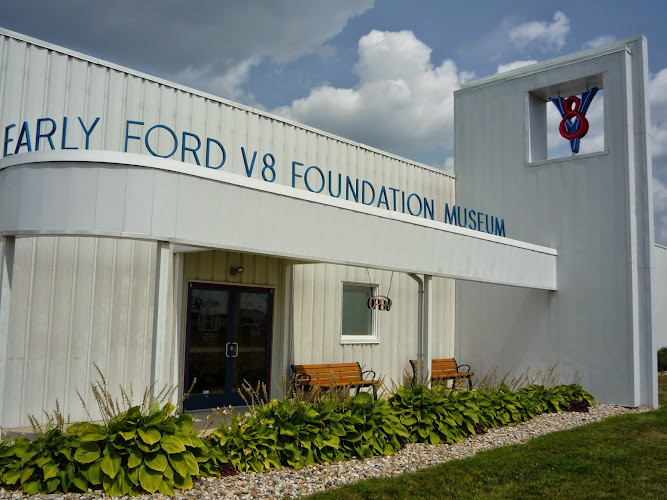
Early Ford V-8 Museum is an automotive museum at 2181 Rotunda Drive, Auburn, Indiana 46706, in the city’s southwestern Interstate 69 corridor. Operated by the Early Ford V-8 Foundation, established in 1991, it explores Ford’s 1932–1953 flathead era through automobiles, engines, and motoring memorabilia. The museum opened in 2009 and rewards travelers interested in how affordable V-8 power reshaped American driving, manufacturing, and car design.
What to Expect at Early Ford V-8 Museum
The central story begins in 1932, when Ford brought V-8 performance to the mass market. Engine displays make the flathead layout understandable: its valves sit in the engine block rather than above the cylinders. Follow the collections from the 1930s through the 1940s and into the early 1950s, comparing upright bodies, increasingly integrated fenders, and postwar styling. Start with the engines before walking around the cars; understanding the machinery makes the changing proportions and marketing story more rewarding.
A major attraction is the Joe and Arlene Floyd collection of 1936 Fords, which allows unusually close comparisons between body styles from a single model year. Look for the rare stainless-steel 1936 Ford, part of the experimental collaboration between Ford and Allegheny Ludlum. The museum’s Rotunda recalls Ford’s exhibition building created for Chicago’s 1934 Century of Progress exposition, later relocated to Dearborn and destroyed by fire in 1962. This is a modern museum interpretation, not the original building. A reference library and gift shop extend the experience beyond the vehicle floor.
- Flathead V-8 engines: Examine the compact engine architecture that became central to Ford’s identity and American hot-rodding.
- 1936 Ford collection: Compare different body configurations without jumping between decades, revealing how one chassis served different buyers.
- Stainless-steel Ford: See an unusual materials experiment that substituted corrosion-resistant stainless steel for conventional painted body panels.
- Rotunda architecture: Connect the museum’s distinctive exhibition space with Ford’s ambitious world’s-fair presentation and subsequent Dearborn visitor attraction.
- Library and gift shop: Ask about research access, then browse automotive books and Ford-related souvenirs before leaving.
Early Ford V-8 Museum at a Glance
| Detail | Information |
|---|---|
| Address | 2181 Rotunda Drive, Auburn, IN 46706, United States |
| Neighborhood / Area | Southwestern Auburn, near the Interstate 69 corridor |
| Operating Hours | Monday–Saturday, 9 a.m.–5 p.m.; Sunday, 11 a.m.–3 p.m.; check holiday arrangements |
| Admission / Price Range | Paid admission; budget tier ($). Check the official ticket page for current rates and concessions. |
| Recommended Visit Duration | 1.5 to 2 hours |
| Nearest Transit / Parking | On-site surface parking; approach from I-69 Exit 329 via County Road 11A. No nearby urban rail service. |
| Official Website & Phone | Early Ford V-8 Foundation Museum; +1 260-927-8022 |
Visiting Tips, Getting There & Nearby Pairings
Arrive near the 9 a.m. weekday opening for an unhurried circuit; Sunday’s shorter window requires more deliberate planning. Use the official website’s ticket and group-ticket options, and call ahead for organized visits or research-library access. Ask about guided interpretation when arranging a group; the website also offers a video tour. Check photography and large-bag rules at reception before unpacking equipment. Keep bags clear of vehicle finishes, and treat cars as display objects unless staff explicitly invite closer interaction.
Driving is the practical approach: the museum has surface parking and a single-level exhibition layout that avoids gallery stair climbs. Wheelchair and stroller users should call about entrance assistance, restroom requirements, and any equipment they need. DeKalb Area Rural Transit offers demand-response transportation rather than a convenient walk-up museum bus route; arrange service beforehand. This roadside setting does not offer a useful cluster of attractions within a 5–15-minute walk. Instead, pair it by car with the Auburn Cord Duesenberg Automobile Museum and neighboring National Automotive and Truck Museum, then explore downtown Auburn’s courthouse square for food.
Frequently Asked Questions
What are the hours, and when should I visit?
Regular hours are Monday–Saturday, 9 a.m.–5 p.m., and Sunday, 11 a.m.–3 p.m. A weekday morning gives you the longest planning window; check the official calendar for holiday changes and special events.
Is admission free, and should I reserve?
Regular admission is paid, with a budget-friendly price tier. Use the official museum website for current ticket categories, and arrange school, club, or other group visits ahead of time.
How long does a visit take?
Allow 90 minutes to two hours for the cars, engine displays, and shop. Dedicated Ford enthusiasts should leave extra time for comparing the 1936 body styles or pursuing a prearranged research inquiry.
Is the museum suitable for families and wheelchair users?
The single-level galleries suit visitors who want to avoid stairs, including families with strollers. Children can compare body shapes and engine layouts, but this is primarily a look-and-learn collection rather than a hands-on play space.
When planning your Auburn travel guide or comparing verified attractions and museums in Auburn, pair this stop with standout local spots including The Gold Rush Museum, Bernhard Museum, Old Stove Brewing Co — Pike Place, and Auburn Cord Duesenberg Automobile Museum (3.5 km away).


