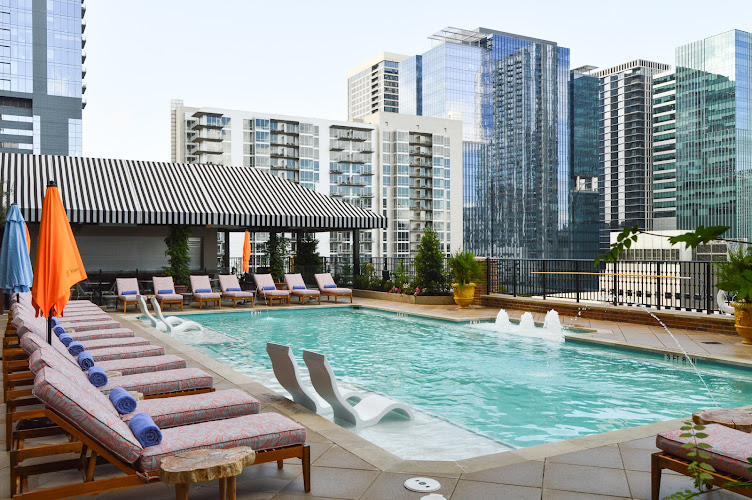
Zilker Metropolitan Park sits at the confluence of Barton Creek and Lady Bird Lake in central Austin, a 351-acre green anchor that has shaped the city’s identity for more than a century. It functions as festival ground, swimming hole, botanical retreat, and daily commuting shortcut all at once, and no single visit captures every layer of what happens inside its borders.
Zilker Metropolitan Park is located at 2100 Barton Springs Road in downtown Austin, Texas, spanning 351 acres along Barton Creek and Lady Bird Lake. Founded in 1917 through a donation by Andrew Jackson Zilker, it hosts Barton Springs Pool, Zilker Botanical Garden, the Zilker Zephyr train, and Austin City Limits Festival. Entry is free except for pool admission ($5-$9) and select attractions; arrive before 9am on weekends to avoid parking congestion.
At A Glance
| Category | Details |
|---|---|
| Address | 2100 Barton Springs Road, Austin, TX 78746 |
| Operating Hours | 5:00 AM – 10:00 PM daily (park grounds); Barton Springs Pool hours vary seasonally |
| Price Range / Admission | Free park entry; Barton Springs Pool $5-$9; parking $5-$25 depending on lot and season |
| Highlights | Barton Springs Pool, Zilker Botanical Garden, Zilker Zephyr miniature train, Barton Creek Greenbelt access, ACL Festival grounds, disc golf course |
| Transport/Transit Access | CapMetro Route 30 and 803 MetroRapid; Barton Springs Rd bike lanes; B-cycle stations on-site |
Deep Origins, Architectural Evolution and Cultural Significance
The land that became Zilker Park carries a history stretching back thousands of years, with archaeological evidence indicating that the area around Barton Springs served as a gathering site for indigenous peoples, including the Tonkawa, who valued the constant 68-degree flow of the springs for both practical and ceremonial purposes. Spanish colonial explorers documented the springs in the 1730s, and the site later became a waypoint for settlers moving through the Texas Hill Country. William Barton, an early Anglo settler, gave his name to both the creek and the springs after establishing a homestead nearby in the 1830s, and by the mid-19th century the springs had already become a local swimming destination.
The park’s formal history begins in 1917, when Andrew Jackson Zilker, a Kentucky-born entrepreneur who made his fortune in Austin’s ice manufacturing business, donated 350 acres of land to the city for $100,000, a fraction of its market value at the time. Zilker had purchased much of the land specifically to protect Barton Springs from private development, and his gift stipulated that the springs remain accessible to the public in perpetuity. Over subsequent decades the Works Progress Administration built much of the pool’s limestone bathhouse and diving board structures during the 1930s, giving the site its enduring architectural character defined by native limestone, cypress shade trees, and minimal built infrastructure that defers to the natural topography.
Culturally, Zilker Park became the epicenter of Austin’s countercultural identity during the 1960s and 1970s, when musicians and activists used Barton Springs as an informal gathering point that helped cement Austin’s reputation as a progressive enclave within Texas. That legacy carries forward today through the park’s role as home to Austin City Limits Music Festival since 2002, an event that draws upward of 450,000 attendees annually across two consecutive weekends in October and generates hundreds of millions of dollars in regional economic activity. The park has also weathered significant environmental battles, particularly the Save Our Springs movement of the late 1980s and 1990s, which successfully limited upstream development to protect water quality in Barton Creek, a fight that remains a touchstone in Austin’s environmental policy debates.
Signature Highlights and Detailed Offerings
Barton Springs Pool remains the park’s defining feature, a three-acre spring-fed swimming pool that maintains a constant temperature between 68 and 70 degrees Fahrenheit year-round, drawing roughly 800,000 to 1,000,000 visitors annually. The pool’s limestone bottom, unaltered since its 1920s construction, distinguishes it from chlorinated municipal pools, and swimmers frequently spot Barton Springs salamanders, an endangered species found nowhere else on earth, along the pool’s edges. Admission runs $5 for Austin residents with proof of residency and $9 for non-residents, with children under 11 free; the pool closes for cleaning on Thursdays.
The Zilker Botanical Garden, a separate 26-acre section with its own $5 admission fee, houses the Taniguchi Japanese Garden, a Prehistoric Garden with life-sized dinosaur sculptures set among cycads, and the Isamu Taniguchi Oriental Garden built in the 1960s by a Japanese-American farmer as a gift to the city. The Zilker Zephyr, a miniature train operating since 1961, loops through the park’s eastern meadow for a nominal $5 fare, a fixture for families with young children. Zilker Hillside Theater hosts free outdoor performances throughout summer, including the long-running Zilker Summer Musical, a tradition since 1959 that stages full-scale productions on a natural amphitheater slope.
The Great Lawn, the park’s expansive open meadow, operates as the primary festival ground for Austin City Limits and doubles as informal recreation space for soccer, frisbee, and picnicking during non-event months. A nine-hole disc golf course threads through the park’s wooded northern edge, and canoe and kayak rentals operate near the Lady Bird Lake boardwalk connection, giving paddlers direct access to Austin’s downtown waterfront skyline views.
Sensory and Spatial Walkthrough
Morning light filters through bald cypress canopies along Barton Creek, casting dappled shadows across limestone outcroppings that flank the pool’s northern edge. Early risers encounter a hushed acoustic environment broken only by cardinals and the soft rush of spring water entering the pool from its source. By mid-morning, the sound profile shifts as families arrive, children’s voices carrying across the water, and the smell of sunscreen and cut grass from Great Lawn maintenance crews mixes with the mineral scent rising off the spring itself.
Afternoon brings peak density, with sunbathers arranged in loose clusters on the pool’s grassy slopes, towels overlapping in a patchwork of color against pale limestone. The botanical garden offers a contrasting sensory register entirely, with the Japanese garden’s koi ponds and stone lanterns creating pockets of near-silence even during the park’s busiest hours. As evening approaches, the Great Lawn’s open sightlines catch extended golden-hour light across downtown Austin’s skyline, a view that has made the park a preferred sunset photography location, particularly from the ridge near the Barton Springs Road entrance looking east toward the Austin skyline reflected in Lady Bird Lake.
Insider Visitor Strategy and Pro Tips
- Arrive before 9:00 AM on weekends between May and September; parking lots along Barton Springs Road and Stratford Drive fill completely by 10:30 AM during peak summer months.
- Barton Springs Pool closes entirely on Thursdays for routine cleaning; plan swimming visits for other days of the week.
- During Austin City Limits Festival weekends in October, the entire park closes to general public access for roughly two weeks total including setup and teardown; check the official ACL schedule before planning a visit that month.
- Bring cash or a card for pool admission; the entrance booths accept both, but lines move faster with exact change during peak hours.
- Glass containers are prohibited within Barton Springs Pool’s fenced area; coolers are allowed on the surrounding lawns but subject to spot checks during large events.
- The best photography window for the skyline-and-water shot from the Great Lawn ridge falls between 7:00 and 7:45 PM in summer, just before sunset paints the water gold.
- Leashed dogs are welcome throughout most of the park but prohibited inside Barton Springs Pool itself and within the botanical garden’s fenced sections.
Curated Half-Day Neighborhood Pairing Itinerary
Begin at Barton Springs Pool for an early swim between 8:00 and 9:30 AM, when the water is calmest and light is softest for photography. Exit through the main entrance onto Barton Springs Road and walk five minutes east to Uchiko or, for a more casual option, Sandy’s Hamburgers, a longstanding walk-up burger and frozen custard stand that has served the neighborhood since 1946, ideal for a quick post-swim snack. From there, continue east roughly ten minutes on foot to the Lady Bird Lake Hike-and-Bike Trail boardwalk entrance, a floating pathway suspended over the lake that offers unobstructed downtown skyline views and connects directly back into Zilker’s eastern meadow. Close the loop with a stop at the South Congress Avenue shopping corridor, roughly a twelve-minute walk or five-minute rideshare from the park’s eastern edge, where independent shops like Allens Boots and Big Top Candy Shop provide a final stop before heading back downtown.
Practical Logistics and Universal Accessibility
CapMetro Route 30 stops directly along Barton Springs Road at the park’s main entrance, while MetroRapid Route 803 stops within a ten-minute walk at the South Lamar/Barton Springs intersection. Austin B-cycle maintains docking stations at three points within the park, including one adjacent to the pool entrance and one near the botanical garden. Parking is available in three main lots off Barton Springs Road and Stratford Drive, with rates ranging from $5 for short visits to $25 during major event days; metered street parking along adjacent residential streets requires attention to posted resident-only restrictions.
Accessibility accommodations include paved, step-free pathways connecting the main parking areas to Barton Springs Pool, the botanical garden entrance, and the Great Lawn. The pool itself provides an ADA-compliant lift for entry into the water, located near the bathhouse on the pool’s northern side. Restrooms with accessible stalls are located at the bathhouse, near the botanical garden entrance, and adjacent to the Zilker Zephyr train station. No formal dress code applies anywhere in the park; swimwear is required inside Barton Springs Pool itself, and casual attire is standard throughout the grounds. Cash and card payments are both accepted at pool admission booths, the botanical garden ticket window, and the Zephyr train ticket counter.
Practical Visitor FAQs
Is Barton Springs Pool open year-round? Yes, though hours shorten in winter and the pool closes each Thursday for cleaning; check the Austin Parks and Recreation website for seasonal schedule updates before visiting.
Is Zilker Park free to enter? General park access is free; only Barton Springs Pool ($5-$9) and Zilker Botanical Garden ($5) charge separate admission fees.
Can I bring a dog to Zilker Park? Leashed dogs are permitted throughout most park grounds but are not allowed inside Barton Springs Pool or the botanical garden.
When does Austin City Limits Festival close the park? ACL Festival occupies the Great Lawn across two consecutive weekends in early October, with the broader park experiencing partial closures for roughly two weeks including setup and breakdown periods.
Where is the best parking near Barton Springs Pool? The lot directly off Barton Springs Road at the pool’s main entrance is closest, though it fills quickly on summer weekends; the Stratford Drive lot offers a secondary option roughly a five-minute walk away.
Is swimming at Barton Springs safe for children? Yes, the pool includes a shallower section near the diving board area suitable for children, though lifeguards recommend close supervision given the pool’s natural, unheated spring-fed depth variations.