Whalers Museum, or Museu dos Baleeiros, is a maritime-history museum at Rua dos Baleeiros 13, 9930-143 Lajes do Pico, Portugal, in the town’s waterfront historic center. Opened in 1988, it occupies three nineteenth-century whaling boathouses and an adjoining blacksmith’s forge. Travelers come to understand Pico’s small-boat sperm-whale hunts, the craftsmanship behind them, and the working lives of islanders whose livelihoods depended on the Atlantic.
What to Expect at Whalers Museum
The buildings are part of the collection: these were places where whaling boats and equipment were kept, not a whale-processing factory. Their modest maritime architecture gives the displays an unusually direct connection to the waterfront outside. The traditional Azorean whaleboat is the central object to study, alongside harpoons, lances, ropes, and other hunting equipment. These narrow, open boats carried crews close enough to strike whales by hand, exposing the physical danger behind an industry sometimes reduced to nostalgic photographs.
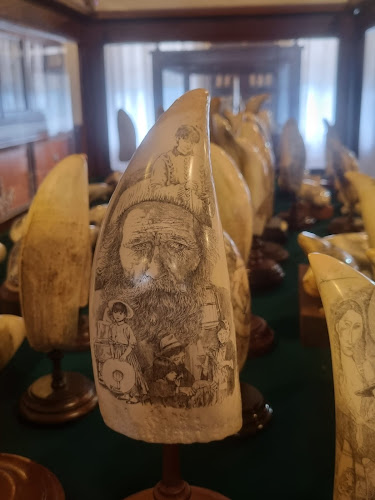
The collections extend beyond the hunt into boatbuilding, metalworking, navigation, and decorative craft. Look closely at the scrimshaw: engraved whale teeth and bone reveal the drawing skills and patient workmanship associated with maritime life. Photographs, documents, and boat models place individual objects within the wider island economy. The museum’s historical documentary, The Last Whalers, adds movement and human scale to the equipment; ask when it will screen. Expect hunting imagery rather than a whale-watching interpretation center, and allow time to discuss that distinction with children.
- Azorean whaleboat: Examine the slender hull and open working space that shaped the crew’s movements during a hunt.
- Hunting equipment: Harpoons and lances explain different stages of the pursuit and the dependence on skilled manual labor.
- Scrimshaw collection: Engraved teeth and worked bone connect the whaling economy with a distinctive maritime decorative tradition.
- Blacksmith’s forge: The adjoining workshop anchors the story of manufacturing and maintaining essential metal equipment.
- Historic film: Documentary footage provides a useful counterpoint to the still photographs, models, and carefully displayed tools.
Whalers Museum at a Glance
| Detail | Information |
|---|---|
| Address | Rua dos Baleeiros 13, 9930-143 Lajes do Pico, Portugal |
| Neighborhood / Area | Historic waterfront, Lajes do Pico, southern Pico Island |
| Operating Hours | Tuesday–Sunday, 10:00–17:30; Monday closed. Check seasonal and holiday arrangements before traveling. |
| Admission / Price Range | Paid admission; $ budget tier. Consult the official museum website for current tickets and concessions. |
| Recommended Visit Duration | 60 to 90 minutes, including the documentary |
| Nearest Transit / Parking | Lajes do Pico town-center bus services; public parking around the waterfront, subject to availability |
| Official Website & Phone | Whalers Museum official website; +351 292 679 340 |
Visiting Tips, Getting There & Nearby Pairings
Arrive near 10:00 to give the boat and equipment displays an unhurried first look, then fit the smaller objects around the film screening. Contact the museum ahead for group visits or guided interpretation; ask reception about audio options, photography restrictions, and where to leave bulky bags. Buy souvenirs or plan a café stop around the town center rather than relying on an on-site shop or café. Public buses connect Lajes with other Pico settlements, including the south-coast route toward Madalena via São Mateus; services are limited, so establish the return departure before setting out. Drivers should use marked public waterfront spaces and leave working harbor access clear.
The museum occupies interconnected historic boat sheds and a forge, so visitors using wheelchairs or larger strollers should telephone about entrance thresholds, internal circulation, and accessible toilets before arrival. Do not assume every part of the historic complex has the same access arrangements. Outside, allow for uneven paving and wet waterfront surfaces. Pair the museum with the harbor and boat-launching waterfront, roughly five minutes away, to connect the exhibits with their setting. The Lajes natural swimming area and Forte de Santa Catarina make additional walks of approximately 10–15 minutes; swimming depends on sea conditions, while the fort adds a separate layer of coastal-defense history.
Frequently Asked Questions
What are the opening hours and best arrival time?
The listed hours are Tuesday through Sunday, 10:00–17:30, with Monday closure. Arrive at opening for a leisurely circuit, and check seasonal or public-holiday changes before making a special journey.
Is admission free, and should I reserve?
Admission is paid and falls in the budget price tier. Check the official website for current rates and concessions, and contact the museum directly to arrange groups or guided visits.
How long should I spend at the museum?
Budget 60–90 minutes for the collections and documentary. Add another half-hour for a waterfront walk that puts the boathouses and former working harbor into context.
Is the museum suitable for children?
Boats, tools, and models give school-age children plenty to examine. Historical hunting footage can be upsetting, so adults should ask about the screening’s content before watching with younger children.
When planning your Azores travel guide or comparing verified attractions and museums in Azores, pair this stop with standout local spots including Hotel Verde Mar & Spa, Taberna na Boavista, Cascata da Ponta do Arnel, and Lava Homes (11.2 km away).