
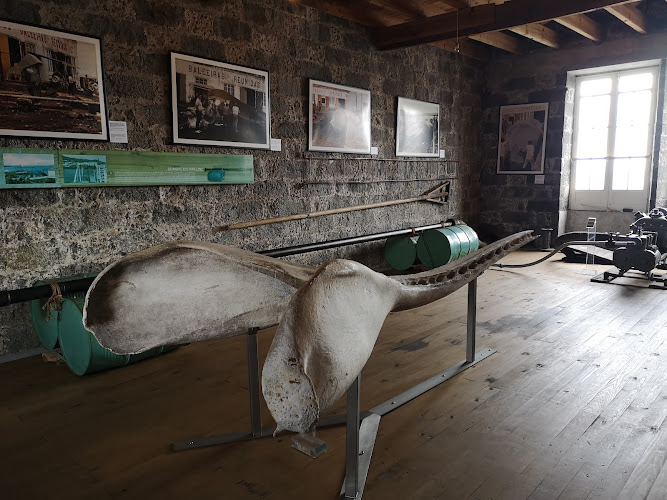
Whaling Industry Museum is an industrial-history museum at Rua do Poço, 9940-361 São Roque do Pico, in the town’s waterfront factory district on Pico’s north coast. Occupying the former Armações Baleeiras Reunidas sperm-whale processing plant, which operated from 1946 to 1984, it explains how whaling supported island livelihoods. Opened as a museum in 1994, it draws visitors for its original machinery and unusually direct account of the industry behind whale oil, meal, and other commercial products.
What to Expect at Whaling Industry Museum
Known locally as the Museu da Indústria Baleeira, this branch of Museu do Pico preserves a workplace rather than recreating one. Large processing vessels, boilers, furnaces, and mechanical equipment occupy the former production spaces. The utilitarian factory architecture matters: broad working areas and the prominent chimney reveal the scale of an operation that depended on landing enormous animals beside the sea. This was the Azores’ first public industrial museum, and the machinery remains its principal collection.
Follow the production sequence, beginning with the waterfront context before examining the equipment used to render blubber and process the remaining carcass. Oil and meal production show how thoroughly the animals were exploited, while historical interpretation connects the machines with the people who worked here. Unlike the Whalers’ Museum in Lajes do Pico, whose emphasis includes boats and hunting traditions, São Roque concentrates on shore-based processing. The subject is confronting rather than celebratory; allow time to discuss the difference between historical subsistence, industrial production, and today’s whale-watching economy.
- Original processing vessels: Large industrial containers explain the transformation of sperm-whale material into commercially valuable products.
- Boilers and furnaces: Heat-generating equipment makes the factory’s energy demands and working conditions tangible.
- Oil and meal production machinery: Preserved equipment traces two important outputs of the former plant.
- Factory chimney and production halls: Functional architecture distinguishes this visit from a conventional maritime gallery.
- Harborside setting: The relationship between landing place and factory helps explain why this industrial complex developed here.
Whaling Industry Museum at a Glance
| Detail | Information |
|---|---|
| Address | Rua do Poço, 9940-361 São Roque do Pico, Portugal |
| Neighborhood / Area | São Roque waterfront, northern Pico Island |
| Operating Hours | Tuesday–Sunday, 10:00–17:30; Monday closed. Check seasonal and public-holiday arrangements. |
| Admission / Price Range | Paid admission; $ budget tier. Consult Museu do Pico for current tickets and concessions. |
| Recommended Visit Duration | 45 to 75 minutes |
| Nearest Transit / Parking | São Roque on the Madalena–São Roque coastal bus corridor; public parking around the waterfront, subject to local signs. |
| Official Website & Phone | Museu do Pico official website; +351 292 679 349 |
Visiting Tips, Getting There & Nearby Pairings
Arrive near 10:00 for an unhurried circuit, especially when fitting the museum into a drive along Pico’s north coast. Individual travelers can plan around the regular opening window; groups should telephone ahead about admission arrangements and guided interpretation. Ask reception about English-language material, photography restrictions, and where to leave bulky bags before entering the machinery areas. Do not depend on an audio guide, café, or substantial shop for your visit; plan refreshments along the waterfront instead. Pico’s buses are infrequent, so check both outward and return journeys before relying on public transport.
Drivers should use marked public spaces near the waterfront without blocking harbor operations. This is a preserved factory with fixed machinery, not an open-plan contemporary gallery: wheelchair users should telephone about the step-free entrance route, thresholds, accessible toilets, and any restricted sections. Keep children and strollers clear of equipment and narrow passages. Nearby, the Convent of São Pedro de Alcântara makes a short architectural detour, while the Cais do Pico waterfront extends the maritime theme; allow roughly 5–15 minutes on foot, depending on your endpoint. Wind and rain can make the exposed coastal walk less comfortable than the indoor visit.
Frequently Asked Questions
What are the opening hours and best arrival time?
The regular schedule is Tuesday through Sunday, 10:00–17:30, with Monday closure. Aim for opening time and check the official website before holiday or winter visits.
How much does admission cost, and should I reserve?
This is a paid, budget-tier museum; consult the official website or telephone for current admission and concessions. Contact the museum ahead for organized groups or a guided visit.
How long should I spend inside?
Allow 45–75 minutes for the machinery and historical interpretation. Industrial-history enthusiasts may prefer 90 minutes to follow the processing sequence carefully.
Is the museum suitable for children?
School-age children interested in machinery and maritime history can find plenty to examine. Whale processing involves animal death, so prepare sensitive visitors and supervise children around the preserved industrial equipment.
When planning your Azores travel guide or comparing verified attractions and museums in Azores, pair this stop with standout local spots including Tasquinha Vieira, Restaurante NACIONAL, Vila Gale Collection S. Miguel, and Furna do Frei Matias (11.6 km away).


