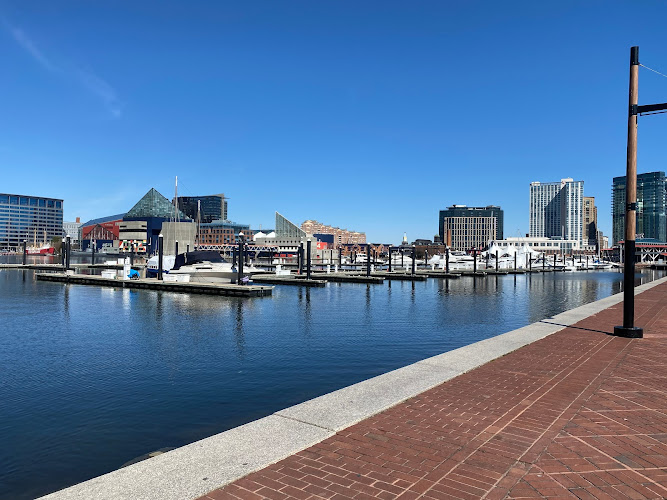
Fort McHenry National Monument and Historic Shrine is a waterfront military landmark at 2400 E Fort Avenue in Baltimore’s Locust Point neighborhood. Built between 1798 and 1802, the five-pointed brick fort withstood the British bombardment of September 13–14, 1814, inspiring Francis Scott Key’s words to “The Star-Spangled Banner.” Travelers come to explore its barracks, artillery positions, and harbor-facing ramparts, then walk the shoreline where Baltimore’s maritime geography makes the battle easier to understand.
What to Expect at Fort McHenry National Monument and Historic Shrine
Begin at the visitor center for exhibits and the orientation film explaining the Battle of Baltimore, then follow the approach into the star fort. Designed by French military engineer Jean Foncin and named for Secretary of War James McHenry, the fort uses projecting bastions to create overlapping fields of defensive fire. Inside, brick buildings around the parade ground contain furnished military spaces and historical displays. Look for the soldiers’ barracks, officers’ quarters, and powder magazine rather than treating the ramparts as simply a viewpoint.
The flagstaff anchors the experience: the enormous garrison flag sewn by Mary Pickersgill became the symbol Key saw after the attack. The original flag is preserved at the Smithsonian in Washington, not here. Ranger talks and scheduled Fort McHenry Guard weapons demonstrations add context, while flag-changing programs sometimes invite visitor participation. Beyond 1814, interpretation follows the site’s use as a Civil War military prison and its transformation into a large Army hospital during World War I.
- Five-pointed star fort: Trace the bastions and see how their angled walls protected the harbor approach.
- Historic barracks: Explore military living spaces arranged around the compact parade ground.
- Flagstaff and flag programs: Connect Pickersgill’s flagmaking with Key’s account of the bombardment.
- Harbor-side walking paths: Follow the peninsula’s shoreline for views of working waterfronts and passing vessels.
- Orpheus monument: Find Charles Niehaus’s sculptural tribute to Key and the fort’s defenders outside the star fort.
Fort McHenry National Monument and Historic Shrine at a Glance
| Detail | Information |
|---|---|
| Address | 2400 E Fort Avenue, Baltimore, MD 21230 |
| Neighborhood / Area | Locust Point, South Baltimore |
| Operating Hours | Monday–Sunday, 9 a.m.–5 p.m.; interior areas may close earlier. Check holiday schedules and alerts. |
| Admission / Price Range | $; outer park grounds free, historic zone paid for ages 16 and older; children 15 and younger free. |
| Recommended Visit Duration | 1.5 to 2.5 hours |
| Nearest Transit / Parking | Maryland Transit Administration bus 94 to Fort McHenry; free on-site parking. |
| Official Website & Phone | Official National Park Service website; +1 410-962-4290 |
Visiting Tips, Getting There & Nearby Pairings
Arrive near opening to combine the film, fort interiors, and shoreline before midday heat. Check the official visit planner for ranger programs; demonstrations are scheduled events, not continuous attractions. Bus 94 reaches the park entrance, with a further walk to the visitor center. Drivers can use the free visitor lot. Bring water, sun protection, and a windproof layer: the exposed peninsula can feel considerably cooler than downtown.
The visitor center has accessible restrooms, and paved paths provide wheelchair and stroller access across much of the grounds. Historic brick surfaces are uneven, while some elevated defensive positions require steps; prioritize the ground-level fort route if stairs are difficult. Pair the fort with the Orpheus monument and the waterfront seawall, both short walks within the park. For a neighborhood extension, Latrobe Park’s recreation grounds are roughly a 15-minute walk from the entrance, longer from the visitor center. Picnic outside the historic zone; leashed pets belong on the outer grounds, not inside the star fort.
Frequently Asked Questions
What are the hours, and when is the best time to visit?
Regular grounds hours are 9 a.m.–5 p.m. daily, with interior closing times and holiday exceptions posted by the park. Morning is best for a complete visit; choose a scheduled ranger program if historical interpretation is your priority.
Is Fort McHenry free, and do I need reservations?
The outer grounds are free, but the historic zone charges admission for visitors aged 16 and older. Ordinary individual visits do not require timed reservations; check the official website for current fees and arrangements for organized groups.
How long should I spend at Fort McHenry?
Allow 1.5 to 2.5 hours for the visitor center, fort, and a waterfront walk. Add time for a ranger talk, weapons demonstration, or picnic.
Is the fort suitable for families and wheelchair users?
Families can combine historical exhibits with outdoor walking and the Junior Ranger program. Accessible visitor facilities and paved routes support many mobility needs, but uneven masonry and stairs limit access to some historic features.
When planning your Baltimore travel guide or browsing verified attractions in Baltimore, pair this stop with standout local spots including The Maryland Zoo in Baltimore, B&O Railroad Museum, Charleston, and Star-Spangled Banner National Historic Trail (0.2 km away).