

Disposable cameras can get ruined by airport security, and the risk is higher in 2026 than it was even a couple of years ago. The TSA has installed more than 1,160 new CT (computed tomography) scanners at close to 300 U.S. airports, and unlike the older 2D X-ray machines, a single pass through a CT scanner can fog or destroy undeveloped film of any ISO. Checked luggage is worse: TSA has confirmed that its high-powered checked-bag scanners can completely ruin undeveloped film, including film already loaded inside a camera. The fix is simple: keep your disposable camera in your carry-on and ask for a hand inspection at the checkpoint.
Affiliate disclosure: this article includes one Amazon affiliate link. If you buy through it, we may earn a small commission at no extra cost to you.
Quick Answer
| Scenario | Risk to film |
|---|---|
| Carry-on, standard 2D X-ray | Low for ISO 800 and under, but not guaranteed |
| Carry-on, newer CT scanner | High, can fog film in a single pass regardless of ISO |
| Checked baggage, any scanner | Very high; TSA confirms checked-bag scanners can destroy undeveloped film |
| Carry-on with a requested hand inspection | Lowest risk; film skips the scanner entirely |

Do Disposable Cameras Get Ruined at Airport Security?
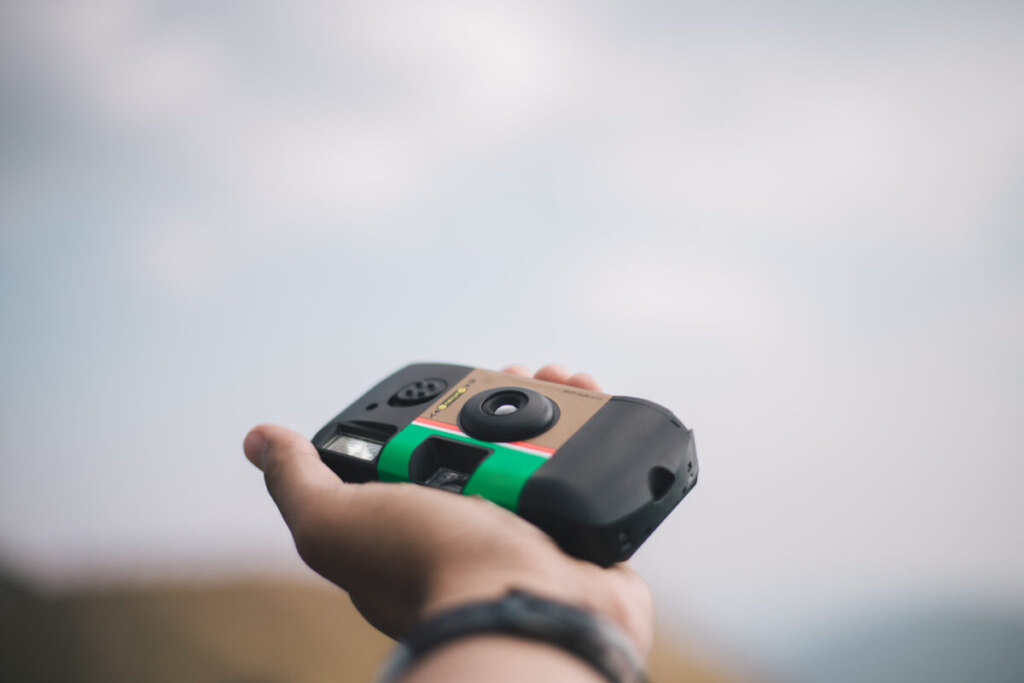
Yes, it’s possible, and the film inside a disposable camera is more exposed than film in a metal canister, so it has less protection against the radiation and imaging technology used to screen bags. Whether your film actually comes out fogged, streaked, or fine depends on which type of scanner it passes through and how many times it gets scanned, not on luck.
The film inside disposable cameras is more sensitive than regular film because it lacks the protection of a metal canister, so it can pick up damage that a canister-protected roll would not. That damage shows up as fogging (a hazy, washed-out look), streaking, or, in the worst cases, completely blank frames after the film is developed. This is a real and documented problem for travelers who shoot film, not just an occasional bad-luck story.
Passing film through airport security screening has been routine for decades, and older 2D X-ray machines are generally considered safe for film at ISO 800 or below if it only passes through once or twice. What has changed the calculation for 2026 is the CT scanner rollout described below, which raises the risk regardless of film speed.
Related: Power Outages at Major Airports: What Travelers Need to Know and Do
Why New CT Scanners Change the Old Advice

As of early July 2026, the TSA had installed more than 1,160 CT scanning units across nearly 300 U.S. airports, and the rollout is ongoing. These are the same 3D scanners that let passengers keep laptops in their bags, and they work by rotating multiple X-ray beams around your carry-on to build a detailed 3D image, which is far more powerful than a standard 2D X-ray. A TSA spokesperson has confirmed that undeveloped film, including film already loaded into a camera, can be ruined by this equipment, and testing by Kodak with the TSA at JFK showed visible fogging on Portra 400 film after a single pass.
The old rule of thumb, that film under ISO 800 is safe through a standard checkpoint X-ray, no longer holds once a CT scanner is involved. Higher-speed film is still more vulnerable, but a CT scanner can fog film of any speed in a single pass. Checked baggage is scanned by an even more powerful CT system, and TSA has confirmed that undeveloped film in checked bags can be completely destroyed, not just fogged. If you are flying with a disposable camera or any unprocessed film, plan to keep it in your carry-on and never in checked luggage.
Not every airport has a CT scanner installed yet, and older checkpoints still use standard 2D X-ray machines. Since you generally cannot tell which type of scanner is at a given checkpoint before you reach it, the safest approach in 2026 is to assume a CT scanner is possible and request a hand inspection rather than relying on the older ISO 800 guidance.
The Science: How Scanners Damage Film

Airport X-ray machines use radiation to see through bags, and film is sensitive to that same radiation. When X-rays pass through a roll of film, they interfere with the silver halide particles the film is coated with. That interference alters how the particles react during developing, which is what produces the fogging or streaking on your prints.
Standard checkpoint X-ray machines typically operate at 50 to 150 kiloelectron volts, and CT scanners use a higher effective dose because they take many X-ray images from different angles to build a 3D picture. The amount of damage depends on the scanner type, how many times the film is scanned, and the film’s own speed (ISO), but with CT scanners, even a single pass at any ISO carries real risk.
How to Protect Your Disposable Camera Film

Three habits meaningfully cut the risk to your film, and the first one matters most now that CT scanners are common.
Request a Hand Inspection

Ask a TSA officer to hand-inspect your disposable camera instead of sending it through the X-ray or CT scanner. This is the single most reliable way to protect the film, since it skips scanning entirely rather than relying on an ISO threshold that no longer holds for CT machines. Arrive 15 to 20 minutes earlier than usual to leave time for the hand inspection, and ask before your bag reaches the belt, not after.
A lead-lined bag will not solve this for you: it shows up on the scanner as an opaque block, so the operator either turns up the scanner’s power to see through it or simply pulls your bag for a manual search anyway. Skip the lead bag and go straight to requesting a hand inspection, which gets you the same manual check without the extra step.
Keep the Camera in Your Carry-On

Never pack film or a loaded disposable camera in checked luggage. Checked-bag scanners are more powerful than checkpoint scanners and, per TSA’s own confirmation above, can completely destroy undeveloped film rather than just fogging it. Keep the camera in your carry-on, in a protective case, so it stays with you through the checkpoint where you can ask for a hand inspection.

Waterproof disposable cameras go through the same TSA screening process as standard ones. Being waterproof protects the camera from moisture and drops, not from X-rays or CT scanning, so the same hand-inspection advice applies regardless of which disposable camera model you’re carrying.
Choosing Luggage and a Camera Case for the Trip

Once you’ve decided to carry your disposable camera on rather than check it, the bag and case you use it in still matter for protecting it from bumps and pressure in the overhead bin.
Impact Resistance
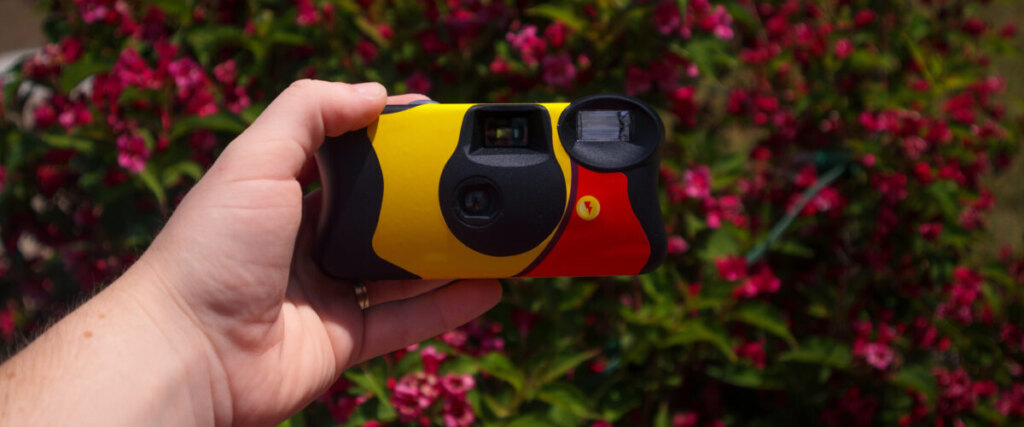
Carry-on shell material affects how well your bag, and the camera inside it, survives being handled and stacked in the overhead bin:
| Material | Impact Resistance |
|---|---|
| Polycarbonate | 1500-2000 PSI |
| Aluminum | 30,000-40,000 PSI |
| ABS plastic | 500-700 PSI |
ABS plastic offers less protection than aluminum, but the bag’s design and build quality matter as much as the raw material.
Weight and Dimensions

Carry-on size and weight rules vary slightly by airline, but these are typical:
- Softside bags: 5-7 lbs
- Hardside bags: 7-10 lbs
Standard carry-on dimensions:
- U.S. domestic: 22″ x 14″ x 9″
- International: 21.7″ x 13.8″ x 9″
TSA-Approved Locks

A TSA-approved lock lets security officers open your bag with a master key for inspection without cutting the lock off, which keeps your bag secure the rest of the time. Combination and key versions are both widely available.
Camera Case Protection
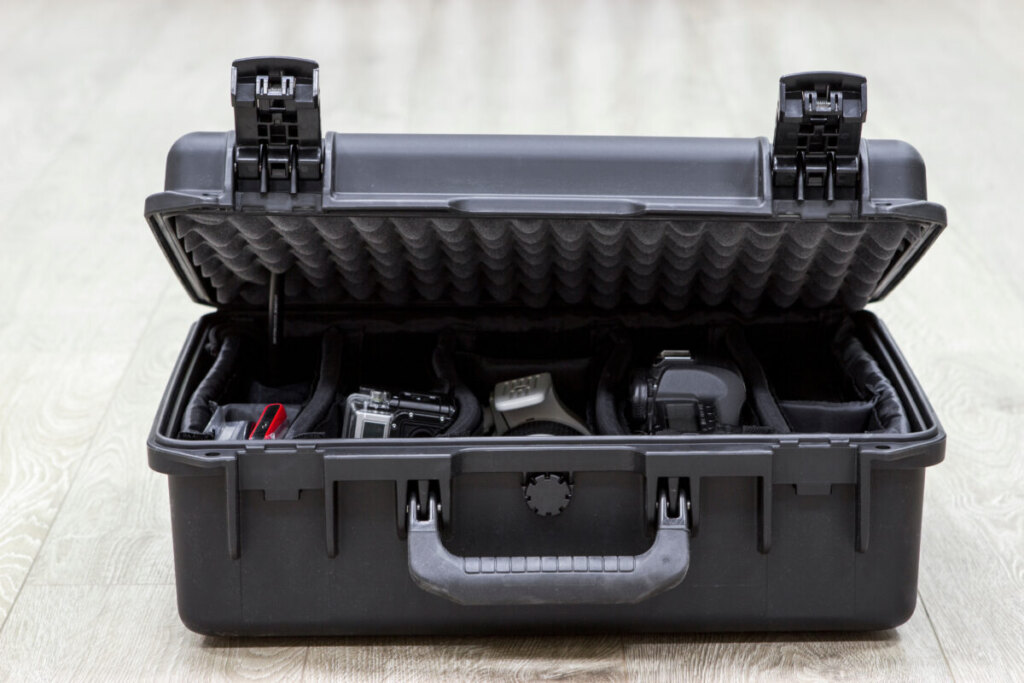
A dedicated camera case adds a layer of protection on top of your bag:
- Hardshell cases: typically pass a 5-10 ft drop test
- Soft padded cases: typically pass a 3-5 ft drop test
Pairing a sturdy carry-on with a padded or hardshell camera case cuts the risk of the physical damage that happens from drops and jostling, separate from the X-ray/CT risk covered above.
Handling and Care During Travel

Traveling with a disposable camera means a few extra care habits beyond the airport, whether you’re trekking or relaxing on a beach.
Avoid Extreme Heat and Humidity
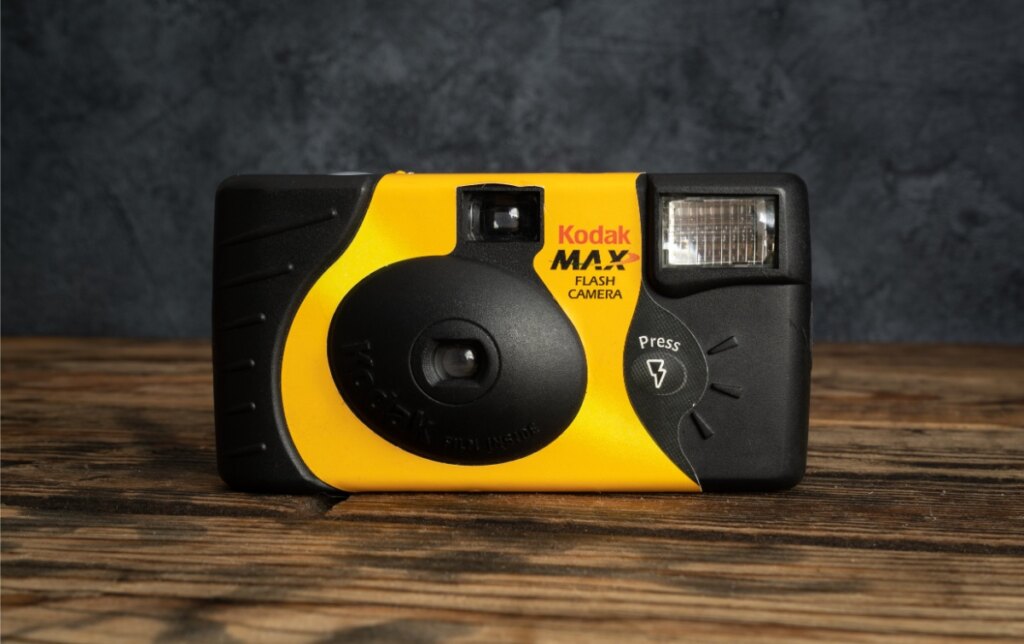
High heat and humidity can damage film and produce blurry, discolored images. Avoid leaving the camera in direct sun or a hot car, and consider packing a silica gel packet in the case to absorb moisture.
Store It Away From Chemicals and Impacts
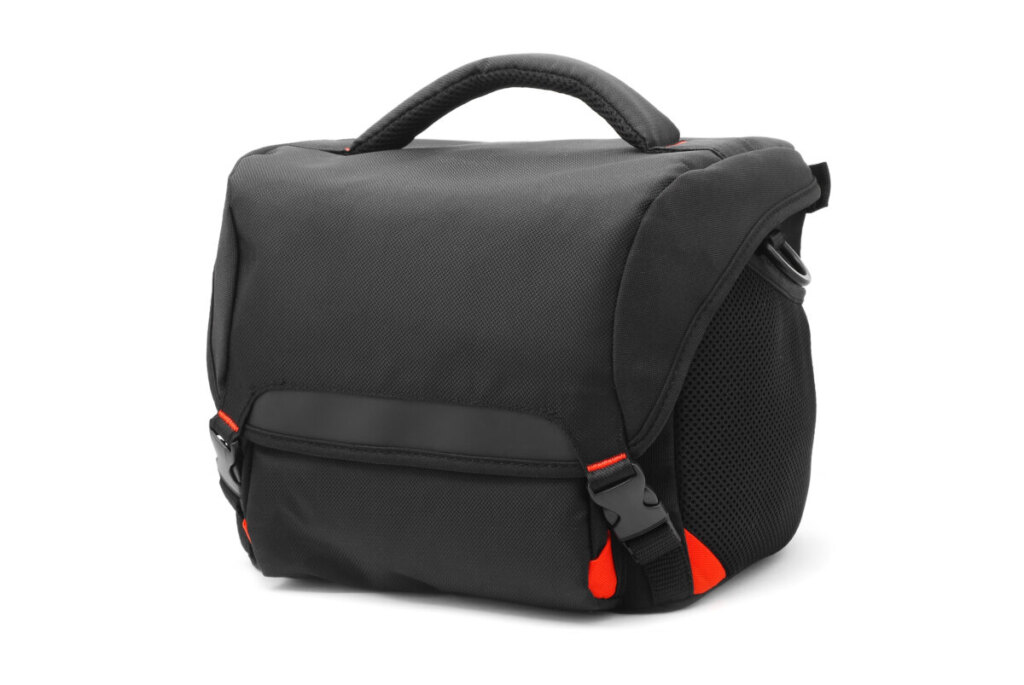
Keep the camera in its own padded pocket rather than loose in your bag. Sunscreen, insect repellent, and other liquids can leak and transfer chemicals onto the camera body, so store it away from those items. A small padded pouch is enough to keep it cushioned during a bumpy transfer or a long day of walking.
Alternatives to a Disposable Camera
If you’d rather avoid the scanner risk altogether, digital and smartphone cameras offer an alternative that isn’t affected by airport X-ray or CT scanners at all, since there’s no film to fog.
Digital cameras: compact point-and-shoots and mirrorless or DSLR models give you manual control over exposure and focus, let you review and delete shots on the spot, and store far more images on a memory card than a 27- or 39-exposure disposable camera ever could.
Smartphone cameras: modern phone cameras have improved enough to cover most everyday travel photography, and you already carry one. Editing apps let you adjust shots without any extra gear.
A digital camera with interchangeable lenses suits travelers who want manual control for wildlife, sports, or low light. A smartphone covers convenience and portability better for everyday scenery and street shots. Either way, you skip the film-scanning risk entirely.
FAQ
Does checked luggage always ruin disposable camera film now?
Not every checked bag runs through a CT scanner yet, but TSA has confirmed that its checked-baggage CT scanners can completely destroy undeveloped film. Since you can’t tell which scanner your bag will hit, treat checked luggage as a real risk and keep film-based cameras in your carry-on instead.
Is film under ISO 800 still safe from airport scanners?
That guidance still applies to older 2D X-ray machines, but it does not apply to the newer CT scanners now installed at close to 300 U.S. airports. A CT scanner can fog film of any ISO in a single pass, so the safest move is to request a hand inspection rather than rely on your film’s speed.
Can I still request a hand inspection for my disposable camera?
Yes. TSA officers can hand-inspect film and film cameras at U.S. checkpoints on request, the same option available for other carry-on items with special handling needs. Ask before your bag goes onto the belt, and build in an extra 15 to 20 minutes so the request doesn’t make you late.
Do waterproof disposable cameras get damaged differently?
No. Waterproof housings protect against water and drops, not against X-rays or CT scanning. Waterproof disposable cameras go through the same screening and carry the same film risk as standard ones.
Sources
- TSA CT scanner rollout and checked-baggage film damage confirmation, reported by The Hill and TheTravel, 2026
- Kodak/TSA CT scanner film test at JFK Airport, reported by Kubus Photo, 2026
- How airport X-ray machines work, HowStuffWorks
Last updated: July 2026. This article was refreshed to reflect the TSA’s 2026 CT scanner rollout and its confirmation that checked-baggage scanners can destroy undeveloped film; the earlier ISO-800/lead-bag advice has been corrected accordingly.


