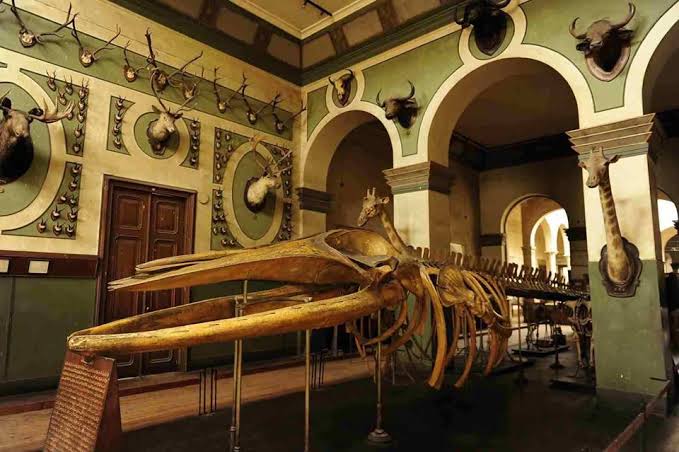
The Agricultural Museum is Egypt’s national museum of farming, rural life and agricultural science at 1 Agricultural Museum Street, Dokki, Giza Governorate 12611, Egypt. Established in 1930 in the former palace and grounds of Princess Fatma Ismail, it developed into a multi-building complex documenting how cultivation along the Nile shaped Egyptian food, trade and daily life. Travelers come for its unusually broad record of ancient farming, cotton, livestock, irrigation and traditional tools, as well as the historic palace setting.
What to Expect at The Agricultural Museum
The museum is spread through several early-20th-century buildings rather than one compact gallery. Start in the main museum, where displays trace agricultural life from Pharaonic Egypt through later rural traditions and mechanized farming. Look for ploughs, sickles, water-lifting devices, grain-processing implements, seed and crop specimens, scale models and scenes illustrating fieldwork. The former princess’s palace gives the visit an architectural dimension: rooms and corridors retain the proportions and decorative character of a grand residential estate, in contrast to the practical subject matter of the collections.
Specialist sections focus on Egypt’s plant and animal wealth. The Cotton Museum explains the crop’s central place in the country’s modern agricultural economy, while galleries on animal production and veterinary subjects include livestock-related material and specimens. Exhibits devoted to ancient Egyptian agriculture connect tomb and temple imagery of sowing, harvesting and Nile-based irrigation with the tools and crops that sustained settlement. Allow time to walk between the buildings and through the landscaped grounds; this is a museum to explore at an unhurried pace, not a single-room stop.
- Former Princess Fatma Ismail palace: Explore a museum complex founded on a royal estate dating from the early 20th century.
- Ancient Egyptian agriculture: See interpretations of cultivation, harvesting and irrigation practices that underpinned life on the Nile.
- Cotton collections: Learn why Egyptian cotton became a defining export and agricultural crop.
- Traditional farm equipment: Examine hand tools, ploughs, water-lifting devices and rural-work displays.
- Plant and animal wealth galleries: Follow Egypt’s crop, livestock and agricultural-science story across specialist museum sections.
The Agricultural Museum at a Glance
| Detail | Information |
|---|---|
| Address | 1 Agricultural Museum Street, Dokki, Giza Governorate 12611, Egypt |
| Neighborhood / Area | Dokki, on the west bank of Greater Cairo |
| Operating Hours | Saturday–Thursday, 9am–3pm; closed Friday |
| Admission & Ticket Prices | Paid admission; current ticket prices are not published online. Confirm the rate at the entrance before visiting. |
| Recommended Visit Duration | 1.5 to 2.5 hours |
| Nearest Transit / Parking | Dokki Metro Station (Line 2) is the closest practical stop; limited street parking is available around the museum perimeter. |
| Official Website / Phone | Egyptian Ministry of Agriculture and Land Reclamation; no dedicated public museum phone is listed. |
Visiting Tips, Getting There & Nearby Pairings
Arrive close to the 9am opening, especially in warmer months, to leave enough time for the dispersed galleries before the 3pm closing time. Tickets are normally handled at the museum rather than through a timed online reservation system, so carry Egyptian pounds and verify the day’s admission policy at the gate. From Dokki Metro Station on Metro Line 2, use a taxi or ride-hailing car for the short onward journey, or walk if conditions are comfortable. Drivers should expect limited on-street spaces and should not rely on parking inside the historic grounds.
The site’s palace-era buildings, thresholds, steps and garden paths can make a full visit difficult for independent wheelchair users and strollers. The grounds are more manageable than every interior, but do not assume step-free routes, elevators or accessible toilets across the complex; ask staff at arrival to identify the most practical galleries. Pair the visit with the cafés and restaurants around Mesaha Square and Mohy El Din Abu El Ezz Street, both within roughly 10–15 minutes on foot. Dokki Club and its surrounding streets are also nearby for a quieter local walk.
Frequently Asked Questions
What are The Agricultural Museum’s hours and the best time to visit?
The museum opens Saturday through Thursday from 9am to 3pm and is closed on Friday. Go at opening for cooler grounds, quieter galleries and enough time to see more than the main building.
How much are tickets, and do I need a reservation?
Admission is paid, but a current public price list is not available online. Individual visitors generally buy entry at the museum; confirm prices, payment methods and any group arrangements when you arrive.
How long should I budget for the museum?
Plan 1.5 to 2.5 hours. A shorter visit can cover the principal historical displays, but the specialist cotton, plant and animal sections and the grounds reward a slower circuit.
Is The Agricultural Museum suitable for families and wheelchair users?
Families interested in animals, crops and hands-on historical objects will find clear visual material, though younger children may need breaks between buildings. Wheelchair and stroller access is uneven because of steps, thresholds and garden surfaces; request an accessible route from staff at the entrance.
When planning your Cairo travel guide or browsing verified museums in Cairo, pair this stop with standout local spots including Tree Lounge Cairo Tower Branch, Synagogue Ben Ezra, تلللاتلللباغ, and Pyramisa Suites Hotel Cairo (1.1 km away).