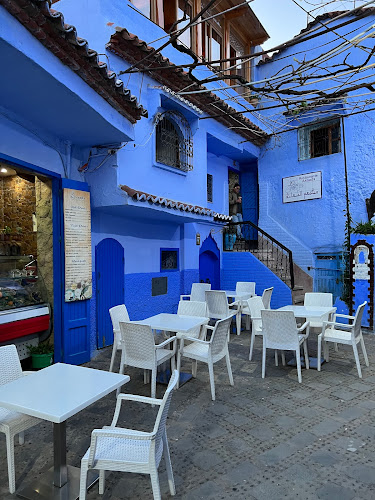
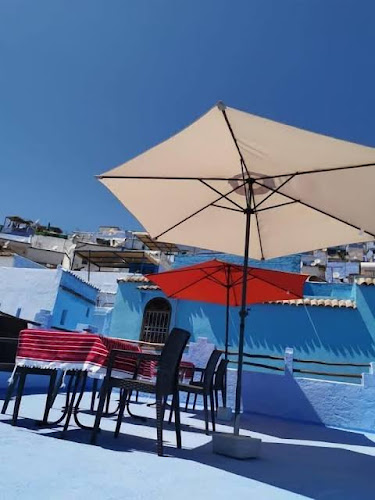
Chefchaouen Medina is the blue-painted historic quarter centered around 5P9R+W2V, Chefchaouen, Morocco, in the old Medina beneath the Rif Mountains. Founded in 1471 by Moulay Ali Ben Rachid as a fortified base against Portuguese incursions, it later absorbed Andalusian and Morisco traditions that shaped its whitewashed lanes, tiled doorways and intimate courtyard houses. Travelers come to wander its steep pedestrian passages, photograph the blue facades, shop for Rif crafts and pause in the café-lined central square.
What to Expect at Chefchaouen Medina
The medina is a living residential district rather than a ticketed attraction, enclosed in parts by old defensive walls and reached through gateways such as Bab el Ain. Its signature blue ranges from powdery sky tones to deep indigo, applied across walls, steps, planters and carved wooden doors. The color has become the city’s visual calling card, while the built fabric reflects a mix of mountain Berber, Andalusian and Moroccan Islamic traditions. Start at Place Outa el Hammam, the broad, stone-paved square at the medina’s heart, then follow the uphill lanes toward Ras el Maa.
At Place Outa el Hammam, the ochre walls of the 15th-century Kasbah contrast sharply with the surrounding blue streets. The Kasbah contains Andalusian-style gardens and a small ethnographic collection, and its tower looks across the roofs and surrounding slopes. Nearby, the Grand Mosque is recognizable by its unusual octagonal minaret; visitors should admire it from outside unless entering for worship. Souks in the lanes around the square sell handwoven wool blankets, striped djellabas, leather slippers, painted ceramics, spices and local goat cheese. Bargaining is customary in many small shops, so take time to compare workmanship rather than buying at the first display.
- Place Outa el Hammam: The social center of the old town, lined with café terraces and framed by the Kasbah and Grand Mosque.
- Chefchaouen Kasbah: A 15th-century fortress with gardens, local-history displays and a tower overlooking the medina.
- Grand Mosque minaret: An octagonal minaret, rare in Morocco, rising above the square beside the Kasbah.
- Ras el Maa: A spring-fed stream at the eastern edge of the medina, reached by an uphill walk through blue lanes.
- Rif handicrafts: Look for woven blankets, wool garments, leather goods, pottery and regional foodstuffs in independent souk stalls.
Chefchaouen Medina at a Glance
| Detail | Information |
|---|---|
| Address | 5P9R+W2V, Chefchaouen, Morocco |
| Neighborhood / Area | Medina, the historic old town below the Rif Mountains |
| Operating Hours | Open daily, 24 hours; shops, cafés and the Kasbah keep separate hours. |
| Admission / Price Range | Medina streets are free to enter; $ for shopping and cafés. Kasbah Museum admission is charged separately. |
| Recommended Visit Duration | 2 to 3 hours for the square, souks and Ras el Maa; longer with the Kasbah. |
| Nearest Transit / Parking | CTM bus station is about 1.5 km downhill; use the medina-edge parking by Place Mohammed V or arrange a taxi. |
| Official Website & Phone | Chefchaouen travel information; no dedicated medina visitor phone line. |
Visiting Tips, Getting There & Nearby Pairings
Arrive soon after sunrise for quieter lanes and softer light on the blue walls, or visit near dusk when day-trippers have left and cafés around Outa el Hammam fill up. The medina itself has no entrance gate or reservation system. The Kasbah can draw queues later in the day, so visit it early if the tower view matters. Respect residents’ privacy: ask before photographing people, avoid blocking doorways, and dress modestly around the mosque and residential alleys.
No train reaches Chefchaouen; intercity buses use the CTM station below town, from where a petit taxi or a 20-minute uphill walk reaches the old town. Private cars cannot negotiate most medina alleys, and parking is best handled at the edge around Place Mohammed V before continuing on foot. Cobblestones, abrupt staircases and sustained slopes make the core difficult for wheelchairs and strollers; there is no continuous step-free route to Ras el Maa. Within a 5- to 15-minute walk, pair the lanes with the Kasbah, the Grand Mosque exterior and Ras el Maa, then continue toward the Spanish Mosque viewpoint above the town.
Frequently Asked Questions
What are the best hours to visit Chefchaouen Medina?
The streets are accessible around the clock, every day. Early morning is best for photography and easier walking; late afternoon is better for café atmosphere, though the narrowest lanes become busier.
Does Chefchaouen Medina have an entrance fee?
No, walking through the medina is free. Budget separately for the paid Kasbah Museum, food, crafts and taxis, and carry cash for small souk purchases.
How long should I spend in the medina?
Allow two to three hours to walk without rushing between Outa el Hammam, the souks and Ras el Maa. Add about an hour for the Kasbah and more time if you stop for lunch or shop seriously.
Is Chefchaouen Medina suitable for wheelchairs and children?
Families can enjoy the car-free lanes, but young children need supervision on steep steps and near the Ras el Maa watercourse. Wheelchair users will find uneven cobbles, gradients and stairs challenging; the central square is the most manageable area.
When planning your Chefchaouen travel guide or browsing verified attractions in Chefchaouen, pair this stop with standout local spots including Assaada, Lina Ryad & Spa, FORNACCIO- Coffee & Kitchen, and Casa blue star (nearby).