
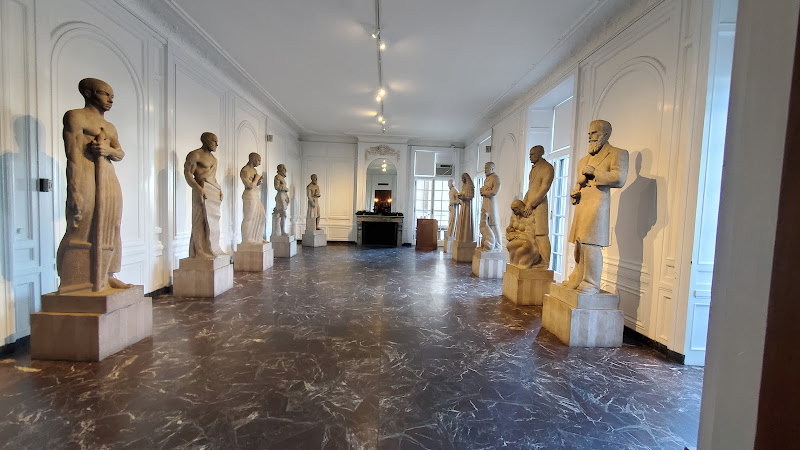
The International Museum of Surgical Science occupies a 1917 mansion at 1524 N Lake Shore Drive in Chicago’s Near North Side, facing Lake Michigan. It describes itself as the only museum in North America devoted to the art and science of surgery, and its four floors cover ancient and modern healing practices from acupuncture to x-rays.
The house was designed by architect Howard Van Doren Shaw for heiress Eleanor Robinson Countiss, and the marble floors, staircase and salon still read as a private home. That contrast is the draw: a polished Gilded Age interior filled with trephined skulls, amputation kits, an iron lung and apothecary jars. Visitors tag it as a small museum, and that is fair; it rewards curiosity more than stamina.
Standout Highlights & What Not to Miss
Rooms are compact and each one follows a single theme, so the visit moves in short bursts. Many exhibits come with brochures that go deeper on the objects. These are the stops worth planning around:
- Trephined Peruvian skulls. Skulls with healed bore holes, dated by the museum to roughly 2000 B.C., are among the most talked-about objects and a good test of how far early surgery went.
- The iron lung. A mid-20th-century polio-era respirator sits among the exhibits and is one of the most photographed objects in the building.
- Apothecary replica and dental room. A recreated drugstore with old prescription ledgers, and a dental display with early extraction tools and a 1920 dental x-ray unit, make the history feel everyday.
- Hall of Immortals and Hall of Murals. Statues of medical pioneers and large painted murals on the upper floors show the mansion’s grand, museum-as-monument side.
- Wound-healing and amputation kits. The top-floor cases of 19th-century amputation sets and dressings are blunt reminders of surgery before anesthesia and antisepsis.
- Country halls and the x-ray shoe fitter. The Japan and Taiwan halls cover contributions such as ultrasound, while the shoe-fitting fluoroscope is a memorable oddity from an era of casual radiation.
Labels vary in style, with some polished and others plainly homemade, so treat the visit as a collection browse rather than a scripted tour. Tours are self-guided.
Visitor Strategy & Planning Snapshot
Because the mansion’s layout forces a winding route, a little planning makes the visit smoother. Use the table below as a quick guide.
| Planning Factor | What to Expect | Practical Strategy |
|---|---|---|
| Ideal Arrival Window | Weekday openings and later afternoons tend to be calmer; weekends and free-admission days can fill the narrow stairwells. | Arrive soon after opening and begin on the top floor, then work down so you move against the crowds. |
| Typical Time Needed | Most visitors spend 1.5 to 2.5 hours; readers of every label can stretch to three. | Plan a firm two hours, and add time if a special exhibit or the library appeals. |
| Booking / Queue Reality | Lines are rarely a problem, but ticketing, free days and event closures vary by date. | Check imss.org before you go and buy online if offered; the museum also hosts private events. |
| Terrain & Accessibility | A four-floor former mansion with small rooms and a grand staircase. The museum lists a wheelchair accessible entrance, parking, restroom and seating; there is no hearing loop. | Ask staff about elevator routes. Wear comfortable shoes, as stairs and marble floors add up. |
| Weather / Seasonal Fit | Fully indoors, so it works in any season, and it sits steps from the lakefront. | Use it as a rain or deep-winter backup, or pair it with a lakefront walk on a clear day. |
Exact prices, free days and current hours change, so rely on the official site and the page sidebar for those details.
Honest Trade-Offs: Best For vs. Who Might Skip
This is a strong fit for medical-history fans, curious teens, nurses and clinicians, architecture lovers who enjoy a historic mansion interior, and anyone who likes the slightly macabre. Reviewers consistently single out the skulls, the iron lung and the apothecary display. It also suits a rainy-day stop, since it is compact and fully indoors.
Skip or shorten it if you are squeamish about surgical instruments, anatomical specimens and pre-anesthesia history, which are shown frankly. Young children may find the content unsettling or dull, and travelers who want interactive, high-tech galleries will find mostly cases and artifacts. The stairs and small rooms can feel tight when busy, and inconsistent labeling may frustrate visitors who want polished interpretation.
Neighborhood Context & How to Pair Your Visit
The museum sits just off Lake Shore Drive near the Gold Coast, and Oak Street Beach and the lakefront path are a short walk away, which makes a good palate cleanser after the galleries. From there you can stroll west into the Gold Coast’s streets of historic townhouses and then toward Lincoln Park for the zoo and conservatory, or head south to Oak Street and Michigan Avenue for shopping and a meal.
A simple half-day: spend two hours in the museum, walk the lakefront toward Oak Street Beach, then have lunch on the Gold Coast. If you want a second museum, Lincoln Park is the logical next step by foot, bus or rideshare, and the city’s lakefront buses run along Lake Shore Drive nearby.
When planning your Chicago travel guide or comparing verified attractions and event venue in Chicago, pair this stop with standout local spots including The Richard H. Driehaus Museum, Talbott Hotel – Chicago Gold Coast, Near South Side, and Chicago History Museum (0.4 km away).


