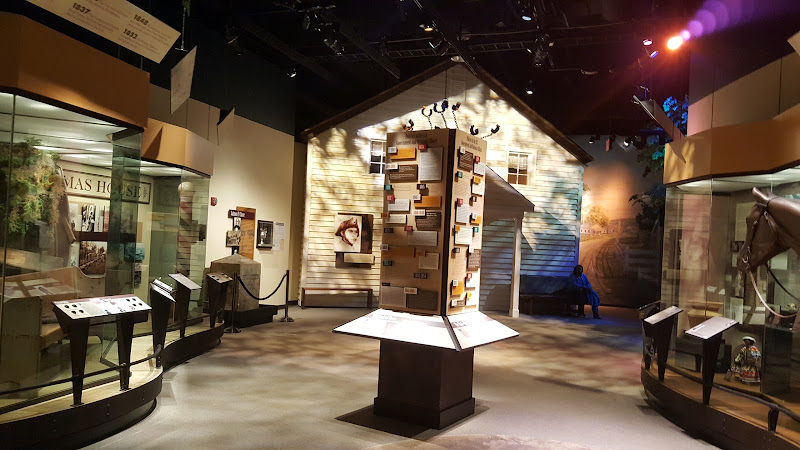
The American Sign Museum turns the glow, scale, and swagger of American commercial signage into a remarkably immersive Cincinnati museum experience. In Camp Washington, inside a former industrial complex, its oversized marquees, hand-painted panels, neon tubing, and roadside icons are displayed with enough room to read them as objects of design, engineering, and public memory—not just old advertisements.
This is a strong stop for anyone drawn to typography, mid-century Americana, local businesses, or the visual language of the highway. The setting suits the collection: raw industrial volume gives towering signs their proper presence, while more intimate displays reveal the tools, materials, and skilled labor behind lettering that once competed for attention from passing cars and pedestrians.
Standout Highlights & What Not to Miss
Approach the museum as a walk through changing eras of American commerce rather than a conventional art gallery. Big-name nostalgia is part of the pleasure, but the richer story lies in how sign makers used scale, color, illumination, and letterforms to give businesses a recognizable identity. Leave time to step back, look up, and inspect the details at close range.
- Main Street streetscape: The signature indoor environment places historic signs alongside reconstructed storefronts, making it easier to imagine how they shaped an active commercial block. It rewards a slow first pass for atmosphere and a second for lettering, window graphics, and projecting forms.
- The Ioka Theatre marquee: A theatrical centerpiece that demonstrates why marquee signage was both architecture and invitation. Look at its layered structure and illuminated presence, not only its photographic appeal.
- Johnny’s Big Red Grill sign: One of the memorable large-scale roadside pieces, useful for seeing how a sign was designed to register quickly from a distance while retaining personality up close.
- Working Neonworks shop: The museum’s active fabrication component connects historic neon to a living craft. Glass bending, electrical components, and the practical demands of keeping illuminated signs alive add useful context to the displays.
- Hand lettering and production artifacts: Seek out brushes, drawings, photographs, and sign-making materials. These quieter objects explain the planning and manual skill behind visuals that can otherwise seem effortless.
Visitor Strategy & Planning Snapshot
| Planning Factor | What to Expect | Practical Strategy |
|---|---|---|
| Ideal Arrival Window | The galleries are visually dense, and the most dramatic views benefit from unhurried looking. | Arrive near the start of your available visit window to photograph, revisit favorites, and avoid having to rush the streetscape. |
| Typical Time Needed | Most visitors can cover the museum in about 60 to 90 minutes; design-minded visitors may linger longer. | Allow extra time if you enjoy reading labels, studying type, or traveling with curious school-age children. |
| Booking / Queue Reality | This is primarily a self-paced museum visit rather than a timed outdoor attraction. | Check current admission and event guidance before setting out, especially if you want a tour or are visiting during a special program. |
| Terrain & Accessibility | Exhibitions are on one accessible floor, with seating and two loan wheelchairs available; the research library requires stairs and an appointment. | Use the seating as needed, and contact the museum ahead if the research library is central to your plans. |
| Weather / Seasonal Fit | The main experience is indoors, making it a dependable option in rain, heat, cold, or winter conditions. | Pair it with outdoor neighborhood exploring when conditions are pleasant, or make it the anchor of an all-indoor museum day. |
Honest Trade-Offs: Best For vs. Who Might Skip
The museum is especially rewarding for typography enthusiasts, roadside-Americana fans, industrial-history followers, photographers, and families with school-age children who can connect objects to familiar brands and streetscapes. It also works unusually well for visitors who think they are “not museum people,” because the displays are immediate, colorful, and easy to enter at different levels. The trade-off is that this is a focused collection, not a broad survey of Cincinnati history or a hands-on science attraction. Very young children may move through faster than adults expect, and visitors seeking a long list of interactive stations may prefer to treat it as one well-chosen stop in a larger day. If historic advertising, craft, or visual culture holds no appeal, the niche may feel more specialized than its dazzling appearance suggests.
Neighborhood Context & How to Pair Your Visit
Camp Washington’s industrial character is part of the museum’s appeal: this is not a polished downtown museum district, but a setting that helps explain why the former factory space feels so right for monumental commercial graphics. Build the visit into a Cincinnati itinerary with another museum, a neighborhood meal, or time exploring central-city architecture and local institutions. Free parking makes the museum a practical anchor for drivers, while a car or rideshare is useful for linking it with other parts of the city. For the most satisfying rhythm, visit when you can give the collection a full, unhurried block of time, then continue on to a contrasting Cincinnati experience rather than trying to squeeze it between tightly timed commitments.
When planning your Cincinnati travel guide or comparing verified attractions and museums in Cincinnati, pair this stop with standout local spots including Best Western Premier Mariemont Inn, Cincinnati Art Museum, and National Underground Railroad Freedom Center.