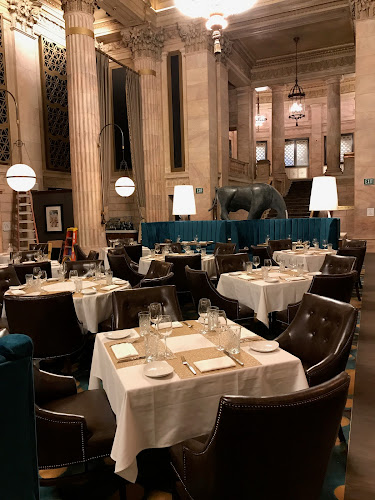
The Cleveland Museum of Art is the cultural anchor of Cleveland’s University Circle, a grand 1916 museum expanded by a luminous glass-roofed atrium. Its architecture is part of the experience: formal stone façades, broad gallery sequences, and a contemporary central court create a visit that feels both historic and remarkably open.
Free collection galleries make this an unusually strong stop for travelers who want major art without committing to an all-day ticketed attraction. The holdings span roughly 6,000 years, but the museum is especially rewarding for Asian art, European painting, sculpture, and armor. Come with a short list, then allow room for the galleries that catch you by surprise.
Standout Highlights & What Not to Miss
Start in the atrium to get your bearings before choosing a direction. The building is extensive, so a focused route delivers more than a rushed attempt to see every department. These are the strongest anchors for a first visit.
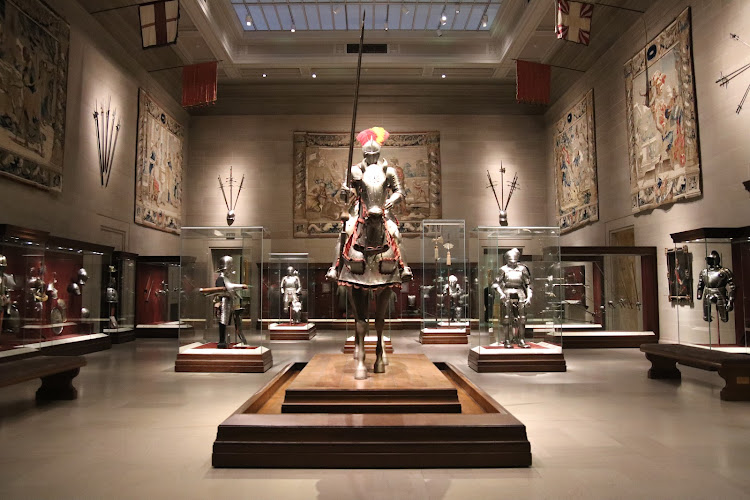
- Mandel Armor Court: This dramatic historic gallery is a signature stop, with mounted figures and armor displayed in a setting that has been central to the museum since its opening era. Look up as well as at the cases; the room’s scale and architectural character are integral to its appeal.
- Asian art galleries: The museum’s Chinese, Indian, Japanese, Korean, and Southeast Asian holdings reward unhurried viewing. This is not a token wing; it is a major reason to visit, with objects that range across religious art, ceramics, painting, and sculpture.
- European painting and sculpture: Build a compact route through medieval, Renaissance, Baroque, and later European rooms. The transition between periods is especially satisfying for visitors who enjoy seeing how religious imagery, portraiture, landscape, and materials evolve.
- The atrium and original building: Pause in the glass-roofed court, then notice the contrast between the older museum’s formal interiors and the newer spaces. Architecture-minded visitors should treat the circulation itself as a gallery-worthy part of the visit.
- ArtLens tools: Use the ArtLens app for a map, object information, and selected audio material. It is useful when you want context beyond labels, and its screen-reader compatibility can make independent navigation easier for some visitors.
Visitor Strategy & Planning Snapshot
| Planning Factor | What to Expect | Practical Strategy |
|---|---|---|
| Ideal Arrival Window | The first part of the day generally offers the calmest gallery experience; late-day visits can work well for a targeted route. | Arrive near opening for the Armor Court and Asian galleries, or plan a concise after-lunch circuit rather than trying to cover the full museum. |
| Typical Time Needed | Most first-time visitors need 2 to 3 hours for several major departments and the building itself. | Choose two collection strengths plus the atrium. Add time only if you want to linger with European painting or special presentations. |
| Booking / Queue Reality | Collection galleries are a straightforward walk-in visit, while special exhibitions or programs can have separate requirements. | Confirm current exhibition access before making a time-sensitive plan. Enter with a gallery route in mind to avoid losing time at the map. |
| Terrain & Accessibility | Large indoor galleries are connected across multiple levels. Step-free access is available via north-entrance ramps and elevators or the P2 garage tunnel. | Free loan wheelchairs and strollers are available first come, first served. Use elevators rather than forcing a stair-heavy route. |
| Weather / Seasonal Fit | This is an excellent all-weather destination and a particularly useful indoor anchor during Cleveland cold, rain, or summer heat. | Pair it with nearby University Circle sites on pleasant days; in poor weather, give the museum a larger share of the itinerary. |
Honest Trade-Offs: Best For vs. Who Might Skip
This museum is best for travelers who value depth, families with school-age children, art-focused couples, architecture fans, and budget-conscious visitors willing to walk through a substantial building. It works especially well when one person wants old masters and another prefers Asian art or modern work. Those seeking a fast, highly theatrical attraction may find the scale and quiet pace less immediately engaging. Very young children or visitors with limited stamina should not try to cover it all; a short route centered on the atrium, Armor Court, and one wing is the better choice. Special-exhibition priorities may also require more advance planning than a collection-only visit.
Neighborhood Context & How to Pair Your Visit
University Circle is one of Cleveland’s most walkable culture districts, making the museum easy to combine with a garden, campus, performance, or additional museum stop without returning downtown between activities. Use the atrium as a reset point before heading back outside, especially if your group splits up in different galleries. A practical half-day plan is to begin with the collection, take a break nearby, then continue through the district on foot. For a fuller day, keep the museum as the central indoor stop and build the rest of the schedule around its pace rather than treating it as a quick detour.
When planning your Cleveland travel guide or comparing verified attractions and museums in Cleveland, pair this stop with standout local spots including A Christmas Story House, TownHall, Hyatt Regency Cleveland at The Arcade, and Glidden House (0.5 km away).