
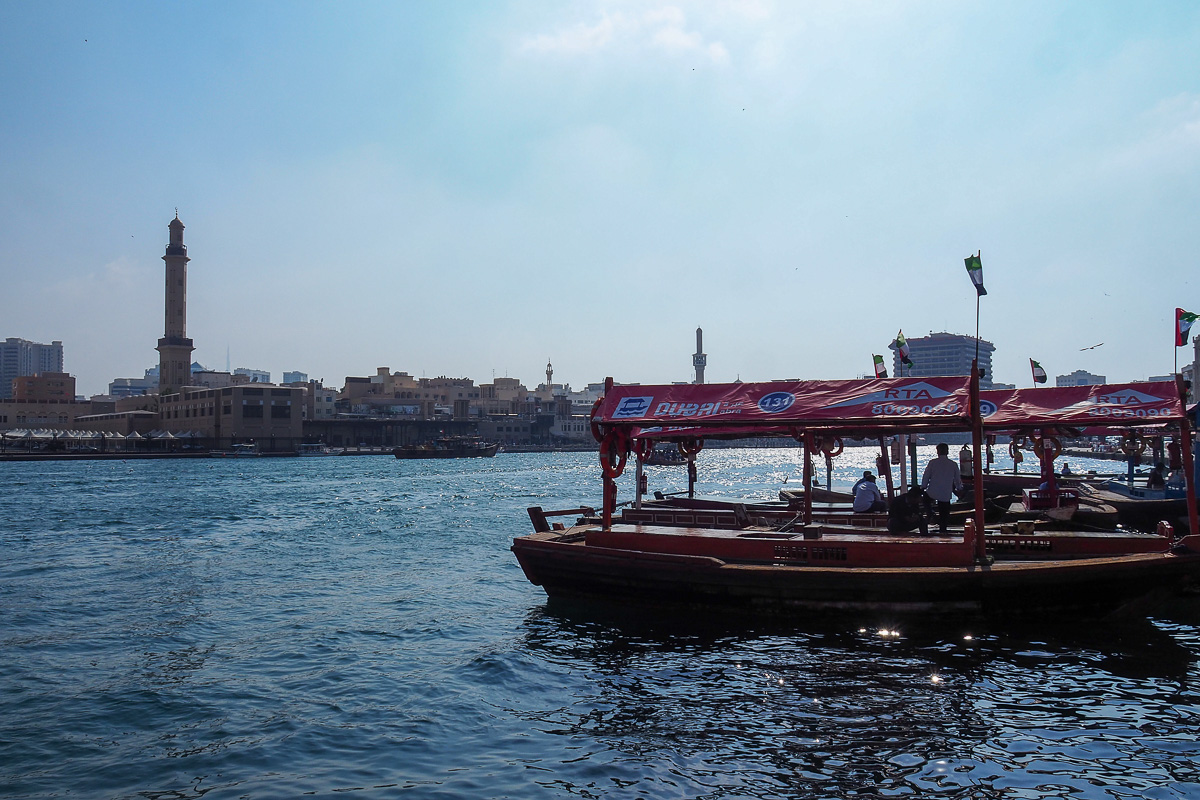
Dubai Creek is the historic saltwater inlet that divides Deira from Bur Dubai, reached from 7884+GWR, Al Maktoum Road, Deira, Port Saeed, Dubai, United Arab Emirates. Long before the towers of modern Dubai, the creek was the emirate’s working harbor for fishing, pearling and trade with Iran, India and East Africa; the Al Maktoum family established Dubai on its banks in 1833. Travelers come to cross the water in a wooden abra, watch dhows load cargo, explore souks and walk through the city’s oldest surviving commercial and residential districts.
What to Expect at Dubai Creek
The Creek is a public waterfront rather than one enclosed attraction. Its most memorable experience is the short abra crossing between the Deira Old Souk Abra Station and Bur Dubai Abra Station. These small, open-sided wooden boats carry passengers across the channel among larger dhows and give clear views of minarets, wind towers and the low-rise trading waterfront. On the Deira side, the covered Spice Souk lanes lead toward the Gold Souk; on the Bur Dubai side, lanes connect to the Al Fahidi Historical Neighbourhood, where restored coral-stone and gypsum houses surround shaded courtyards.
Allow time to walk the creek edge rather than treating the abra as only transport. The Al Seef promenade combines new shopfronts with an area designed around traditional barjeel wind-tower forms, while dhow berths toward Deira remain a functioning trading landscape. For a focused historical stop, the Al Shindagha Museum interprets Dubai’s waterfront development and includes the Dubai Creek: Birth of a City experience; the nearby Sheikh Saeed Al Maktoum House preserves a late-19th-century residence with courtyard rooms and creek-facing wind towers.
- Abra crossings: Ride the traditional shared water taxi between Bur Dubai and Deira for an intimate view of the channel.
- Deira souks: Browse saffron, frankincense and spice displays, then continue to the Gold Souk’s concentrated jewellery shops.
- Al Fahidi Historical Neighbourhood: Explore narrow sikkas, coral-and-gypsum buildings and barjeel wind towers on the Bur Dubai bank.
- Working dhow wharves: See wooden cargo vessels moored along the Deira creekside, especially in daytime.
- Al Seef promenade: Follow the waterside path for cafes, evening views and traditional-inspired architecture.
Dubai Creek at a Glance
| Detail | Information |
|---|---|
| Address | 7884+GWR, Al Maktoum Road, Deira, Port Saeed, Dubai, United Arab Emirates |
| Neighborhood / Area | Dubai Creek waterfront; Deira and Bur Dubai, with Port Saeed at the eastern creek end |
| Operating Hours | The public waterfront is accessible daily; souks, museums, abra stations and restaurants keep separate hours. |
| Admission & Ticket Prices | Free public admission. Shared abra crossings are paid separately; museums and heritage houses may charge admission. |
| Recommended Visit Duration | 1.5 to 2.5 hours for an abra, souks and one historic district; longer with museums. |
| Nearest Transit / Parking | Al Ras Metro Station (Green Line) for Deira souks; Al Ghubaiba Metro Station (Green Line) for Bur Dubai. Use paid public parking at Al Seef or Deira waterfront facilities. |
| Official Website / Phone | Visit Dubai: Dubai Creek; Dubai Tourism information: 800 900 |
Visiting Tips, Getting There & Nearby Pairings
Arrive around 8–10am for cooler walking conditions, active souk deliveries and less intense traffic around the abra landings; sunset is best for light on the water but is busier. No reservation is needed to walk the creek or board the shared abra, and fares are paid at the station. Book museum entry separately if Al Shindagha Museum is central to your plan, and check its opening hours before setting out. The Green Line is the easiest way to avoid Deira’s congested streets: use Al Ras for the Gold and Spice Souks, or Al Ghubaiba for Al Fahidi and the Bur Dubai landing.
Accessibility varies greatly by bank. Al Seef has broad, mostly level paved promenades suitable for wheelchairs and strollers, while the older souk lanes can be crowded and uneven, with kerbs and tight passages. Shared abras require stepping down into a low boat and are not step-free; travelers who cannot transfer should enjoy the waterfront from land. Within a 5–15 minute walk of the historic Deira landing are the Spice Souk and Gold Souk; from Bur Dubai, walk to Al Fahidi Historical Neighbourhood, the Coffee Museum area and Al Seef’s creekside dining terraces.
Frequently Asked Questions
What are the best hours to visit Dubai Creek?
The creek waterfront is public and can be visited daily, but morning and the hour before sunset are the most comfortable times to walk. Check individual hours for abra stations, souks and museums, particularly during Ramadan and public holidays.
Is there an admission fee or do I need reservations?
Walking Dubai Creek is free. Pay separately for an abra crossing and for ticketed museums such as Al Shindagha Museum. Shared abra rides do not require advance booking; reserve only organized cruises or guided tours if desired.
How much time should I budget for Dubai Creek?
Budget 1.5 to 2.5 hours for a shared abra, the Deira souks and a walk through Al Fahidi or Al Seef. Add one to two hours if visiting Al Shindagha Museum or stopping for a waterfront meal.
Is Dubai Creek suitable for families and wheelchair users?
Families can combine the brief boat crossing with snacks and souk browsing, but should hold children’s hands near busy landings. Al Seef is the most straightforward stroller and wheelchair route; historic lanes are tighter, and traditional abras are not step-free.
When planning your Dubai travel guide or browsing verified attractions in Dubai, pair this stop with standout local spots including Dubai Land Central Community Hub Children's Park, Princess City, CÉ LA VI, and Museum Of Illusions (0.4 km away).


