
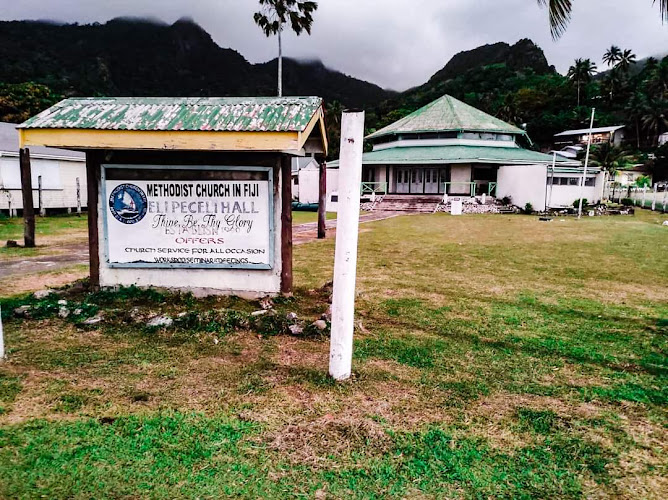
Levuka Historical Port Town is Fiji’s UNESCO World Heritage-listed former capital, spread along Beach Street and the waterfront in Levuka, Ovalau Island, Lomaiviti Province, Fiji. Founded by European traders and settlers in the 1820s, this compact 19th-century port became Fiji’s colonial capital from 1874 to 1882; travelers come to walk its working harbor, timber-and-corrugated-iron streetscape, churches and landmarks tied to the country’s colonial era.
What to Expect at Levuka Historical Port Town
Levuka is an inhabited town rather than a single ticketed museum, and its best exhibit is the townscape itself. Begin at the Beach Street waterfront, where long, narrow commercial buildings face the harbor with the steep, forested slopes of Ovalau rising directly behind them. The scale of the place is unusually intact: former trading premises, verandas, weatherboard façades, churches and residences still reveal the practical shape of a late-19th-century Pacific port.
Walk south through the historic core toward Nasova, where Fiji was ceded to Britain in 1874, then return along Beach Street to look for the Sacred Heart Church clock tower, which also functions as a navigational landmark. The Royal Hotel and Ovalau Club are part of the old waterfront character, while the former government and commercial buildings explain why Levuka was selected as the first colonial capital. There is no single admission desk, bag check or prescribed gallery route; streets and exterior architecture are freely accessible, while privately occupied buildings and religious interiors require respectful, permission-based entry. Exterior photography is straightforward, but ask before photographing people, worshippers or private premises.
- Beach Street waterfront: Follow the historic commercial spine, where port-facing verandas and trading-era buildings frame Levuka Bay.
- Sacred Heart Church: See the Beach Street Catholic church and its prominent clock tower, a familiar landmark for vessels approaching the harbor.
- Nasova and the Cession site: Walk to the area associated with the 1874 Deed of Cession, the turning point that brought Fiji under British rule.
- Royal Hotel precinct: Study the intimate scale of Levuka’s early hospitality and mercantile architecture along the seafront.
- Harbor-to-hills setting: Pause for views that show the defining geography of the World Heritage property: a narrow coastal strip pressed between bay and volcanic slopes.
Levuka Historical Port Town at a Glance
| Detail | Information |
|---|---|
| Address | Beach Street and historic town centre, Levuka, Ovalau Island, Lomaiviti Province, Fiji |
| Neighborhood / Area | Levuka waterfront, eastern Ovalau |
| Operating Hours | Public streets and waterfront are accessible daily, 24 hours; church and business interiors keep their own hours. |
| Admission / Price Range | Free to explore public streets, harbor frontage and exterior landmarks. |
| Recommended Visit Duration | 1.5 to 2.5 hours on foot; allow longer for meals and church visits. |
| Nearest Transit / Parking | Levuka Wharf is central; Levuka Airport at Bureta is about 22 km away. Limited informal street parking is available near Beach Street. |
| Official Website & Phone | UNESCO World Heritage listing; no single town-site visitor phone. |
Visiting Tips, Getting There & Nearby Pairings
Arrive early, before the day becomes hot, for the clearest harbor light and an unhurried look at façades along Beach Street. Levuka is best explored independently with water, sun protection and shoes that handle uneven pavements and occasional roadside drainage channels. Start at the wharf end of town, walk the waterfront in one direction, then turn inland only where you can safely view the slope-side streets; this keeps the route simple and gives the town’s port geography immediate context.
There are no city bus or rail lines in Levuka. Most visitors arrive by ferry at Levuka Wharf or fly to Levuka Airport at Bureta and continue by road; arrange transport before leaving the airport. Parking is limited and there is no dedicated heritage-site garage, so walking is the practical choice once in town. The route along Beach Street is mostly level, but surfaces can be cracked, narrow or uneven, and uphill side streets are steep; wheelchair users and strollers will find the waterfront the most manageable section, with no single controlled step-free entrance because this is a public historic town. Pair the walk with Sacred Heart Church, the Nasova Cession area and a waterfront meal or drink around the Royal Hotel and Ovalau Club.
Frequently Asked Questions
When is the best time to visit Levuka Historical Port Town?
The streets, waterfront and exterior landmarks are open at all hours because Levuka is a living town. Visit in the early morning or late afternoon for cooler walking conditions and fewer vehicles on Beach Street; confirm hours separately before entering a church, hotel or business.
Is there an admission fee or a ticket to buy?
No ticket is required to walk the UNESCO-listed public streets, waterfront and exterior landmarks. Costs arise only for transport, food, accommodation, guided arrangements or entry to any independently operated venue.
How long should I allow for Levuka?
Allow 1.5 to 2.5 hours for a focused Beach Street, Sacred Heart and Nasova walk. A half-day suits travelers who want to stop for lunch, photograph the harbor and explore at a slower pace.
Is Levuka suitable for families and wheelchair users?
Families can easily enjoy the harbor views and short waterfront walk, though children should be supervised near traffic and the wharf. The waterfront is relatively level, but uneven footpaths, open drainage edges and steep inland streets make a companion helpful for wheelchair users and strollers.
When planning your Fiji Islands travel guide or browsing verified resort hotel in Fiji Islands, pair this stop with standout local spots including VASUTURAGA FAMILY, Hilton Fiji Beach Resort and Spa, Fiji Beachouse, and The Wakaya club & Spa (18.5 km away).


