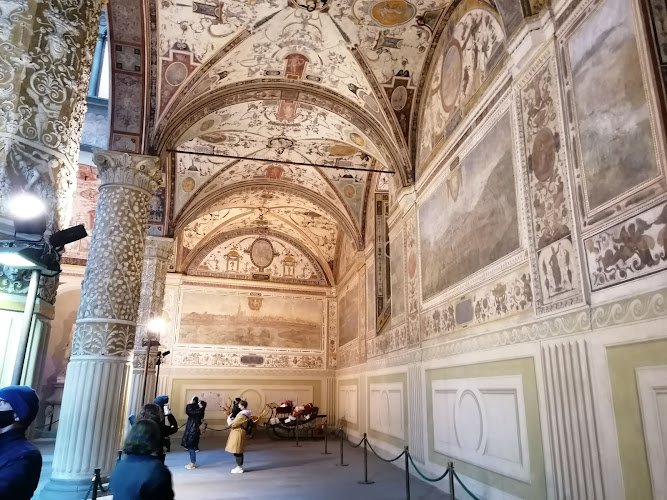
National Archaeological Museum, Florence is Florence’s principal museum of ancient Mediterranean civilizations, at Piazza della Santissima Annunziata 9b, 50121 Firenze FI, in the Santissima Annunziata area of the historic center, Metropolitan City of Florence, Italy. Established in 1870 from the city’s Medici and grand-ducal antiquities holdings and installed in the 17th-century Palazzo della Crocetta, it draws travelers for landmark Etruscan bronzes, Greek vases, Roman sculpture and one of Italy’s important Egyptian collections.
What to Expect at National Archaeological Museum, Florence
The Etruscan galleries are the defining reason to come. Look for the bronze Chimera of Arezzo, discovered in 1553 and long associated with Medici collecting; the Arringatore, a late Etruscan bronze figure of an orator; and the finely worked funerary objects, cinerary urns, inscriptions and terracotta sculpture that make the culture’s cities and burial customs easier to understand. The museum also preserves the François Vase, the celebrated sixth-century BC Attic volute krater whose dense painted scenes reward close looking.
Allow time beyond the headline objects. The Greek collection moves through painted pottery, sculpture and small bronzes, while the Roman rooms include portraits, sarcophagi and decorative material. The Egyptian section, formed substantially through the 1828–29 Tuscan expedition led by Ippolito Rosellini with Jean-François Champollion, displays mummies, coffins, stelae, canopic equipment and everyday objects. The museum’s palace setting is part of the visit: Palazzo della Crocetta was built for Maria Maddalena de’ Medici, and its historic rooms and internal circulation give this collection a markedly different character from a purpose-built gallery.
- Chimera of Arezzo: An exceptional Etruscan bronze depicting the fire-breathing creature wounded in combat.
- Arringatore: A rare late Etruscan bronze portrait of a public speaker, inscribed in Etruscan.
- François Vase: A major Greek ceramic masterpiece covered with mythological scenes and labeled figures.
- Egyptian collection: Mummies, coffins, reliefs and ritual objects connected to the Rosellini–Champollion expedition.
- Palazzo della Crocetta: A 17th-century Medici palace that gives the archaeological displays an intimate, historic setting.
National Archaeological Museum, Florence at a Glance
| Detail | Information |
|---|---|
| Address | Piazza della Santissima Annunziata 9b, 50121 Firenze FI, Italy |
| Neighborhood / Area | Santissima Annunziata, northeast edge of Florence’s historic center |
| Operating Hours | Listed hours: Monday–Wednesday and Friday–Saturday 8:30am–2pm; Thursday 8:30am–7pm; Sunday closed. Check before travel for holiday changes. |
| Admission & Ticket Prices | Paid admission; check the official museum website for current full, reduced and free-entry eligibility, including state-museum initiatives. |
| Recommended Visit Duration | 1.5 to 2.5 hours; allow longer for the Egyptian and Etruscan rooms. |
| Nearest Transit / Parking | Piazza San Marco bus stops are about a 5-minute walk; Parterre parking is roughly 15 minutes on foot. Central Florence is a restricted-traffic ZTL. |
| Official Website / Phone | Official website · +39 055 23575 |
Visiting Tips, Getting There & Nearby Pairings
Arrive at opening, particularly on the short 8:30am–2pm days, to see the signature Etruscan rooms before group visits build. Thursday’s later closing is the strongest option for a less rushed itinerary. Buy or reserve through the official channels when online tickets are offered, and keep an eye on temporary closures or altered hours around public holidays. From Santa Maria Novella station, a taxi is straightforward; on foot, the museum is around 20 minutes. City buses stopping around Piazza San Marco leave only a short walk along Via degli Alfani or Via Cesare Battisti.
Drivers should not assume they can reach Piazza della Santissima Annunziata: it lies within Florence’s controlled-traffic zone, where unauthorized entry can trigger a fine. Use Parterre or a garage outside the restricted core, then walk. The historic palace has wheelchair-access arrangements and a lift for upper-level access, but its older layout can involve thresholds and changes of level; contact the museum before arrival for the most suitable entrance and assistance. Pair the visit with Brunelleschi’s Ospedale degli Innocenti directly on the square, the Museo di San Marco five minutes away, and the Galleria dell’Accademia about 10 minutes away. Cafés around Piazza Santissima Annunziata and Piazza San Marco are convenient for a light lunch after the galleries.
Frequently Asked Questions
What are the best hours to visit the National Archaeological Museum, Florence?
Go at the 8:30am opening for the quietest start, or use Thursday, listed until 7pm, for a longer visit. The museum is listed as closed on Sunday; always confirm the day’s schedule before setting out.
How much are tickets, and do I need a reservation?
Admission is paid, with reductions and free-entry categories determined by the state museum system. Check the official website for the current tariff and booking arrangements; reserving is sensible when timed-entry sales are available.
How long should I budget for the museum?
Plan 90 minutes for the principal Etruscan highlights and around two to two-and-a-half hours if you want to explore the Greek, Roman and Egyptian displays with care.
Is the museum suitable for families and wheelchair users?
Families will find visually engaging bronzes, mummies and myth-filled Greek pottery. Wheelchair users can use accessible arrangements and lift access, but should contact the museum ahead because this is a multi-level historic palace.
When planning your Florence travel guide or comparing verified attractions and museums in Florence, pair this stop with standout local spots including Synagogue and Jewish Museum of Florence, Opificio delle Pietre Dure, Florence Untold Bike Tour by Roberto, and Piazza della Santissima Annunziata (nearby).