
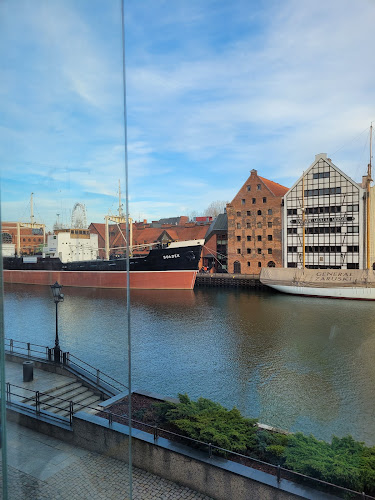
National Maritime Museum in Gdańsk is Poland’s leading maritime-history museum, based at Ołowianka 9–13 on Ołowianka Island, beside the Motława River in central Gdańsk, Poland. Founded in 1960 as the Maritime Museum in Gdańsk and later given national status, it occupies a row of reconstructed historic granaries. Travelers come to understand Gdańsk’s role as a Baltic port through ships, navigation, maritime archaeology, trade and the lives of people who worked at sea.
What to Expect at National Maritime Museum in Gdańsk
The main museum is known as the Granaries on Ołowianka. Its red-brick warehouses, rebuilt after their destruction in 1945, are part of the experience: the sequence of connected granaries preserves the scale and waterside character of Gdańsk’s former commercial waterfront. Inside, permanent displays use ship models, maritime paintings, navigational instruments, maps, uniforms, port equipment and archaeological material to chart the relationship between Poland, the Baltic and the wider world.
Expect a chronological and thematic route rather than a single ship-gallery experience. Exhibits examine early watercraft and seafaring, the growth of Gdańsk as a trading port, Polish merchant and naval traditions, shipbuilding, fishing and life aboard vessels. Look closely at the finely made scale models and recovered objects from Baltic wrecks, which give useful physical context to a sea whose shallow coastal waters have preserved centuries of maritime evidence. The museum’s wider Gdańsk group also includes the museum ship SS Sołdek, moored immediately outside, and the medieval Żuraw port crane across the Motława.
- Reconstructed Ołowianka granaries: Explore a linked complex of waterfront warehouses rebuilt after World War II.
- Ship models and navigation: See detailed vessels, charts and instruments that explain how ships were designed, sailed and positioned.
- Maritime archaeology: Encounter material connected with Baltic wrecks and the museum’s underwater-heritage research.
- Gdańsk as a port: Follow the city’s commercial and shipbuilding story from a working riverfront setting.
- SS Sołdek nearby: Add the postwar cargo ship for an aboard-ship perspective on engineering and crew life.
National Maritime Museum in Gdańsk at a Glance
| Detail | Information |
|---|---|
| Address | Ołowianka 9–13, 80-751 Gdańsk, Poland |
| Neighborhood / Area | Ołowianka Island, on the Motława opposite Gdańsk Main Town |
| Operating Hours | Closed Monday; Tuesday and Thursday–Sunday 10am–4pm; Wednesday 1pm–4pm. Check seasonal and holiday changes before travel. |
| Admission & Ticket Prices | Paid admission; current rates, concessions and combined tickets are listed on the official museum website. |
| Recommended Visit Duration | 1.5 to 2 hours; allow longer when combining it with SS Sołdek. |
| Nearest Transit / Parking | Walk from Targ Rybny or Main Town stops; paid parking is available around Szafarnia and Targ Rybny, followed by a short walk over the river crossings. |
| Official Website / Phone | nmm.pl / +48 58 301 86 12 |
Visiting Tips, Getting There & Nearby Pairings
Arrive shortly after opening, particularly from June through September, when Old Town sightseeing groups and cruise visitors increase demand. Buy online in advance when you have a fixed schedule, and check whether a combined ticket makes sense if you also plan to visit SS Sołdek or another National Maritime Museum branch. The museum is an easy walk from Długi Targ and the Long Market: cross to Ołowianka via the footbridge near the waterfront, then follow the island promenade. From the Gdańsk Główny rail station, allow roughly 20 minutes on foot through the Main Town.
Ołowianka’s riverside approach is largely level, though historic paving and bridge surfaces can be uneven in wet weather. The museum provides step-free access and an elevator within the granary complex; contact the museum before arrival for assistance or to confirm arrangements for a particular exhibition, wheelchair, stroller or group. Pair the visit with the Maritime Culture Centre on the opposite bank, the Żuraw crane and its former port district, or a waterside meal around Szafarnia and the Gdańsk Marina, all within about 5–15 minutes on foot.
Frequently Asked Questions
When is the best time to visit the National Maritime Museum in Gdańsk?
Weekday mornings are the quietest choice. The Granaries are closed on Mondays; listed hours are 10am–4pm Tuesday and Thursday through Sunday, and 1pm–4pm on Wednesday. Confirm the day’s schedule online before setting out.
How much are tickets, and should I reserve ahead?
Admission is paid, with current standard, reduced and combined-ticket prices published by the museum. Online booking is useful in summer, for groups and when visiting multiple branches; use the official website for the current tariff and reservation rules.
How long should I budget for the museum?
Set aside 1.5 to 2 hours for the Granaries on Ołowianka. Add around an hour for SS Sołdek, especially if you want time to examine its working spaces and riverfront setting.
Is the National Maritime Museum suitable for families and wheelchair users?
Yes. Ship models, practical maritime objects and the nearby SS Sołdek make the area engaging for families. The granary museum has step-free access and an elevator, while the historic outdoor paving and ship visit can require extra care; contact the museum for individual access needs.
When planning your Gdansk travel guide or comparing verified attractions and museums in Gdansk, pair this stop with standout local spots including Gdański Bowke, National Museum in Gdańsk, Wine Bar "Literacka", and Hotel Podewils Old Town Gdańsk (nearby).


