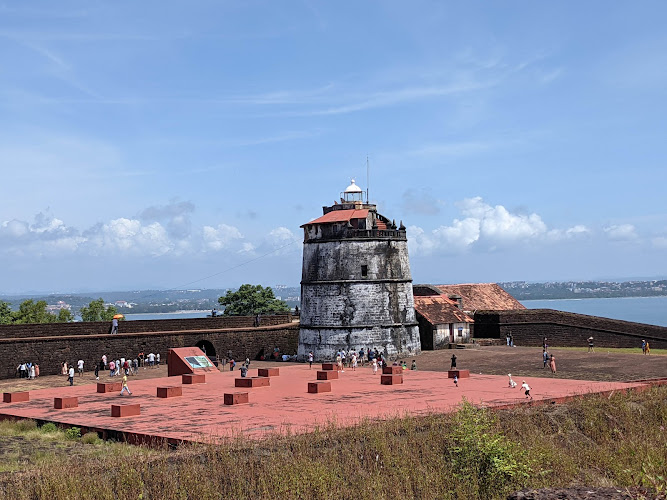
St. Augustine Tower is the 46-metre surviving belfry of the former Church of Our Lady of Grace at Church of St. Augustine Ruins, Old Goa, Goa 403402, India. Built by Augustinian friars in 1602, this weathered laterite landmark is one of the most dramatic remnants of Portuguese-era Goa and a key stop within the UNESCO-listed Churches and Convents of Goa ensemble.
What to Expect at St. Augustine Tower
Approach from the tree-lined lane behind the Old Goa church precinct and the tower rises unexpectedly above the open archaeological grounds. The church was begun in 1597 for the Augustinian order and completed five years later; at its height, the complex included a vast vaulted church, convent, cloisters and a four-storey belfry. The abandoned church deteriorated after the Augustinians left Goa in the 1830s, and much of the structure collapsed in 1842. Only one side of the belfry remains standing, its exposed laterite masonry, arched openings and uneven silhouette making the scale of the vanished church easy to imagine.
This is an outdoor ruin rather than an interpretive museum, so the reward is architectural atmosphere and historical context. Walk around the fenced conservation area to view fragments of the church walls, the footprint of the nave and the tower from changing angles. The tower is not open for climbing. Early morning gives softer light on the red-brown masonry, while late afternoon is best for photographs of the tower against the palms. Pair the visit with the nearby Basilica of Bom Jesus and Sé Cathedral to understand why Old Goa was once the capital of Portuguese India.
- 46-metre belfry: The surviving four-level laterite tower is among Old Goa’s most recognizable Portuguese-period silhouettes.
- Church of Our Lady of Grace: Trace the remains of the Augustinians’ once-grand 1602 church, formerly one of the city’s largest religious buildings.
- Arched masonry: Look closely at the tall openings and thick walls, which reveal the engineering of a bell tower built for Goa’s tropical monsoon climate.
- UNESCO setting: The ruins form part of the wider Churches and Convents of Goa World Heritage landscape, alongside major monuments within walking distance.
- Open-air photography: Palms, grass and the isolated tower create especially striking compositions in the lower-angle light of morning and late afternoon.
St. Augustine Tower at a Glance
| Detail | Information |
|---|---|
| Address | Church of St. Augustine Ruins, Old Goa, Goa 403402, India |
| Neighborhood / Area | Old Goa’s historic church precinct, North Goa |
| Operating Hours | Daily, 9am–5pm |
| Admission / Price Range | Free entry; outdoor archaeological monument |
| Recommended Visit Duration | 30 to 45 minutes; allow longer when combining nearby churches |
| Nearest Transit / Parking | Old Goa bus stand is about a 15-minute walk; limited visitor parking is available around the Old Goa monument precinct |
| Official Website & Phone | Archaeological Survey of India & +91 832 243 7132 |
Visiting Tips, Getting There & Nearby Pairings
Arrive soon after the 9am opening, before the heat builds and before sightseeing groups move through Old Goa. There is no timed-ticket system for the ruins, and entry is free, but carry drinking water, sun protection and shoes with grip: the grounds can be muddy or slippery after monsoon rain. Treat the site as an archaeological monument rather than a climbable landmark; do not cross barriers or attempt to access the tower. A taxi or private car from Panaji takes roughly 20 to 30 minutes depending on traffic, while buses to Old Goa leave from Panaji and other Goan towns.
The approach and viewing areas are largely at ground level, but surfaces are uneven earth, grass and broken-stone paths; wheelchair users and visitors with strollers may need assistance, particularly in wet weather. There is no interior route, elevator or tower ascent. Within a 10-to-15-minute walk, visit the richly gilded Basilica of Bom Jesus, home to the relics of St. Francis Xavier, and the vast white façade and vaulted interior of Sé Cathedral. The Church of St. Francis of Assisi and its museum are also close by, making this a satisfying half-day heritage circuit before returning to Panaji for lunch.
Frequently Asked Questions
What are St. Augustine Tower’s hours, and when is the best time to go?
The grounds are open daily from 9am to 5pm. Go at opening time for cooler temperatures and quieter photographs, or in the final hour for warmer light on the laterite tower; leave enough time to exit before closing.
Is there an admission fee or reservation requirement?
Entry to the St. Augustine ruins is free, and reservations are not required. It is an unfurnished outdoor monument with no café or ticketed tower climb, so plan food and refreshments around the wider Old Goa precinct.
How much time should I budget for the ruins?
Allow 30 to 45 minutes to walk the perimeter, study the surviving masonry and take photographs. Budget two to three hours if you are linking it with the Basilica of Bom Jesus, Sé Cathedral and St. Francis of Assisi complex.
Is St. Augustine Tower suitable for families and wheelchair users?
Families can visit easily, provided children stay clear of conservation barriers and uneven edges. The exterior can be viewed without stairs, but natural, uneven paths and monsoon conditions make independent wheelchair or stroller movement difficult; there is no accessible tower interior.
When planning your Goa travel guide or browsing verified attractions in Goa, pair this stop with standout local spots including Velsao Beach, Houses of Goa Museum, Ahilya by the Sea, and Museum Of Christian Art (nearby).