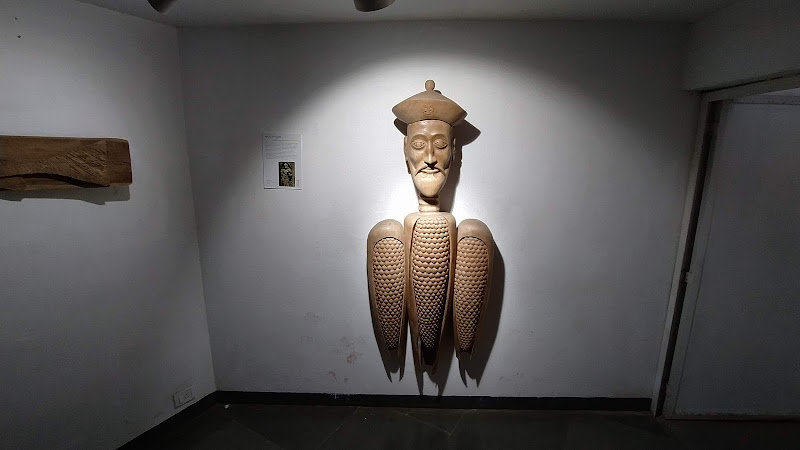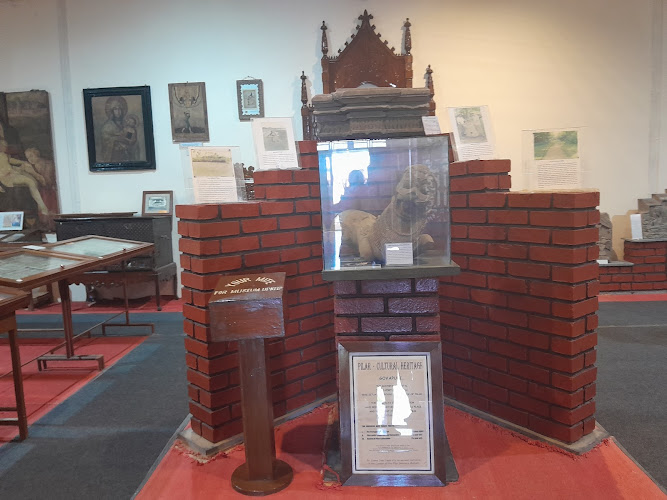
Pilar Seminary Museum is a compact heritage museum set within the historic religious complex on Pilar Hill, in the Pilar area of Goa Velha. Its scale is intimate, but its subject is unusually broad: archaeological material, documents, coins and devotional art trace layers of Goan history from the Kadamba period through Portuguese rule and Catholic religious life. The setting matters as much as the displays. This is not an isolated gallery visit, but a chance to read objects against the hilltop seminary and shrine complex around them.
Visitors come for a close look at material that is easy to miss in Goa’s larger headline attractions: a Kadamba lion sculpture, palm-leaf manuscripts, Portuguese coins and finely made sacred images. The museum’s atmosphere is contemplative rather than theatrical, with the surrounding Our Lady of Pilar shrine and the tomb of Venerable Father Agnelo D’Souza adding a living devotional dimension. It suits travelers who enjoy pausing over individual objects and placing Goa’s Hindu, colonial and Christian histories in the same frame.
Standout Highlights & What Not to Miss
Approach this as an object-led museum rather than a large, comprehensively interpreted institution. A little curiosity goes a long way: look closely at how excavated fragments, written records and religious sculpture connect to the wider history of Pilar Hill. Ask on arrival whether staff can point out key works, and confirm the current rules for photography, bags and access to particular rooms.
- Kadamba lion sculpture: This excavated stone lion is the clearest visual link to medieval Goa and the Kadamba dynasty. Give it more than a passing glance; it anchors the collection’s pre-colonial story.
- Palm-leaf manuscripts and documents: These fragile-looking records bring a different texture to the visit. They are reminders that language, learning and administration survive not only in monuments, but also in painstakingly preserved written material.
- Portuguese coins: The coin displays offer a concise way to consider trade, governance and everyday circulation during the Portuguese era. Compare their formal authority with the more personal character of the devotional objects nearby.
- The 1733 Mary Magdalene carving: This image is a particularly rewarding example of Goan craftsmanship within a Catholic context. Notice the carving as art in its own right, not simply as an object of worship.
- The wider Pilar complex: Make time for the Our Lady of Pilar shrine and Father Agnelo’s tomb. Their presence explains why the museum feels connected to an active religious landscape rather than a collection removed from its setting.
Visitor Strategy & Planning Snapshot
| Planning Factor | What to Expect | Practical Strategy |
|---|---|---|
| Ideal Arrival Window | The hilltop complex is best appreciated when you can move at an unhurried pace and spend time outdoors as well as inside. | Plan a daytime visit and leave room to linger around the shrine and seminary grounds after the museum. |
| Typical Time Needed | Most visitors need about 45 to 75 minutes for the collection and its immediate context. | Allow the longer end if you read closely, seek staff orientation or include the religious landmarks in the same stop. |
| Booking / Queue Reality | This is a small, specialist museum rather than a high-volume attraction with a constant line. | Check current entry arrangements before setting out, especially if visiting with a group or hoping for an explanation of the displays. |
| Terrain & Accessibility | The hilltop complex includes slopes, uneven outdoor surfaces and stepped sections. | Visitors with mobility needs should contact the venue ahead to discuss the most practical accessible entrance and route. |
| Weather / Seasonal Fit | Outdoor movement between parts of the complex is part of the experience, while Goa’s heat and rain can shape comfort. | Carry water in warm weather; in wet conditions, wear footwear with grip and build in extra time for careful walking. |
Honest Trade-Offs: Best For vs. Who Might Skip
Pilar Seminary Museum is best for history-minded visitors, art lovers, solo travelers and first-time Goa visitors who want a quieter counterpoint to beaches and major churches. It rewards people who value rare, locally grounded objects and are happy to create connections between them. Those seeking a large museum, extensive multimedia interpretation or a fast, entertainment-led attraction may find the visit modest in scale. It is also less suitable for anyone unable to manage uneven hilltop surfaces without advance planning. The strongest reason to come is depth, not spectacle: a small collection made more meaningful by its religious and historical setting.
Neighborhood Context & How to Pair Your Visit
Keep this visit centered on Pilar Hill rather than treating the museum as a quick in-and-out stop. Begin with the displays, then use the surrounding shrine, seminary architecture and Father Agnelo’s tomb to give the objects context. The complex works well as a reflective pause within a wider Goa Velha heritage day, especially for travelers already exploring the region’s churches and older historic landscapes. Build a walkable mini-itinerary within the grounds, allowing time to notice changes in elevation and to stop at devotional spaces respectfully. Because the museum is compact, it pairs especially well with another nearby heritage stop rather than needing an entire day of its own.
When planning your Goa travel guide or browsing verified museums in Goa, pair this stop with standout local spots including Nerul Goa, Thalassa, Goa Marriott Resort & Spa, and Grand Hyatt Goa (4.7 km away).