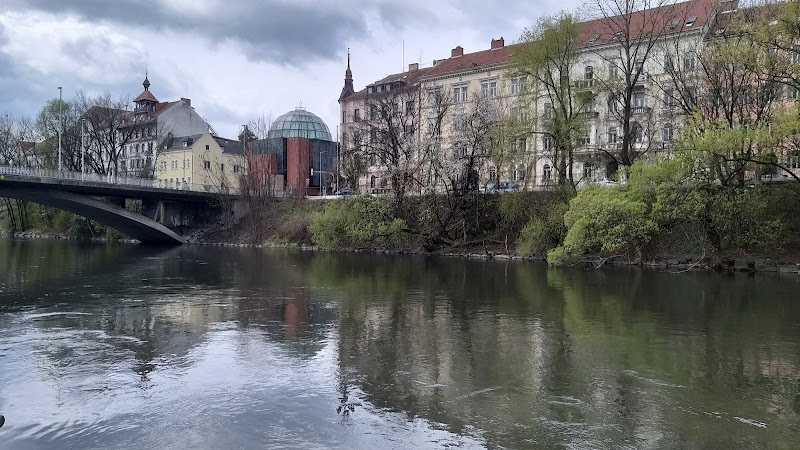
Chinese Pavilion is a small, open-sided viewing pavilion on Graz’s Schlossberg, at Schloßberg 2, 8010 Graz, Austria, above the Innere Stadt old town. Built in 1890, it belongs to the hill’s transformation from a fortified stronghold into a public landscape, rather than to a Chinese museum or cultural collection. Travelers come for a sheltered pause among the trees, the ornamental roof and timber structure, and views across the western side of Graz. Combine it with the Clock Tower and a walk through the hilltop gardens.
What to Expect at Chinese Pavilion
The pavilion is an outdoor architectural stop, not a ticketed attraction with galleries, replicas, or exhibits. Its Chinese-inspired garden architecture reflects the European taste for decorative structures in landscaped parks. Look at the relationship between the projecting roof, slender supports, and open viewing sides: the surrounding landscape is the principal attraction. The experience changes with the weather, from clear views across city rooftops to a quieter, enclosed feeling when mist settles around the Schlossberg.
The setting explains much of its appeal. French forces dismantled most of the Schlossberg fortifications following the 1809 conflict; Graz residents paid to preserve the Clock Tower and Bell Tower. Landscaping associated with Ludwig von Welden began in 1839, helping establish the park visitors explore today. The pavilion belongs to this later recreational chapter. Follow the connecting paths rather than expecting a separate visitor complex: there is no exhibition circuit, pavilion café, or staffed admission desk.
- 1890 pavilion: A late-19th-century garden structure with an ornamental roof and open sides framing its hillside surroundings.
- Western outlook: Look across Graz’s roofs toward the districts beyond the Mur, with visibility depending on foliage and weather.
- Schlossberg park: Wooded slopes, planted terraces, and connecting paths make the approach part of the visit.
- Clock Tower connection: Continue south to the Uhrturm, recognizable by clock hands whose larger hand indicates the hour.
- Fortress landscape: Nearby walls, terraces, and the surviving Bell Tower reveal the hill’s earlier defensive role.
Chinese Pavilion at a Glance
| Detail | Information |
|---|---|
| Address | Schloßberg 2, 8010 Graz, Austria |
| Neighborhood / Area | Schlossberg, above Innere Stadt |
| Operating Hours | Monday–Sunday: open 24 hours; transport operates separately |
| Admission / Price Range | Free; $ overall. Funicular and lift travel cost extra. |
| Recommended Visit Duration | 15–30 minutes; 1.5–2 hours with the wider Schlossberg |
| Nearest Transit / Parking | Schlossbergbahn stop, trams 3 and 5; paid parking at Kastner & Öhler’s underground garage |
| Official Website & Phone | Graz Tourism; visitor information: +43 316 8075 0 |
Visiting Tips, Getting There & Nearby Pairings
Arrive in daylight to appreciate the roof details and navigate the branching hillside paths. Morning suits a longer walk; late afternoon can bring warmer light across the city. From tram stop Schlossbergbahn, take the funicular from Kaiser-Franz-Josef-Kai, then continue through the park. Alternatively, the Schlossberg lift rises from Schlossbergplatz through the hill. Both avoid much of the climb, but onward paths still have slopes, and stair routes are unsuitable for wheelchairs or strollers. The Schlossbergbahn accommodates wheelchairs; choose paved paths and allow extra time for gradients. Drivers should park below the hill rather than attempt to reach the pavilion by car.
Pair the pavilion with the Uhrturm, roughly five to ten minutes away on foot, then explore the nearby Herbersteingarten terraces below it. Allow around ten minutes to reach the Glockenturm, which houses the large bell known as Liesl; route choice and stops affect walking times. Wear shoes with grip, especially after rain or when autumn leaves cover paths. Keep dogs on a lead and leave room for other visitors at the viewpoint. The pavilion offers overhead shelter, not an enclosed refuge from wind or winter cold.
Frequently Asked Questions
What are the opening hours and best time to visit?
The pavilion is accessible around the clock, every day. Daylight is best for the architecture and views; check funicular or lift operating times separately if you depend on transport back down.
Is there an admission charge or reservation requirement?
Admission is free, and no reservation is needed. The Schlossbergbahn funicular and Schlossberg lift are separate paid services; check their current fares through Holding Graz before traveling.
How much time should I allow?
Allow 15–30 minutes for the pavilion, photographs, and a pause. Budget 1.5–2 hours if you include the Clock Tower, garden terraces, and walking between the hill’s main viewpoints.
Is the pavilion suitable for families and visitors with limited mobility?
Families can include it in a Schlossberg walk, keeping children close beside steep slopes and stairways. Visitors with limited mobility should use the funicular and paved approaches rather than the stair climbs; the surrounding hill is not level.
When planning your Graz travel guide or browsing verified attractions in Graz, pair this stop with standout local spots including Tramway Museum Graz, Diözesanmuseum, Burger Factory, and aiola upstairs (nearby).