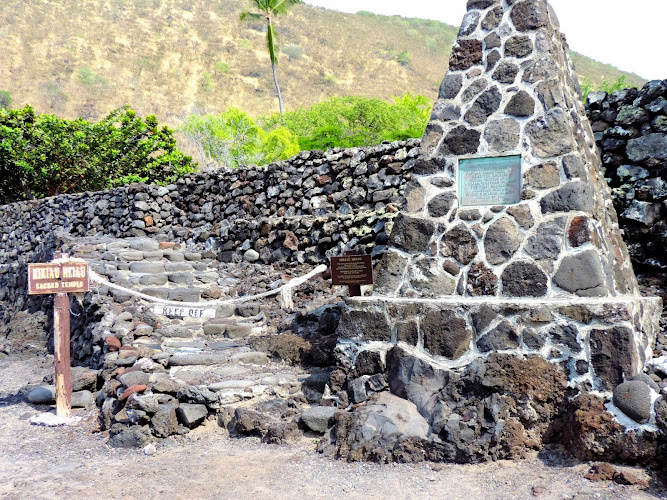
Puʻu O Mahuka Heiau State Historic Site is an open-air sacred and archaeological landscape high above Oʻahu’s North Shore, near Haleiwa. Oʻahu’s largest known Hawaiian temple complex occupies a commanding ridge above Waimea Bay and Waimea Valley, where three adjoining stone-walled enclosures make the scale of the place immediately apparent. The setting is as important as the masonry: ocean, valley, and upland views help explain why this was a significant ceremonial and political center.
This is not a recreated attraction or an indoor museum with objects behind glass. The surviving walls, grass, earth, and stone paving traces are the historic resource itself. Often associated with the 1600s and later enlarged or altered by successive rulers, the heiau offers a concentrated introduction to pre-contact Hawaiian religious and chiefly life. Visit with care: this remains a place of cultural significance to Native Hawaiians, not simply a scenic overlook.
Standout Highlights & What Not to Miss
Give yourself time to look beyond the headline view. The site is compact, but its meaning becomes clearer when you read the interpretive material, follow the visible boundaries of each enclosure, and connect the hilltop position to the productive valley and coastline below.
- The three stone enclosures: Their substantial stacked-stone walls define the core of the nearly two-acre precinct. Notice how the adjoining spaces create an organized complex rather than a single isolated platform.
- The Waimea panorama: Look toward Waimea Bay and inland toward Waimea Valley. The broad sightlines are a practical lesson in the site’s strategic position above an important settlement area.
- Architecture without reconstruction: Timber-and-thatch structures once stood within the precinct, but they are gone. The remaining stonework invites visitors to consider both what survives and what archaeology cannot fully restore.
- Interpretive context: Use the on-site information to understand the relationship between chiefs, priests, makaʻāinana, ceremony, and the labor required to build major temples.
- A respectful viewing approach: Stay on designated visitor areas, do not climb or enter the stonework, and keep voices and photography considerate. These choices protect fragile features and honor the site’s living cultural weight.
Visitor Strategy & Planning Snapshot
| Planning Factor | What to Expect | Practical Strategy |
|---|---|---|
| Ideal Arrival Window | The exposed hilltop is most comfortable when light is softer and temperatures are less intense. Clearer early conditions can also sharpen the bay-and-valley views. | Make it an early North Shore stop when possible, especially if photography matters. Bring sun protection even for a short visit. |
| Typical Time Needed | Most visitors can absorb the principal enclosures, interpretive material, and overlooks in 30 to 45 minutes. | Allow extra time if you want to read closely, take photographs, or pause quietly rather than treating it as a quick roadside viewpoint. |
| Booking / Queue Reality | This is a small historic-site stop rather than a large managed attraction. Parking capacity and road-trip timing can shape the experience more than a formal tour schedule. | Build flexibility into a North Shore driving day. Check current park notices before leaving, and have a nearby stop in mind if conditions change. |
| Terrain & Accessibility | Uneven earth, grass, and rocky surfaces limit wheelchair and stroller access around the temple area. The archaeological setting is not a smooth, fully paved route. | Wear secure footwear, move slowly, and contact State Parks in advance about individual access needs. Avoid assuming every viewpoint is equally reachable. |
| Weather / Seasonal Fit | Sun, wind, and passing rain can all affect comfort on the exposed ridge. North Shore surf and weather conditions may also influence the rhythm of a wider day out. | Carry water and rain protection, then pair the visit with flexible coastal or valley plans rather than a tightly timed outdoor schedule. |
Honest Trade-Offs: Best For vs. Who Might Skip
This is especially rewarding for travelers interested in Hawaiian history, archaeology, cultural landscapes, and North Shore photography. It suits visitors who can appreciate a place without reconstructed buildings, guided performances, or a long checklist of activities. The trade-off is that the experience depends on attention and respect: much of what you are seeing is low stonework in an exposed landscape, not an instantly legible monument. Travelers seeking a sandy beach stop, extensive facilities, shaded strolling, or easy mobility across level paved surfaces may prefer to admire the view briefly or choose another nearby destination as their main outing.
Neighborhood Context & How to Pair Your Visit
Puʻu O Mahuka works best as a purposeful short stop within a North Shore day, paired with time around Waimea Bay, Waimea Valley, or Haleiwa. Reach the site as a drive-linked hilltop visit, then save the more walkable portion of the itinerary for the bay, valley, or Haleiwa’s town streets rather than expecting a continuous pedestrian route from the heiau. The sequence matters: beginning here gives the coast below historical context, while ending here provides a quiet counterpoint to busier beach and town stops. Keep the visit unhurried, pack out everything you bring, and let the site set a respectful tone for the rest of the day.
When planning your Hawaii travel guide or comparing verified attractions and parks in Hawaii, pair this stop with standout local spots including Hikiau Heiau, Mauna Kea – State Science Reserve – Halepōhaku Area, Grand Hyatt Kauai Resort & Spa, and North Shore Marketplace (7.8 km away).