
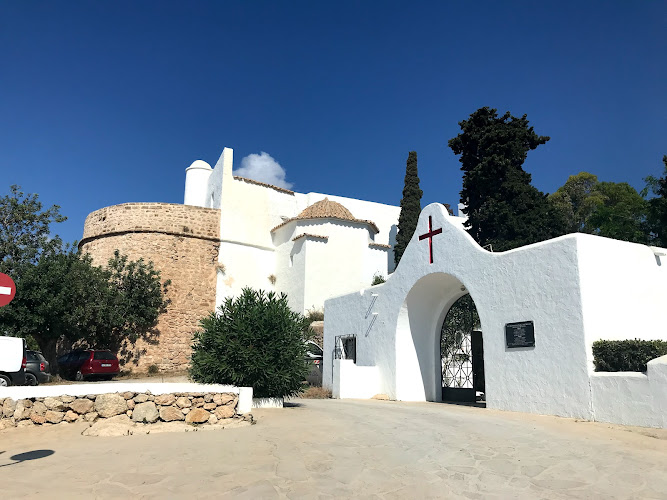
Museu Etnogràfic d’Eivissa is Ibiza’s museum of rural material culture, housed in Can Ros, a more than 300-year-old farmhouse on Av. Pare Guasch, 07840 Santa Eulària des Riu, in the Puig de Missa area of Santa Eulària des Riu. Declared a Bien de Interés Cultural, this former payès home traces the working, domestic and ceremonial life of the island through farming tools, fishing gear, dress, jewellery and household objects; travelers come for a close look at the Ibiza that existed beyond the beach resorts.
What to Expect at Museu Etnogràfic d’Eivissa
Can Ros is as important as its collection. The low-slung whitewashed farmhouse, with its thick walls, modest rooms and traditional rural layout, gives the displays an appropriate domestic setting rather than a conventional gallery atmosphere. Begin by taking in the building and its gardens, then move room by room through objects that explain how Ibizan families produced food, made clothing, travelled, worshipped and furnished their homes before tourism reshaped the island economy.
The permanent presentation brings together agricultural and fishing implements, carts, tools of traditional trades, ceramics and everyday domestic equipment. Look especially for the island’s formal clothing and jewellery: traditional dress communicates status and local identity with far more precision than the familiar all-white Ibiza image. Popular musical instruments add another layer to the story of community celebrations. Temporary exhibitions, a specialist ethnographic library and video library extend the programme, while public craft workshops periodically put heritage skills into practice. Check the official museum website for workshop and exhibition dates before travelling.
- Can Ros farmhouse: Explore a protected, more than three-century-old payès house and a fine example of Ibiza’s vernacular rural architecture.
- Farm and fishing implements: See the practical equipment that supported cultivation, livestock work and coastal livelihoods on the island.
- Traditional dress and jewellery: Examine garments and personal adornment that preserve the visual language of Ibizan social and festive life.
- Domestic life collection: Household utensils, pottery and furnishings show how island families cooked, stored goods and organised daily routines.
- Crafts and folk culture: Carts, occupational tools and popular musical instruments connect rural trades with community celebrations and workshops.
Museu Etnogràfic d’Eivissa at a Glance
| Detail | Information |
|---|---|
| Address | Av. Pare Guasch, 07840 Santa Eulària des Riu, Illes Balears, Spain |
| Neighborhood / Area | Puig de Missa, above central Santa Eulària des Riu |
| Operating Hours | Tue–Sat 10am–2pm; Sun 11am–1:30pm; closed Monday |
| Admission / Price Range | Free admission; donations and workshop conditions may vary |
| Recommended Visit Duration | 45 to 60 minutes |
| Nearest Transit / Parking | Santa Eulària bus station is about a 10–15 minute uphill walk; limited street parking around Puig de Missa |
| Official Website & Phone | museuetnograficdeivissa.es · +34 971 33 28 45 |
Visiting Tips, Getting There & Nearby Pairings
Arrive soon after the 10am opening on Tuesday through Saturday for the quietest rooms and cooler temperatures on the climb to Puig de Missa. Entry is free, so this is an easy cultural stop to combine with a morning in Santa Eulària; allow extra time if a temporary exhibition or craft activity is running. The museum’s short opening window makes it unsuitable for a late-afternoon visit. Personal photography should be confirmed with staff on arrival, particularly in temporary displays or during workshops.
From the Santa Eulària bus station, walk through the town centre toward Puig de Missa; the final approach is uphill. Drivers should expect narrow local streets and limited on-street spaces rather than a dedicated museum garage. Can Ros is a historic farmhouse with changes of level, thresholds and compact rooms, so wheelchair users and visitors with strollers should call ahead about the day’s practical access. Pair the museum with the nearby whitewashed Puig de Missa church, roughly 200 metres away, then descend to the palm-lined Santa Eulària waterfront and the town’s marina, both within about 10–15 minutes on foot.
Frequently Asked Questions
When is the best time to visit Museu Etnogràfic d’Eivissa?
The museum opens Tuesday to Saturday from 10am to 2pm and Sunday from 11am to 1:30pm; it is closed on Mondays. Go at opening time, particularly in warm months, to explore before the uphill walk around Puig de Missa becomes hot and before midday visitors arrive.
Does the museum charge admission or require advance booking?
Admission is free and a standard self-guided visit does not require advance booking. Contact the museum directly if you are planning a group visit or want to attend a craft workshop, as activities and temporary-programme arrangements can differ.
How long should I spend at Can Ros?
Budget 45 to 60 minutes for the permanent collection and the farmhouse itself. Add time for a temporary exhibition, a workshop, or a visit to Puig de Missa church immediately above the museum.
Is Museu Etnogràfic d’Eivissa suitable for families and wheelchair users?
Families can use the tangible objects, carts and costume displays to introduce children to traditional island life. The historic house has uneven surfaces, thresholds and level changes, and the route up Puig de Missa is steep; contact the museum before arrival to discuss mobility needs and available assistance.
When planning your Ibiza travel guide or comparing verified attractions and museums in Ibiza, pair this stop with standout local spots including IBIZA EXPLORER, MAEF – Museu Arqueològic d'Eivissa i Formentera (Museum/Museo), Agroturismo ATZARO ibiza, and Pont Vell, Santa Eulària des Riu (0.3 km away).


