Down a dust-and-limestone lane between Santa Gertrudis and Sant Llorenç de Balàfia, a citrus orchard hides a restaurant that has quietly outlasted three decades of Ibiza’s trend cycles. La Paloma opened in 2004 as a family project and has grown, without ever losing its orchard-shack informality, into one of the island’s most requested lunch reservations. It is not a museum or monument in the conventional sense, but it functions as a genuine cultural attraction: a living document of how Ibiza’s hippie-era food culture matured into something the world now travels for.
La Paloma sits on Carrer Can Pou 4, near Sant Llorenç de Balàfia in Ibiza’s rural interior, inside a working orange grove. Opened in 2004 by chef Prasuna Coppini’s family, it serves Mediterranean, Middle Eastern and Italian-inflected vegetarian-strong dishes from a wood-fired kitchen. Expect €15–€35 per dish, no formal admission fee, cash-friendly policies, and mandatory advance booking, especially for lunch under the trees between April and October.
At a Glance
| Category | Details |
|---|---|
| Address | Carrer Can Pou, 4, 07812 Sant Llorenç de Balàfia, Ibiza, Balearic Islands |
| Operating Hours | Typically 1pm–4pm and 8pm–midnight, closed Mondays (seasonal changes apply — call ahead) |
| Price Range | $$–$$$ (mains €15–€35, no cover admission) |
| Highlights | Orange grove garden seating, wood-fired hummus and focaccia, fresh juices, fireside winter dining |
| Transport/Transit Access | Private car or taxi from Ibiza Town (25–30 min), no direct bus line, on-site free parking on unpaved ground |
Deep Origins, Architectural Evolution & Cultural Significance
La Paloma’s story begins in 2004, when a family with no restaurant pedigree decided to plant a kitchen inside an existing orange orchard rather than build a dining room and add greenery afterward. That distinction matters. Most of Ibiza’s countryside restaurants retrofit gardens around a structure; La Paloma did the opposite, and the site still reads that way. The original buildings are low, whitewashed, and modest — a single-story finca with a tiled roof, deep-set windows and a covered porch that functions as the indoor dining room when weather forces guests inside. Over two decades, the family has added a covered bar area, a fire pit zone for cold months, and expanded seating pockets tucked between individual citrus trees, but they have resisted the temptation to formalize the architecture into something glossier. There is no marble, no designer lighting rig, no attempt to mimic the polished beach-club aesthetic that dominates Ibiza’s coastal dining scene.
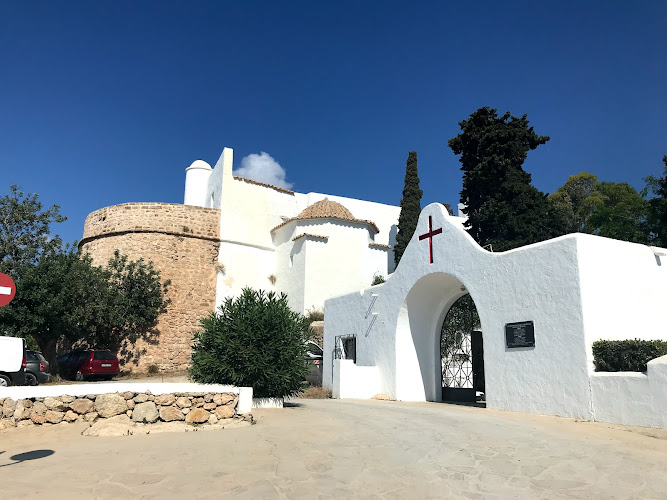
Chef Prasuna Coppini, who has anchored the kitchen since the beginning, built the menu around a fusion that reflects Ibiza’s own layered demographic history: waves of Italian, Israeli, and broader Mediterranean and Middle Eastern residents who settled on the island from the 1960s onward and brought home cooking rather than restaurant cooking with them. The significance of La Paloma within Sant Llorenç de Balàfia specifically is tied to this cultural layering. The village itself is one of Ibiza’s most traditional interior settlements, known for its fortified 16th-century church-houses (the “casas fortificadas”) built as refuges from pirate raids. La Paloma sits in dialogue with that rural, defensive, agrarian history — its orchard setting is not decorative but a continuation of the same land-use patterns that shaped the area for centuries. Locals describe it less as a restaurant that arrived in the countryside and more as an extension of the countryside that happens to serve food.
Its cultural weight has grown alongside Ibiza’s shift from a purely nightlife-driven tourist economy toward a slower, wellness- and gastronomy-oriented identity in the 2010s and 2020s. La Paloma is frequently cited by food writers and residents as one of the originators of that shift — proof that a restaurant with communal wooden tables, no dress code, and produce grown meters from the plate could become as sought-after as any club VIP table.
Signature Highlights & Detailed Offerings
The menu changes seasonally but has held a stable spine for years. The hummus, served warm with a pool of olive oil, toasted pine nuts, and torn parsley, arrives with the restaurant’s signature puffed focaccia — baked to order in a wood oven and delivered still steaming, priced around €9–€12. Falafel, made fresh rather than frozen, is often served as part of a mezze board alongside labneh, tahini, pickled vegetables, and grilled eggplant, running roughly €16–€22 depending on portion size. The kitchen’s Italian register shows up in handmade pastas — a burrata-and-tomato dish using produce from nearby farms is a frequent summer fixture, typically €18–€24 — while heavier options include slow-cooked lamb and grilled whole fish sourced from Ibiza’s own coastal catch, priced €28–€38.
Fresh juices and smoothies form their own category of signature offering: carrot-ginger, beet-orange, and green blends made with fruit picked from the orchard when in season, priced €6–€9. Desserts lean toward simple, unfussy preparations — citrus-based tarts and ricotta cakes that use the estate’s own oranges in autumn and winter months. There is no formal admission or ticketing structure since this is a working restaurant, but the “offering” that draws repeat visitors is the seating itself: individual wooden tables scattered under specific named orange trees, each with its own microclimate of shade and light, making a reservation request for a particular table a genuine and common practice among regulars.
Sensory & Spatial Walkthrough
Arriving at La Paloma by midday in summer, the first sensation is temperature contrast: the dry heat of the unpaved parking area gives way abruptly to the cool, green shade of the orchard canopy, several degrees cooler than the open road. Light filters through the citrus leaves in moving dapples rather than direct beams, which is why lunch here reads visually softer in photographs than almost any coastal restaurant on the island — there is no glare, no reflected white sand, only mottled green-gold light shifting with the breeze. The material palette is deliberately plain: raw wood tables, mismatched wooden chairs, terracotta pots, white linen napkins, and unglazed ceramic plates that show hand-thrown imperfections. Nothing is lacquered or polished to a shine.
Acoustically, the space is quiet by Ibiza standards — no piped music competes with cicadas, distant church bells from Sant Llorenç, and the low hum of conversation at neighboring tables spaced far enough apart for privacy. Evenings shift the mood substantially: as the sun drops, string lights and candle lanterns replace natural light, and in cooler months the fire pit becomes the visual and social anchor, with seating arranged in loose semicircles rather than the daytime’s linear table rows. Winter service moves largely indoors to the finca’s original rooms, where thick stone walls, low beamed ceilings, and a working fireplace create a noticeably more enclosed, intimate register than the open-air summer service.
Insider Visitor Strategy & Pro Tips
- Book at least 5–7 days ahead for July and August lunch service; weekend tables often fill two weeks out during peak season.
- Request a table “under the trees” specifically when booking — the phone staff know regulars ask for this and will note preferences.
- Arrive at the very start of lunch service (1pm) to get first pick of shaded tables before the midday sun moves directly overhead by 2:30pm.
- Photography is welcome and unrestricted; the best natural light for food photography falls between 1pm and 2pm when dappled sun hits the tables at an angle rather than overhead.
- Bring cash as a backup — rural Ibiza restaurants can have inconsistent card connectivity, though most terminals work.
- Off-season (November–March), confirm opening days by phone, as the restaurant reduces service and closures shift year to year.
- Wear closed or sturdy sandals; the orchard floor is uneven dirt and tree roots, not paved terrace.
Curated Half-Day Neighborhood Pairing Itinerary
Begin the morning in Santa Gertrudis de Fruitera, roughly ten minutes by car, and walk the small village square, stopping at one of its long-established cafes for a coffee and ensaimada before the day heats up. From there, drive or taxi about eight minutes to the fortified church-houses cluster near Sant Llorenç de Balàfia itself, where the 16th-century defensive architecture offers a striking, uncrowded counterpoint to the coast’s beach clubs — allow 30–40 minutes to walk the perimeter and photograph the stone facades. Time the final leg to arrive at La Paloma by 1pm for lunch under the orange trees, allowing a leisurely two hours for the full mezze-to-dessert arc. Close the afternoon with a short ten-minute drive to the Santa Gertrudis art galleries strip, where several small independent studios and ceramic shops stay open into early evening, rounding out a circuit that touches architecture, gastronomy, and craft within a roughly fifteen-kilometer radius.
Practical Logistics & Universal Accessibility
There is no public bus route serving Carrer Can Pou directly, making a rental car, private transfer, or taxi the only realistic options; expect a 25–30 minute drive from Ibiza Town and roughly 20 minutes from Santa Eulalia. On-site parking is free but unpaved and can become dusty or slightly uneven after rain, which may present mobility challenges for wheelchair users — guests with accessibility needs should call ahead so staff can arrange a table near the entrance and advise on the smoothest path from the parking area. The dining surfaces themselves are step-free from the car park to the outdoor tables, though the terrain is dirt rather than paved. Indoor winter seating involves navigating a raised threshold typical of older finca construction. Dress code is fully casual — resort wear, sandals, and beachwear are all acceptable, and no jacket or formal attire is expected even for dinner service. Card payment is accepted at most terminals, though carrying cash is advisable given rural connectivity gaps.
Frequently Asked Questions
Do I need a reservation at La Paloma? Yes, reservations are strongly recommended year-round and essentially mandatory for lunch or dinner between May and September.
Is La Paloma vegetarian or vegan-friendly? The menu is vegetarian-strong with numerous vegan-adaptable dishes like hummus, falafel, and grilled vegetable plates, though it also serves meat and fish.
What is the average cost per person? Expect roughly €35–€55 per person for a two-to-three course meal with a drink, placing it in the $$–$$$ range.
Is La Paloma open in winter? Yes, but with reduced hours and indoor seating by the fireplace replacing the orchard tables; confirm current winter days by phone as they shift seasonally.
Can I walk here or is a car required? A car or taxi is required; there is no direct public transit stop, and the surrounding roads are not pedestrian-friendly for long-distance walking.
Is the restaurant suitable for children or large groups? Yes, the open orchard layout and relaxed pacing suit families well, and large groups should call ahead to arrange connected or nearby tables under the trees.