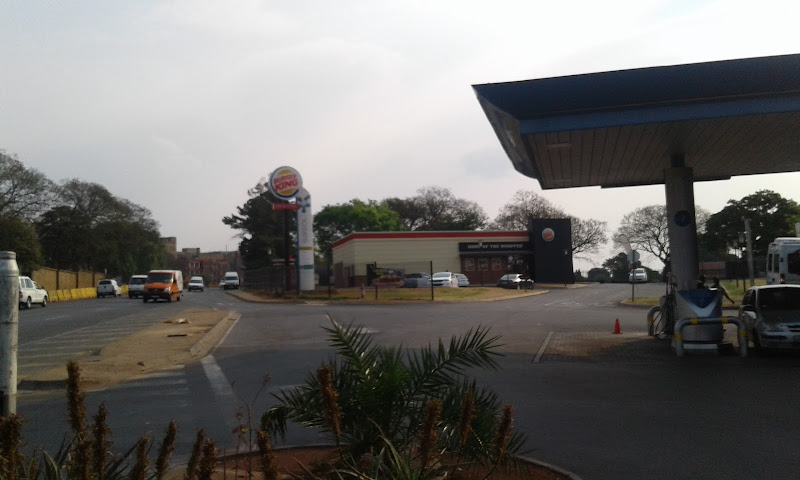
Doornfontein is an inner-city Johannesburg neighbourhood sitting just east of the central business district, in the zone where the city’s gold-rush growth spread outward in the late 1800s. It was once a fashionable residential suburb, and a large part of its early identity came from the Jewish families who settled here. Today it is dense, busy and student-heavy, with the University of Johannesburg’s Doornfontein campus shaping daily rhythms.
The area is best known for the Ellis Park sports precinct, where the stadium, tennis venue and pool draw crowds on event days. What makes Doornfontein distinctive is the layering: a world-famous rugby ground, surviving Victorian-era houses, artist studios and everyday working-class commerce all within a short radius. Public access is free, while stadium matches, concerts and arena events are ticketed separately. It rewards curious visitors who want the real city rather than a curated precinct.
Standout Highlights & What Not to Miss
Doornfontein works best as a layered walk or drive-through where you pick two or three focal points rather than trying to cover everything. These are the ones worth your time:
- Ellis Park Stadium (Emirates Airline Park). Opened in 1928 and built in about eight months on a former quarry and dump site, it is one of Africa’s largest stadiums and the setting of the 1995 Rugby World Cup final. The rugby statue outside is the easiest photo stop.
- Victorian and Edwardian streetscapes. Look for old villas, some split into two homes, now used as university offices around the University of Johannesburg’s Doornfontein campus. They are the clearest trace of the suburb’s days as a Jewish and middle-class residential district.
- August House. A landmark building on Commissioner Street that houses artist studios and holds periodic open-studio events. Check for an open day before you go, as the studios are not a standing gallery.
- Ellis Park sports precinct. Beyond the main stadium sit the tennis stadium, a large public swimming pool and the arena used for concerts, so a match or event day shows the area at full volume.
- Views toward Ponte City. The cylindrical Hillbrow tower is a recognisable skyline marker from the stadium side and puts the neighbourhood in context.
- Street life along the main roads. Student flats, taxi routes, trader stalls and small eateries make this a working inner-city district, not a polished attraction.
Visitor Strategy & Planning Snapshot
Think of this as a daylight, situational-awareness outing. The table below sets out how to plan it.
| Planning Factor | What to Expect | Practical Strategy |
|---|---|---|
| Ideal Arrival Window | Mid-morning on a weekday or Saturday gives the best light and the busiest street activity, with plenty of daylight left. | Arrive by 9:30 or 10:00 and finish before late afternoon. Avoid wandering on foot after dark. |
| Typical Time Needed | A self-guided look at the stadium precinct and surrounding streets takes 1.5 to 2.5 hours. | Combine it with Constitution Hill or Newtown for a half day rather than treating it as a standalone outing. |
| Booking / Queue Reality | Streets and the neighbourhood are free to walk. Matches, concerts and arena events need separate tickets and bring heavy traffic. | Buy event tickets through official ticketing channels. On event days, expect road closures and arrive early. |
| Terrain & Accessibility | Mostly flat to gently sloping city streets. Pavements vary in quality, with uneven patches and busy intersections. | Wear closed, comfortable shoes. Wheelchair users should scout routes first and use a vehicle between points. |
| Weather / Seasonal Fit | Highveld summers bring afternoon thunderstorms, while winters are dry and sunny with cold mornings. | April to September suits walking. In summer go in the morning and keep a rain layer handy. |
A guided walking tour is the strongest way to read the area, since the historical detail is hard to see from the pavement alone. Local operators have run heritage walks here that trace the old Jewish district from the stadium outward. Keep phones and cameras discreet, carry only what you need and ask your accommodation about the current mood of specific streets.
Honest Trade-Offs: Best For vs. Who Might Skip
Doornfontein suits sports fans, architecture and urban-history enthusiasts, photographers who like gritty streetscapes and repeat visitors who have already done the headline Johannesburg sights. Rugby and football followers get the most from it, especially when paired with a match. It is also useful for anyone curious about how the city’s suburbs have reinvented themselves over a century.
You might skip it if you want polished attractions, quiet green space or a relaxed stroll with no planning. Conditions are urban and sometimes rough around the edges, pavements are uneven, and there is little in the way of visitor signage. First-timers with only a day in Johannesburg may get more from Constitution Hill and Maboneng, which are nearby and easier to navigate. Travellers who are uneasy in busy inner-city areas should go with a guide or a driver.
Neighborhood Context & How to Pair Your Visit
Doornfontein sits close to Constitution Hill, the Johannesburg Art Gallery area, Newtown and Jeppestown, so it slots easily into a half-day circuit. A practical sequence is to start at the Ellis Park precinct in the morning, walk or ride past the old villas near the university campus, then head to August House if an open-studio day is on. From there, continue by car or ride-hailing to Constitution Hill for the human rights museum and the Constitutional Court. Finish with lunch in Newtown or Maboneng, where restaurants and galleries are concentrated. Use short vehicle hops between stops rather than walking every link, and check the stadium fixture list first so you either catch an event or avoid the traffic.
When planning your Johannesburg travel guide or browsing verified attractions in Johannesburg, pair this stop with standout local spots including Saxonwold, Gold Reef City Theme Park, Park Meadows Shopping Centre, and End Street North Park (0.5 km away).