
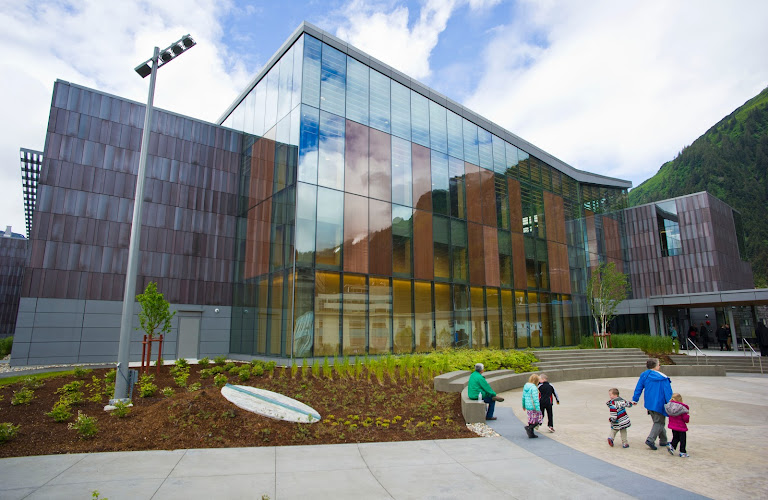
Alaska State Museum is Alaska’s state history, culture, and art museum at 395 Whittier Street in the downtown Willoughby District of Juneau, Alaska, United States of America. Established in 1900, it explores Alaska Native cultures, natural history, Russian colonial rule, and the territory’s development into a state. Travelers visit for substantial cultural collections, objects that explain life across Alaska’s very different regions, and a children’s discovery area. The museum occupies the Father Andrew P. Kashevaroff Building, commonly called the APK, which opened in 2016 and also houses the state library and archives.
What to Expect at Alaska State Museum
Begin with the Alaska Native collections rather than treating them as a quick introduction. Clothing, tools, carvings, baskets, and ceremonial belongings reveal distinct traditions among Southeast Alaska’s Tlingit, Haida, and Tsimshian peoples and communities elsewhere in the state. Look closely at the materials: woven spruce roots, worked wood, animal skins, and ivory demonstrate skills adapted to particular environments. Read the cultural identifications on individual labels; these collections represent different peoples, not one interchangeable “Alaskan” culture.
The museum’s signature natural-history installation is a large eagle nesting tree, giving visitors an unusually close perspective on bald eagles and their habitat. Historical galleries broaden the story through Russian America, the American purchase, mining, maritime activity, and World War II. Art exhibitions add another perspective, although temporary displays change. Families should leave time for the children’s discovery area and its ship-themed play setting. The APK’s spacious contemporary interior makes this an indoor cultural visit rather than an attraction requiring trails or outdoor walking.
- Eagle nesting tree: A memorable wildlife installation that rewards looking upward as well as at eye level.
- Alaska Native collections: Regional clothing, basketry, carvings, and tools connect craftsmanship with community life.
- Russian America: Historical interpretation places Alaska’s colonial period within the longer state story.
- Territorial and wartime history: Displays explore industries, transportation, and events that reshaped Alaska.
- Children’s discovery area: A ship-themed space gives younger visitors a change of pace from reading labels.
Alaska State Museum at a Glance
| Detail | Information |
|---|---|
| Address | 395 Whittier Street, Juneau, AK 99801, United States of America |
| Neighborhood / Area | Willoughby District, downtown Juneau |
| Operating Hours | Seasonal schedules apply; check the official Visit Us page for your date and holiday closures. |
| Admission & Ticket Prices | Paid admission; current rates and any free-admission opportunities are listed through the official museum website. |
| Recommended Visit Duration | 1.5 to 2.5 hours; allow longer for detailed reading. |
| Nearest Transit / Parking | Downtown Transit Center on Egan Drive, approximately 10 minutes away on foot; check posted restrictions at nearby parking spaces. |
| Official Website / Phone | Alaska State Museum / +1 907-465-2901 |
Visiting Tips, Getting There & Nearby Pairings
Arrive near opening if you want to read the galleries before moving on to other downtown sights. Check the museum’s Visit Us information before arranging transport, particularly outside the summer cruise season. Confirm admission categories and group arrangements directly rather than buying an unrelated sightseeing package solely for entry. Capital Transit passengers can walk from the Downtown Transit Center toward Whittier Street. Drivers should read parking signs carefully; government, employee, and time-limited spaces are not interchangeable visitor parking.
The modern APK provides an accessible indoor setting, with step-free access and elevators between public levels. Wheelchair users and families with strollers should use the accessible entrance route and ask reception for orientation. Allow for wet sidewalks and slippery conditions outside in colder weather. Pair the museum with the Walter Soboleff Building, roughly a 10-minute walk away, for another perspective on Southeast Alaska Native culture. The Juneau-Douglas City Museum and Alaska State Capitol are about 10–15 minutes away uphill; that climb makes them a less effortless pairing for visitors with limited mobility.
Frequently Asked Questions
What are the hours, and when should I visit?
Opening days and hours change seasonally. Check the official schedule for your exact date, then aim for opening time with at least two hours available before closing.
How much are tickets, and should I reserve?
Admission is paid. Consult the official website for current prices, concessions, and free-admission dates. Contact the museum ahead for organized groups or questions about advance arrangements.
How much time should I budget?
Allow 1.5 to 2.5 hours for the permanent galleries and a temporary exhibition. Visitors who read most labels or spend extra time in the children’s area should allow longer.
Is it suitable for children and wheelchair users?
Yes. The children’s discovery area complements the object-based galleries, while the modern building offers step-free access and elevators. Ask reception about individual access needs and the easiest route through the building.
When planning your Juneau travel guide or browsing verified attractions in Juneau, pair this stop with standout local spots including Devil's Club Brewing Company, The Narrows Bar, Silverbow Inn, and Ramada by Wyndham Juneau (nearby).


