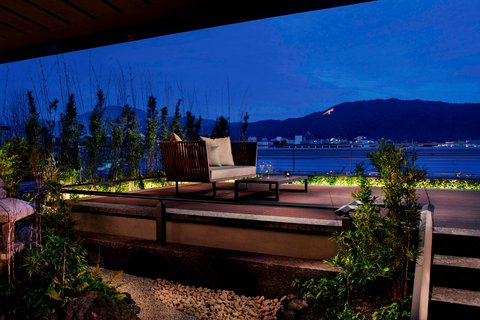
Arashiyama Park Nakanoshima Area is a prefecturally managed scenic park on the sandbar island in the Katsura River at Saganakanoshimacho, Ukyo Ward, Kyoto (616-8383), at the heart of the Arashiyama district. It forms the Nakanoshima district of Kyoto Prefecture’s Arashiyama Park, a landscape garden celebrated since the Heian period for cherry blossoms in spring and maples in autumn, and it sits beside the graceful Togetsukyo Bridge. Travelers come for riverside strolls under pine and cherry trees, views of the green Ogura and Arashiyama hillsides, and an easy, free, always-open escape from the busier streets of the Saga-Arashiyama area.
What to Expect at Arashiyama Park Nakanoshima Area
Arashiyama Park is divided into three districts: Kameyama, Nakanoshima, and Rinsenji. Nakanoshima is the middle one, and it is exactly what its name says: an island formed in the river, planted heavily with pine and cherry trees. In the cherry blossom season it fills with picnickers and hanami crowds, while at other times of year it is a quiet place to stroll, sit on the bank, and watch the Katsura River slide past. You will often see anglers casting lines against the backdrop of the opposite mountains. The river changes its name along its course: the Hozu River upstream through the Hozukyo gorge, and the Oi River near Arashiyama, so you may see both names on local signs.
The wider park around the island adds the features that make this listing popular with families and photographers. On the Kameyama hillside, which is the southeast part of Mt. Ogura, red pine mixed with cherry and maple shades winding paths, open lawns, rest areas, an observation deck, and a children’s plaza. The west side of that hill looks over the Hozu gorge, while the east side holds the cremation mound of three emperors, beginning with Emperor Go-Saga. Downstream of Togetsukyo Bridge on the left bank, the Rinsenji district is lined with old red pines, cherry, and maple trees that give the walk a distinctly classical feel.
- Cherry blossom season: The island’s cherry trees and pines make Nakanoshima one of Kyoto’s classic hanami spots, and it is at its liveliest in early April.
- Autumn maples: Maples mixed among the pines turn the riverbanks red and gold, framed by the forested slopes across the water.
- Observation deck: Up on the Kameyama hill, the deck gives sweeping views down the valley toward the Hozu gorge and the river below.
- Children’s plaza: A play area on the hillside makes the park practical for families traveling with young kids.
- Riverside angling and rest spots: Quiet banks around the island suit slow walks, sketching, and watching local anglers fish the Katsura River.
Arashiyama Park Nakanoshima Area at a Glance
| Detail | Information |
|---|---|
| Address | Saganakanoshimacho, Ukyo Ward, Kyoto, 616-8383, Japan |
| Neighborhood / Area | Saga-Arashiyama, western Kyoto, beside Togetsukyo Bridge on the Katsura River |
| Operating Hours | Open 24 hours, every day |
| Admission / Price Range | Free entry; price tier $ (no admission fee) |
| Recommended Visit Duration | 45 to 90 minutes for Nakanoshima; 2 to 3 hours with the Kameyama hillside |
| Nearest Transit / Parking | Keifuku Randen Arashiyama Station, JR Saga-Arashiyama Station, Hankyu Arashiyama Station; nearby paid lots fill early in peak seasons |
| Official Website & Phone | Kyoto Prefecture park guide; +81 75-701-0101 |
Visiting Tips, Getting There & Nearby Pairings
The park is open around the clock, but the best light comes early in the morning, before tour groups reach Togetsukyo Bridge, and again near sunset when the hillsides turn gold. In cherry blossom and autumn foliage seasons, arrive before 9:00 a.m. or expect shoulder-to-shoulder crowds and long waits for trains and buses. Public transport is the sensible choice: the Hankyu Arashiyama Station and the JR Saga-Arashiyama Station are both within a short walk of the bridge, and the Keifuku Randen tram terminates at Arashiyama Station nearby. Parking around the district is limited and costly during the peak weeks. The island itself is reached by crossing the bridge and is largely flat along the river edge, which suits strollers and wheelchair users on the main paths, though the Kameyama hillside, with its winding trails and observation deck, includes slopes and some uneven ground. Official contact details are on the prefecture’s park guide page.
Pair the visit with the neighboring sights. The Rinsenji district downstream of the bridge extends the pine-lined walk, and the Saga-Arashiyama and Sagano area is packed with historic sites, shops, and cafes within a 5 to 15 minute walk. Farther downstream, Arashiyama Higashi Park stretches along the riverbank toward Matsuo Bridge, with lawns, ponds, sports fields, a cycling road, and a section of the Tokai Nature Trail, and the Matsuo Taisha shrine, known as the shrine of sake, lies nearby.
Frequently Asked Questions
What are the opening hours and best time to visit?
The park is listed as open 24 hours every day. Early morning offers the calmest atmosphere, while early April cherry blossoms and mid to late November maples are the most scenic and also the busiest periods.
Is there an admission fee?
No. Entry to Arashiyama Park is free. Costs come only from transport, parking, or food and drinks in the surrounding Arashiyama streets.
How much time should I budget?
Allow about an hour for the Nakanoshima riverside. If you add the Kameyama hillside with its observation deck and children’s plaza, plan on two to three hours at an easy pace.
Is the park suitable for families and wheelchair users?
Families do well here thanks to the children’s plaza and open lawns. The riverside paths are mostly level, but the hillside trails to the observation deck involve slopes, so wheelchair and stroller users should stick to the island and bank paths. There is no formal dress code.
When planning your Kyoto travel guide or comparing verified attractions and parks in Kyoto, pair this stop with standout local spots including The Ritz-Carlton, Kyoto, Kikyo Sushi, Funaokayama Park, and HOSHINOYA Kyoto (0.2 km away).