
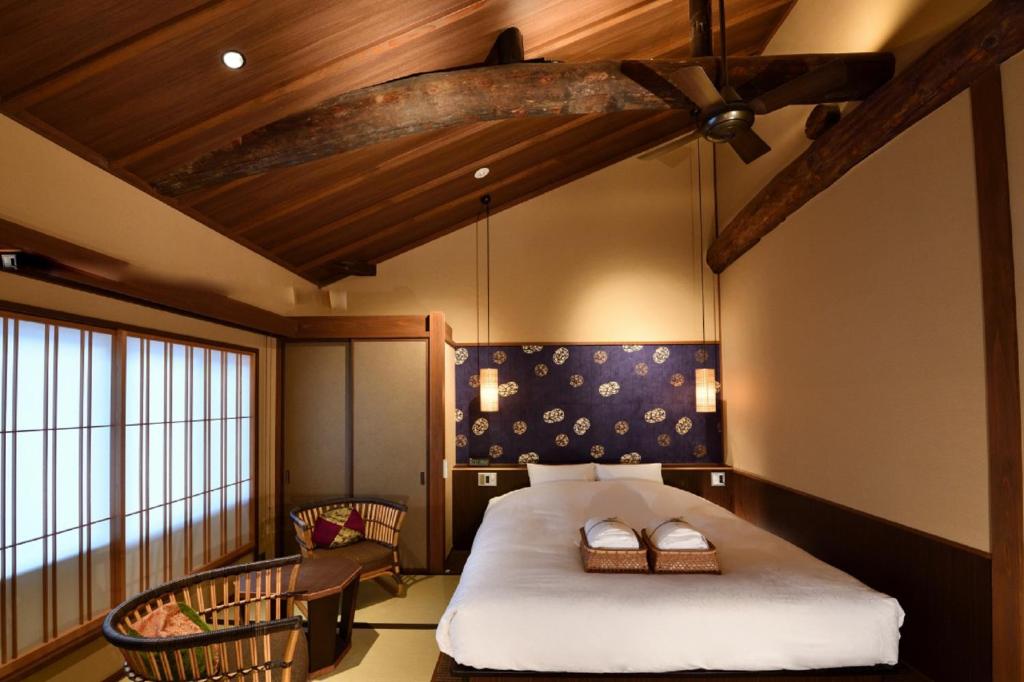
Kyokoyado Muromachi Yutone (京小宿 室町 ゆとね) is a deliberately small Kyoto inn in a restored machiya townhouse, where a narrow streetscape gives way to a courtyard garden, intimate rooms and the warm grain of Japanese cypress. With just seven rooms, it feels less like a large hotel and more like a carefully composed overnight stay centered on traditional Kyoto materials, private bathing and dinner served at an unhurried pace.
The inn sits in Shimogyo Ward’s Muromachi area, a low-rise central-Kyoto neighborhood of closely spaced lanes and merchant-townhouse character. Gojo Station is about a five-minute walk away, placing guests within easy reach of Kyoto Station and the city’s wider rail network while preserving a quieter, more residential mood after a day among Kyoto’s major sights.
Standout Highlights & What Not to Miss
Yutone’s appeal is in the details rather than spectacle. It is a stay for travelers who want the spatial rhythm of a machiya—street-facing entrance, deeper interior spaces and a garden focal point—without giving up the comfort of an en-suite bath. The most rewarding plan is to treat the property as part of the Kyoto experience, not merely a place to sleep between sightseeing stops.
- Private hinoki soaking tubs: Every room has a Japanese cypress bath. The aromatic wood and private setting make a soak especially welcome after long walking days. These are soaking baths rather than natural hot-spring baths, an important distinction for travelers specifically seeking an onsen.
- The courtyard garden: Take time to sit with the view instead of rushing through the common areas. The garden gives the compact townhouse an inward-looking sense of calm and makes changing light and seasonal weather part of the stay.
- Seasonal kaiseki dinner: The in-house Isshozui dining room focuses on Kyoto ingredients and seasonal presentation, including foods such as yuba and fu. Dinner is best approached as a multi-course cultural experience, not a quick meal before heading back out.
- Seven-room scale: The limited room count supports a quiet atmosphere and a more personal rhythm than a large lodging property. It also means preferred dates and room configurations can be less flexible, especially for travelers who need a triple setup.
- Library Lounge downtime: Build in a little unscheduled time to use the lounge, read, or return to the garden. This is one of the best ways to appreciate why a small machiya stay can feel distinct from a conventional central-Kyoto hotel.
Visitor Strategy & Planning Snapshot
| Planning Factor | What to Expect | Practical Strategy |
|---|---|---|
| Ideal Arrival Window | An earlier afternoon arrival gives you time to settle into the room, garden and bath before dinner or an evening walk. | Plan sightseeing around a relaxed check-in day rather than treating the inn as a late-night crash pad. |
| Typical Time Needed | One night introduces the experience; two nights better justify the meal, bath and slower neighborhood pace. | Use a two-night stay if you want one evening in-house and one evening exploring central Kyoto. |
| Booking / Queue Reality | Seven rooms and a dining program make this a limited-capacity stay, particularly during popular Kyoto travel periods. | Reserve well ahead when your dates are fixed, and confirm dining arrangements and room needs during booking. |
| Terrain & Accessibility | The building is a traditional machiya on a narrow street, with no on-site parking; historic layouts may present steps or tight circulation. | Arrive by rail or taxi as appropriate, travel light if possible, and contact the inn directly about step-free requirements. |
| Weather / Seasonal Fit | The garden, warm bath and seasonal cuisine give each part of the year a different character, from humid summer to crisp winter. | Pack for Kyoto’s weather and allow indoor time; the inn is particularly rewarding when you do not need to be outdoors all day. |
Honest Trade-Offs: Best For vs. Who Might Skip
Yutone is best for couples, solo travelers, culture seekers and diners who value atmosphere, privacy and a small-scale Kyoto lodging experience. It suits guests willing to slow down for a bath and a carefully paced meal, and it can be especially appealing to visitors who prefer a quiet base over a full-service, high-traffic hotel. The trade-off is that its historic machiya character is not designed around the broad corridors, extensive facilities or anonymous convenience of a modern chain. Travelers needing guaranteed step-free access, on-site parking, a natural onsen, a large social scene or numerous room choices may be better served elsewhere. Families and small groups should also check room configuration carefully before committing.
Neighborhood Context & How to Pair Your Visit
Use Yutone as a walkable central-Kyoto base rather than limiting your time to headline attractions. Start with a morning walk through the surrounding streets, then use nearby Gojo Station for efficient connections to Kyoto Station and other parts of the city. The inn also pairs naturally with an eastward outing toward the Higashiyama side, followed by an early return for a soak and dinner. For a less structured day, combine neighborhood wandering with a café stop, a visit to nearby temple districts, and an evening spent back at the courtyard. The strongest itinerary leaves room for the inn itself: arrive before dark, linger over the garden, and let the quieter Muromachi setting reset the pace.
When planning your Kyoto travel guide or browsing verified attractions in Kyoto, pair this stop with standout local spots including Aman Kyoto, Kyoto Museum for World Peace, Tōji Temple, and Kotochika Shijo (0.6 km away).


