
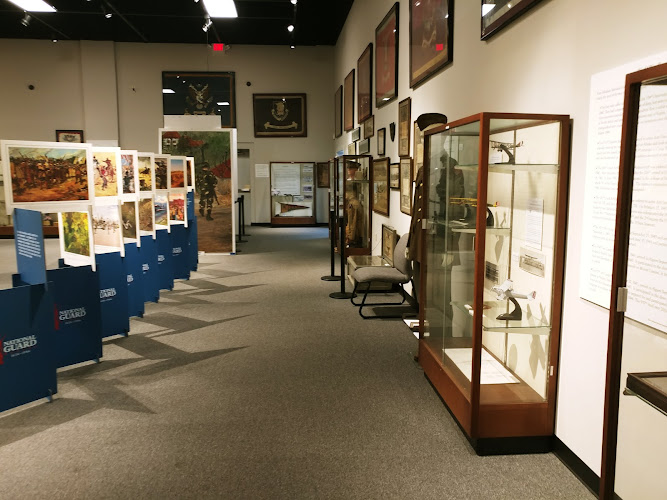
Arkansas National Guard Museum is a military-history museum at 6th & Missouri, Camp Robinson, North Little Rock, AR 72199, inside the active military installation north of the city’s Levy neighborhood. Its collections connect Arkansas’s militia beginnings with the National Guard’s wartime deployments and service at home. The setting matters: Camp Robinson originated as Camp Pike in 1917, when the United States mobilized for World War I. Travelers come for uniforms, weapons, photographs, and the stories behind generations of Arkansas service members.
What to Expect at Arkansas National Guard Museum
The museum occupies Lloyd England Hall, a historic former officers’ club, rather than a purpose-built exhibition complex. Its domestic-scale rooms suit a close examination of military objects and personal histories. Start with the militia and early-post history, then follow the world-war material into later Guard service. Weapons and uniforms show changes in equipment, while photographs help explain the enormous training operation that transformed this part of central Arkansas. Camp Pike was renamed Camp Joseph T. Robinson in 1937, honoring the Arkansas senator.
The institution’s interpretation extends beyond its physical displays. Its official website explores the 1918 influenza pandemic, the 154th Squadron, and the 39th Infantry Brigade’s Operation Iraqi Freedom II deployment. Research projects document African American pioneers and women in the Arkansas National Guard. Before arriving, explore the virtual artifact database and the featured painting The First Muster at Arkansas Post: it commemorates 87 men organized into two militia companies on July 10, 1780, under Spanish commandant Balthazar de Villiers. These online resources provide useful context without implying every item is displayed onsite.
- Lloyd England Hall: A historic officers’ club places the collection within the post’s own built heritage.
- Military uniforms and equipment: Material culture makes changing service conditions and military technology tangible.
- Camp Pike’s World War I story: Learn how a major mobilization camp reshaped North Little Rock beginning in 1917.
- 39th Infantry Brigade histories: The museum’s research resources include Iraq-deployment photographs, histories, and muster rolls.
- Digital artifact collection: Browse digitized objects before or after visiting to extend your understanding beyond the galleries.
Arkansas National Guard Museum at a Glance
| Detail | Information |
|---|---|
| Address | 6th & Missouri, Camp Robinson, North Little Rock, AR 72199 |
| Neighborhood / Area | Camp Joseph T. Robinson, north of Levy |
| Operating Hours | Monday–Friday, 8 a.m.–3 p.m.; Saturday–Sunday closed. Call ahead for holiday or installation closures. |
| Admission / Price Range | Free admission; $ price tier. Installation entry procedures apply. |
| Recommended Visit Duration | 45–90 minutes, plus time for installation entry |
| Nearest Transit / Parking | Drive to Camp Robinson’s public access point; obtain directions to museum visitor parking at entry. No direct public transit to the museum. |
| Official Website & Phone | Arkansas National Guard Museum; (501) 435-2400 |
Visiting Tips, Getting There & Nearby Pairings
Choose a weekday morning, leaving enough time before the 3 p.m. closing. Call before traveling to arrange civilian access and ask which identification and vehicle documents are required; a museum visit does not bypass military security. Approach via Camp Robinson Road and follow gate instructions rather than treating the address as unrestricted downtown access. For wheelchair users or families with strollers, ask staff to identify the step-free entrance, accessible restroom, and closest suitable parking space in advance. The historic officers’ club and controlled installation require more arrival planning than a street-front museum.
Keep your bag compact, ask about storage, and request permission before photographing exhibits; photography elsewhere on the installation requires separate caution. Contact staff ahead for group interpretation or library research rather than assuming scheduled tours, an audio guide, a café, or a staffed shop. This is not a walkable attraction cluster: nearby off-post outings require driving. Pair it with The Old Mill in T. R. Pugh Memorial Park for rustic concrete architecture, Burns Park for green space, or Big Dam Bridge for Arkansas River views. These are separate stops, not five-to-fifteen-minute walks from the museum.
Frequently Asked Questions
What are the hours, and when should I visit?
The museum opens Monday through Friday from 8 a.m. to 3 p.m. and closes on weekends. A weekday morning allows time for security processing and an unhurried visit; telephone ahead around holidays.
Is admission free, and do I need a reservation?
Admission is free. Arrange installation access with the museum before departure, and contact staff separately for school visits, organized groups, or research appointments.
How long should I allow?
Allow 45–90 minutes for the displays, depending on how closely you read the historical material. Add extra time for the gate, and arrange a longer appointment for archival research.
Is it suitable for children and visitors with limited mobility?
School-age children interested in uniforms, military equipment, and Arkansas history will find clear points of interest. Visitors with mobility needs should discuss entrance access and restroom arrangements with staff before entering the post.
When planning your Little Rock travel guide or comparing verified attractions and museums in Little Rock, pair this stop with standout local spots including The Old Mill, Wyndham Riverfront Little Rock, DoubleTree by Hilton Hotel Little Rock, and Big Dam Bridge (7.7 km away).


