
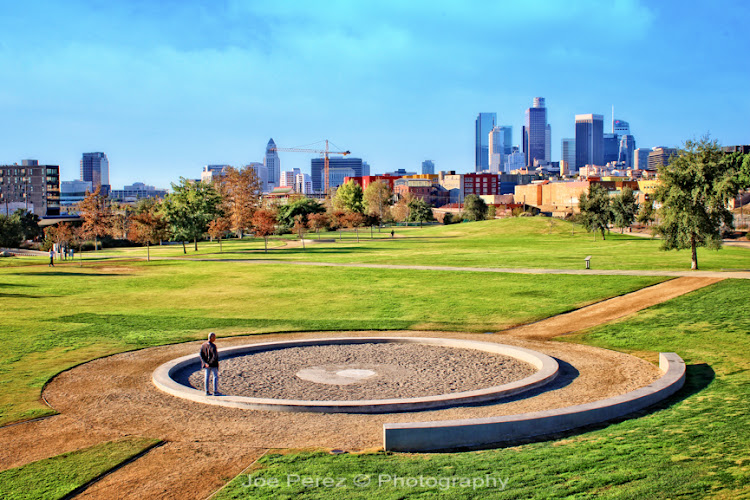
Los Angeles State Historic Park is a 32-acre California state park at 1315 N Spring Street in the Chinatown area of Los Angeles, California, United States of America. Often called “the Cornfield,” this former Southern Pacific River Station rail yard became public parkland after a long community campaign and reopened in its redesigned form in 2017. Travelers come for broad lawns, downtown skyline views, walks and bike rides along planted paths, and an outdoor introduction to the layered Indigenous, railroad, industrial, and civic history of the city.
What to Expect at Los Angeles State Historic Park
This is an open, landscape-driven park rather than a museum with indoor galleries. Wide paved promenades and smaller paths cross a former rail property between Chinatown and the Los Angeles River corridor, with long sight lines toward City Hall and the downtown towers. The signature elevated pedestrian bridge is a fine place to pause for photographs; it frames the skyline above native planting areas and the park’s broad central lawn. The site sits near the midpoint of the evolving 52-mile Los Angeles River greenway and is closely tied to the river-revitalization movement.
Interpretive elements throughout the grounds explain the place’s cultural and industrial past, including the area’s Tongva history and its later role as the Southern Pacific Railroad’s River Station. Look for the wetland planting area, seasonal native vegetation, and birds using the Pacific Flyway. Recreation is deliberately simple: walk, jog, ride a bike, spread out for a picnic, or fly a kite when conditions allow. The lawns also become a festival and concert venue, so the experience can range from peaceful weekday openness to a large programmed event; check the official events calendar before making a special trip.
- Elevated pedestrian bridge: A raised crossing with one of the clearest City Hall and downtown skyline compositions in the park.
- The Great Lawn: Expansive open turf for picnics, casual play, kite flying, and major public festivals.
- Native and wetland plantings: Landscape areas that bring seasonal color and habitat to a former industrial site.
- Interpretive history: Outdoor markers connect Tongva presence, the rail-yard era, and the community effort that created the park.
- River-greenway setting: A useful pause on walks and rides exploring the Los Angeles River corridor.
Los Angeles State Historic Park at a Glance
| Detail | Information |
|---|---|
| Address | 1315 N Spring Street, Los Angeles, CA 90012 |
| Neighborhood / Area | Chinatown, beside the Los Angeles River corridor and north of downtown |
| Operating Hours | Daily, generally 8 a.m. to sunset; confirm seasonal or event-day changes before departure. |
| Admission & Ticket Prices | Free public admission; no standard timed-entry reservation. Event admission may differ. |
| Recommended Visit Duration | 45 to 90 minutes; allow longer for a picnic, event, or nearby Chinatown walk. |
| Nearest Transit / Parking | Metro A Line Chinatown Station is next to the park; limited on-site parking is accessed from the Spring Street side. |
| Official Website / Phone | lastatehistoricpark.org / (323) 441-8819 |
Visiting Tips, Getting There & Nearby Pairings
Arrive in the morning for cooler temperatures and the quietest paths, or come in late afternoon for softer skyline light. There is no routine admission ticket to book, but event days can change access, parking patterns, and the character of the grounds. Use the park’s Visit Us page and visitor map to verify hours, gates, programs, and parking before you leave. Metro’s Chinatown Station on the A Line is the easiest car-free arrival point and is immediately adjacent to the park.
The main routes are paved and mostly level, making them practical for wheelchairs, strollers, and visitors who prefer a low-gradient walk. Use designated accessible parking and accessible restroom facilities when available; grass, unpaved edges, and crowded festival layouts can be less even. Shade is sparse, so bring water, sunscreen, and a hat. Within roughly 5 to 15 minutes on foot, you can reach Chinatown Central Plaza for bakeries and casual Chinese dining, the ornate gates and restaurants along North Broadway, and Olvera Street and Union Station just south of the park.
Frequently Asked Questions
What are the best hours to visit Los Angeles State Historic Park?
The park generally operates daily from 8 a.m. until sunset. Go on a weekday morning for the most room to walk, or near golden hour for downtown views. Check the official site for seasonal, maintenance, or event-related changes.
Does Los Angeles State Historic Park charge admission or require reservations?
General entry is free and does not require a standard reservation. Concerts, festivals, and other ticketed programs held on the grounds may have separate admission rules, so consult the event listing for those dates.
How much time should I budget for a visit?
Budget 45 to 90 minutes to follow the paths, read interpretive signs, see the bridge, and photograph the skyline. Plan two hours or more if you are picnicking, attending a program, or combining the park with Chinatown or Olvera Street.
Is Los Angeles State Historic Park family-friendly and wheelchair accessible?
Yes. Families have open lawn space and easy walking routes, while the mostly level paved promenades work well for wheelchairs and strollers. Keep in mind that lawn areas and temporary event setups can create uneven or crowded conditions.
When planning your Los Angeles travel guide or comparing verified attractions and parks in Los Angeles, pair this stop with standout local spots including Bestia, The Maybourne Beverly Hills, Western Square, and Elysian Park, Buena Vista Meadow (1.0 km away).


