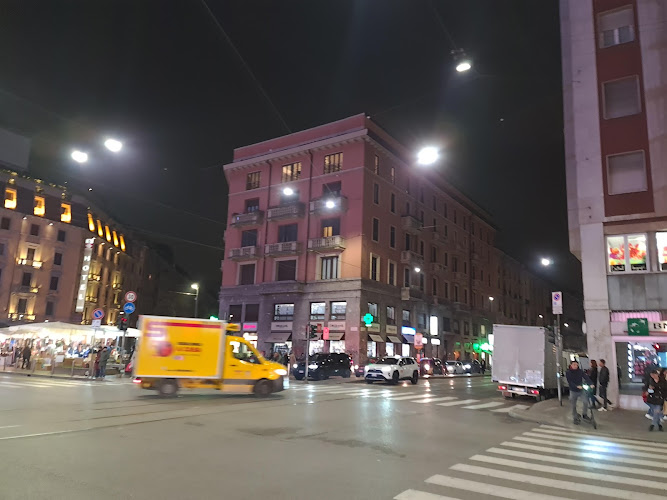
Arco di Porta Romana is a late-Renaissance ceremonial gateway at Piazzale Medaglie d’Oro 2, 20135 Milan, in the Porta Romana neighborhood southeast of the historic center. Built in 1596 during Spanish rule and attributed to architect Aurelio Trezzi, it marked the city’s southern entrance through the Spanish walls. Travelers come for its monumental stone arch, classical detailing, and unusually clear illustration of how fortified Milan met the road toward Rome.
What to Expect at Arco di Porta Romana
This is an outdoor architectural stop rather than a ticketed monument with galleries or an interior tour. The single round-headed passage is framed by heavily textured rusticated masonry and classical columns, with an upper entablature and commemorative inscriptions reinforcing its ceremonial character. Its construction is associated with preparations for the arrival of Margaret of Austria, the future wife of Philip III of Spain. Look at the gate from both sides: the changing angle makes the depth of the passage and the contrast between rough stonework and formal ornament easier to appreciate.
The arch belonged to the Spanish-era defensive perimeter, but its elaborate treatment also projected political authority. Today, traffic, tram wires, and apartment buildings surround it, replacing the open approaches of the fortified city. Nearby surviving wall sections help restore that context; part of this historic setting now borders QC Terme Milano. There is no tower climb, exhibition route, museum shop, or monument café. Photography is principally an exterior exercise, with the best compositions taken from pedestrian areas rather than the roadway.
- 1596 gateway: A surviving entrance from Spanish-ruled Milan, designed as both a threshold and a statement of authority.
- Rusticated stonework: Deeply articulated masonry gives the arch its weighty, defensive appearance.
- Classical façade: Columns, horizontal moldings, and inscriptions reward a closer look beyond the central opening.
- Spanish-wall setting: Nearby wall remnants explain the relationship between this isolated arch and Milan’s former perimeter.
- Porta Romana streets: Corso di Porta Romana leads northwest toward the center, while neighborhood cafés make an easy follow-up stop.
Arco di Porta Romana at a Glance
| Detail | Information |
|---|---|
| Address | Piazzale Medaglie d’Oro 2, 20135 Milano, Italy |
| Neighborhood / Area | Porta Romana, southeast of Milan’s historic center |
| Operating Hours | Monday–Sunday: exterior visible 24 hours |
| Admission / Price Range | Free exterior viewing; $ |
| Recommended Visit Duration | 15 to 30 minutes |
| Nearest Transit / Parking | M3 Porta Romana; tram 9 on Viale Sabotino. Paid blue-line street bays in surrounding streets, subject to signs and availability. |
| Official Website & Phone | City of Milan; no dedicated monument visitor telephone |
Visiting Tips, Getting There & Nearby Pairings
Arrive in daylight to examine the carvings and inscriptions; early morning is useful for photographs before the surrounding streets become busier. No reservation or timed-entry ticket is needed. Take the yellow M3 metro to Porta Romana, immediately beside the square, or tram 9 to the Porta Romana interchange. Driving adds little convenience: curbside parking is limited, blue-line spaces are paid according to posted rules, and central Milan’s traffic restrictions require attention. Use marked crossings and never step into tram tracks or traffic lanes for a frontal photograph.
The visit stays at street level, without a staircase or interior lift, but busy crossings, curb transitions, and uneven paving are the main considerations for wheelchair users and strollers. Choose a step-free metro exit where available and allow extra crossing time. Pair the arch with QC Terme Milano, a separately ticketed spa just a few minutes away; Giardino Oriana Fallaci, roughly a ten-minute walk west for a shaded pause; or the Basilica of San Nazaro in Brolo, approximately fifteen minutes northwest along Corso di Porta Romana. The basilica adds an early-Christian counterpoint to the gateway’s Spanish-era history.
Frequently Asked Questions
What are the opening hours and best time to visit?
The exterior can be viewed around the clock, every day. Daylight is best for architectural details, while an early visit makes it easier to pause and photograph the surrounding streets.
Do you need tickets or a reservation?
No tickets or reservations are required for exterior viewing. This is a public landmark, not a paid indoor attraction; nearby spa admission is entirely separate.
How long should you allow?
Allow 15 to 30 minutes to examine both façades, read the stonework, and take photographs. Budget an hour or more if you add a neighborhood walk or café stop.
Is it accessible and suitable for children?
The outdoor viewing experience does not require climbing stairs, although surface conditions and crossings need care. Children can enjoy the monumental arch, but the busy junction demands close supervision; no religious dress code applies.
When planning your Milan travel guide or browsing verified attractions in Milan, pair this stop with standout local spots including Noblesse Oblige, Ristorante Le 5 Terre, Zona Buenos Aires, and Trattoria Trippa (0.3 km away).