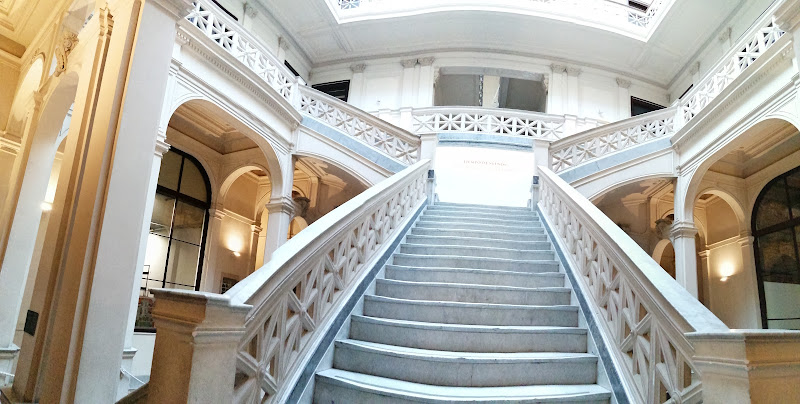
Torres Garcia’s Museum, officially Museo Torres García, is an artist-focused museum at Peatonal Sarandí 683, 11000, in Montevideo’s Ciudad Vieja. It explores Joaquín Torres García (1874–1949), the Uruguayan painter, theorist, and teacher whose Constructive Universalism joined geometric order with recognizable symbols. Travelers come for his paintings, drawings, and inventive wooden constructions. The museum currently announces a temporary closure; confirm reopening before making a special trip.
What to Expect at Torres Garcia’s Museum
Torres García’s work extends well beyond Cubism. Born in Montevideo, he developed his career in Barcelona, New York, and Paris before returning to Uruguay in 1934. His mature compositions arrange fish, boats, clocks, houses, and human figures within measured grids, often using restrained earthy colors. The museum’s collection traces that development through paintings, drawings, documents, and objects. Look closely at how familiar signs acquire meaning through their placement, rather than expecting conventional landscapes or portraits throughout.
The wooden toys are particularly revealing: their interchangeable components connect play with the artist’s belief that complex forms could emerge from simple structures. His Taller Torres García, established in 1943, carried those ideas into a generation of Uruguayan artists. The museum occupies a multistory building on pedestrian Sarandí, with exhibitions distributed across different levels. Its program also includes changing exhibitions, facilitated educational visits, and artistic training workshops. Begin with the biographical material, then follow the development toward constructive compositions; ask reception which floors hold each display.
- Constructive paintings: Geometric divisions organize everyday symbols into a distinctive visual language associated with Torres García.
- Transformable wooden toys: Modular objects connect his artistic experiments with childhood learning and hands-on construction.
- Drawings and documentary material: Works on paper illuminate the thinking behind his compositions and teaching.
- Educational programming: Facilitated visits and workshops extend the museum’s focus beyond looking at finished artworks.
- Museum shop: Browse art-related publications and gifts connected with Torres García’s legacy when visitor services resume.
Torres Garcia’s Museum at a Glance
| Detail | Information |
|---|---|
| Address | Peatonal Sarandí 683, 11000 Montevideo, Uruguay |
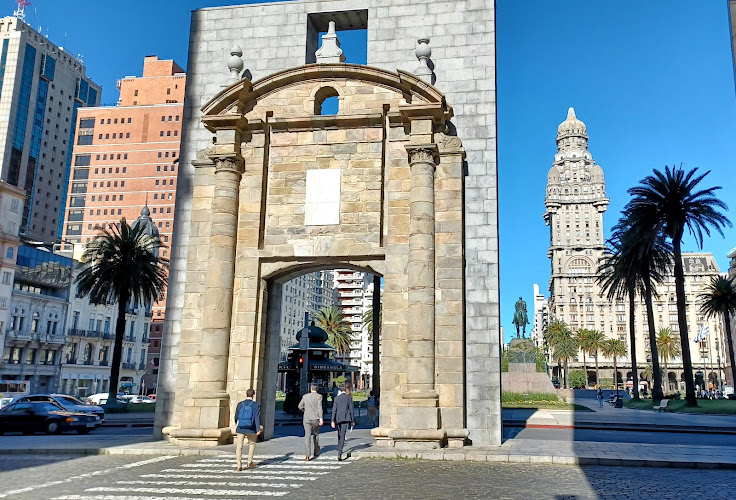
| Neighborhood / Area | Ciudad Vieja, near Puerta de la Ciudadela |
| Operating Hours | Temporarily closed. Regular published schedule: Monday–Saturday, 10 a.m.–6 p.m.; Sunday closed. Gallery clearance begins at 5:50 p.m. |
| Admission / Price Range | Paid admission; $ budget tier. Check current ticket rates and reopening on the official website. |
| Recommended Visit Duration | 60 to 90 minutes once reopened |
| Nearest Transit / Parking | Bus stops around Plaza Independencia; no metro. Paid garages on surrounding streets; Sarandí is pedestrianized. |
| Official Website & Phone | Museo Torres García visitor information; +598 2916 2663 |
Visiting Tips, Getting There & Nearby Pairings
After reopening, aim for the first hour of the regular schedule to leave ample time for the upper galleries. Contact the museum ahead for facilitated visits, school groups, or workshop participation rather than assuming these accompany admission. Ask reception about photography and storage for backpacks before entering; keep bulky luggage out of your gallery plans. Bus routes 121 and 180 provide connections into Ciudad Vieja; check the current stop and direction through Montevideo’s STM journey information. Drivers should use surrounding paid garages and finish on foot.
The museum documents a double-door entrance, a ramp, and an elevator serving every floor, making its vertical layout manageable for wheelchair users. Ask about seating and assistance when arranging a visit. Outside, allow for uneven paving and pedestrian traffic on Sarandí. Combine the museum with Plaza Independencia, around five minutes away via Puerta de la Ciudadela, then walk toward Plaza Matriz and the Metropolitan Cathedral, also roughly five minutes away. Teatro Solís is another easy pairing, about five to ten minutes away on foot.
Frequently Asked Questions
Is the museum open, and when should I visit?
The official visitor page currently says it is temporarily closed. Its regular hours are Monday–Saturday, 10 a.m.–6 p.m.; once reopening is announced, arriving near 10 a.m. leaves the most flexibility.
How much are tickets, and should I reserve?
This is a paid-admission museum in the budget price tier. Confirm current rates and any booking arrangements directly with the museum, especially for organized groups or educational activities.
How long does a visit take?
Allow 60–90 minutes for the collection and changing displays. Art students and visitors interested in Torres García’s theories may prefer longer for drawings, texts, and close comparison of compositions.
Is it accessible and suitable for children?
A ramp and elevator provide access across the museum’s floors. The wooden toys offer children an approachable introduction to abstraction, while facilitated educational visits provide additional context; collection objects are not play equipment.
When planning your Montevideo travel guide or comparing verified attractions and museums in Montevideo, pair this stop with standout local spots including Pre-Columbian and Indigenous Art Museum, Restaurante Mesón Español, Alma Historica Boutique Hotel, and Gateway of the Citadel (nearby).