
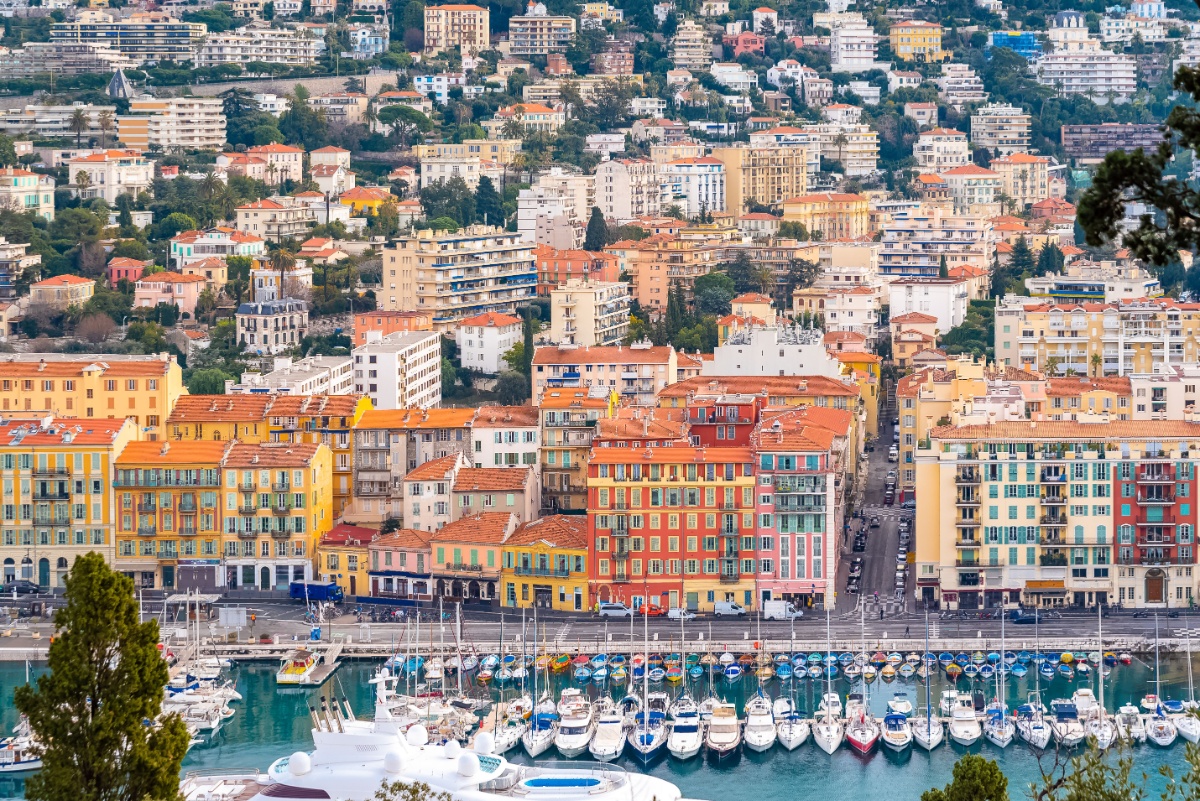
Quick answer: Nice is the jewel of the French Riviera, gracing the Baie des Anges with its famous pebble-beach Promenade des Anglais, pastel-hued Old Town (Vieux Nice), and Belle Époque architectural heritage. Top sights include Castle Hill, the Matisse Museum, and the Cours Saleya market.
Editorial disclosure: This destinations.ai guide was prepared with AI assistance and checked against the official sources linked below. Accommodation and activity placeholders may use affiliate links; that does not change the planning advice.
Nice, the glamorous capital of the French Riviera, curves along the Mediterranean’s Baie des Anges in the south of France, blending belle-epoque elegance with a sun-soaked, easygoing pace.
The seafront Promenade des Anglais is the city’s signature, leading to the maze of pastel lanes, markets and churches in Vieux Nice (the Old Town). Climb Castle Hill (Colline du Chateau) for the best panorama over the rooftops and sea, browse the flower and produce stalls of Cours Saleya, and take in art at the Matisse and Chagall museums.
The best time to visit is April to June or September to October, when the weather is warm but not stifling and crowds are thinner than the July-August peak. Nice is walkable and well served by trams, and makes an ideal base for exploring the Riviera.
Affiliate placeholder: Compare accommodation options after checking the official property details, location, and cancellation terms.
Affiliate placeholder: Check current activity availability, meeting points, accessibility, and cancellation terms before reserving.
Sources and current planning links
Explore more destinations.ai travel guides when building a longer route.
How to plan a Nice visit
Nice is easiest to enjoy as a Mediterranean city day, an Old Nice food-and-history route, and one Riviera excursion chosen from the current transport and weather. The sea, markets, museums, hilltop views, and nearby towns all compete for attention, so avoid treating the Promenade des Anglais as the whole trip. The official Nice Côte d’Azur tourism information is useful for current events, museums, transport, and accessible routes.
What are the best things to do in Nice?
Start with the Promenade des Anglais, Vieux Nice, Cours Saleya, and the Castle Hill area, then choose a museum or neighborhood that matches your interests. The Promenade is for the sea and the city’s grand waterfront rhythm; the Old Town is for lanes, churches, markets, and food. Castle Hill provides a different view but involves slopes and steps, so use the route that suits your group and check current access.
Nice has a strong museum choice. The MAMAC, Musée Matisse, Musée Marc Chagall, and Musée Masséna each tell a different story about modern art, Mediterranean light, local history, or the city’s Belle Époque identity. Check opening days, temporary exhibitions, tickets, and accessibility before building the entire afternoon around one institution. A gallery or market is a better rainy-day plan than an outdoor-only schedule.
The beaches are largely pebbled, so bring or rent suitable footwear and check current swimming conditions. A short swim or shoreline pause can be enough; you do not need to spend the entire day in the sun. The Port, Cimiez, the Russian Orthodox Cathedral, and the local gardens add variety when the center feels busy. Choose two or three stops and let the streets connect them.
Which Nice neighborhoods are best for visitors?
Vieux Nice is the most atmospheric base, the Carré d’Or and Promenade suit first-time waterfront access, and the Port, Libération, Cimiez, or Gambetta areas offer different combinations of food, quiet, and transit. Old Nice can be noisy and stair-heavy, but it puts markets and restaurants at your door. The Promenade is convenient for views and hotels, while Carré d’Or can make shopping and dining simple. Cimiez is calmer and more residential, though it adds a transfer to the beach and Old Town.
Compare the exact street, lift, air conditioning, luggage storage, breakfast hours, noise, and distance from the tram. A sea view can sit across a busy road, and a historic apartment may have narrow stairs. If you plan day trips by train, choose a base with a simple route to the station rather than judging convenience by a neighborhood label alone.
What should you eat in Nice?
Use Nice meals to explore local ingredients and dishes such as socca, pissaladière, pan bagnat, salade niçoise, seasonal vegetables, and Riviera seafood. Recipes vary, so read the current menu and ask how a dish is prepared. Cours Saleya is useful for a market walk and a casual stop, while a long dinner deserves a reservation in the neighborhood you are already visiting. Check allergies, shared fryers, and vegetarian options directly.
Plan lunch before the hottest waterfront hours and keep dinner flexible after a day on the coast. Local wine and small producers can add interest without requiring a full tour. If a restaurant is popular because of its view, confirm the current hours and route; the best meal is rarely improved by an unnecessary cross-town transfer when everyone is tired.
What is the best time to visit Nice?
Late spring and early autumn often balance warm sea weather, outdoor comfort, and demand, while summer brings long days and the busiest Riviera calendar. May, June, September, and early October suit travelers who want to walk, swim, and take day trips without scheduling every hour at midday. Winter can be pleasant for museums and food, but some seasonal services change. Check current festival, Carnival, sports, and school-holiday dates before booking.
Carry sun protection, a light layer, and shoes with grip for old stone and hill routes. Rain can make the coast and polished pavement slippery. If the beach or viewpoint is not comfortable, use a museum, market, church, workshop, or food route as the main activity. Riviera weather is an itinerary input, not a minor footnote.
How do you get around Nice?
Walking and tram routes handle much of central Nice, while regional trains and buses connect the coast and hinterland when checked against current schedules. Use a short taxi or rideshare transfer when luggage, heat, or a steep route makes the walk impractical. Confirm the current airport connection, ticket rules, and station for every day trip. A rental car is rarely useful in Old Nice but can help for villages or mountain routes beyond the rail line.
Monaco, Villefranche-sur-Mer, Antibes, Cannes, Eze, and Saint-Paul-de-Vence can all appear in a Riviera itinerary, but they are not interchangeable half-day stops. Choose one, verify the return service, and leave room for delays. If you are traveling in peak season, start early and do not tie a distant excursion to a fixed dinner at the end of the night.
Nice for families and accessible travel
Families can combine a beach or promenade break with one museum, a market, a park, and a meal near the next activity. The sea gives children an obvious change of pace, but sun, pebbles, traffic, and crowds need planning. Carry water, hats, snacks, and suitable shoes. Keep hilltop viewpoints optional and avoid promising a stroller-friendly route through every Old Nice lane.
Accessibility varies by tram, pavement, beach access, museum, hotel, and hill route. Ask providers about step-free entrances, lifts, toilets, seating, dropped curbs, and accessible beach facilities before booking. A central address is not proof of a level walk. Two reliable stops and a planned rest can give a traveler more of Nice than a rushed list.
A practical three-day Nice itinerary
Three days gives you one central Nice day, one museum-and-neighborhood day, and one carefully chosen Riviera extension. Keep the first and last evenings close to your base so transport delays do not dominate the trip.
- Day one: walk the Promenade, Vieux Nice, Cours Saleya, and Castle Hill if conditions suit you.
- Day two: choose MAMAC, Matisse, Chagall, Masséna, Cimiez, or the Port, then make time for a local meal.
- Day three: take a confirmed train or bus to one Riviera town, or stay in Nice for the beach, markets, and gardens.
Which day trips work from Nice?
Villefranche-sur-Mer, Eze, Antibes, Cannes, and Monaco can all work from Nice, with the right choice depending on trains, buses, walking ability, and the kind of day you want. Pick one main destination, check current return times, and avoid stacking a village, museum, and airport transfer into one route. The hinterland offers hiking and vineyards too, but mountain weather and roads require extra planning.
Nice feels generous when you move between sea, stone, food, and art without trying to conquer the Riviera. Confirm current details, choose a neighborhood to return to, and let the light and local rhythm carry part of the itinerary.
For a longer regional route, compare Paris, France, Barcelona, Spain, Rome, Italy with this destination before finalizing your itinerary.
Frequently asked questions
What is Nice, Provence-Alpes-Cote d'Azur best known for?
Nice is celebrated for its azure Mediterranean coastline, vibrant open-air flower and food markets, world-class modern art museums, and prime access to neighboring Riviera gems like Monaco and Cannes.
When is the best time to visit Nice?
The best time to visit is April to June or September to October, when the weather is warm but not stifling and crowds are thinner than the July-August peak.
How many days should you spend in Nice?
Plan about 3 days for a first visit, then add time if you want to explore beyond the central sights.
How should you get around Nice?
Nice boasts a clean, efficient modern tramway system (Lignes d’Azur) connecting the airport directly to the city center and port on Line 2. The historic Old Town is pedestrian-only and ideal for walking, while regional TER trains run along the coast to Antibes, Cannes, and Monaco.
What should you book ahead in Nice?
Book admission for the Chagall and Matisse museums ahead during the summer season. Private beach club loungers along the Promenade des Anglais and day boat charters should be reserved well in advance from June to August.
Explore Nice by Category: Discover top curated spots across Nice Attractions & Sightseeing, Best Places to Stay in Nice, Nice Restaurants & Dining.


