
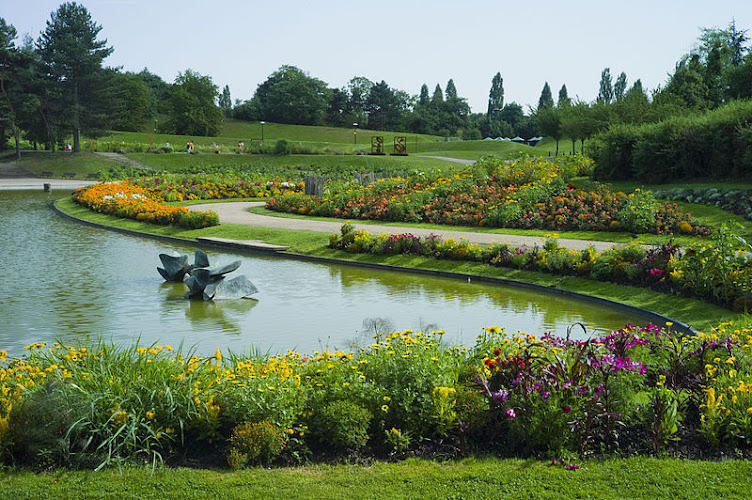
Parc Floral de Paris is a municipal botanical garden set within the Bois de Vincennes, on Paris’s greener eastern edge. Rather than a formal palace garden, it unfolds as a broad landscape of themed plantings, lawns, ponds and pavilions, with an artificial lake giving the grounds a distinctly unhurried character.
Opened in 1969 on a former military site, the park makes an appealing counterpoint to central Paris’s dense museum-and-monument circuit. Families use its play areas, photographers follow the changing flower displays, and concertgoers arrive for the open-air summer programme. It is a destination in its own right, but also a restorative pause in a day spent exploring eastern Paris.
Standout Highlights & What Not to Miss
The pleasure here is in wandering rather than ticking off a single landmark. Give yourself permission to follow the paths between garden rooms, then slow down where the season is most visible. Displays evolve substantially through the year, so a repeat visit can feel quite different from the last.
- The themed garden rooms: Explore the changing sequence of cultivated spaces rather than rushing straight through. Their contrasting planting styles and water features make the park feel more varied than a single large lawn.
- The dahlia collection: Late summer into early autumn is the signature period for the park’s extensive dahlias, when their range of forms and colours is especially rewarding for garden enthusiasts and photographers.
- The lake and pond-side planting: The artificial lake is one of the calmest places to pause. Look for water lilies and reflections, especially when the surrounding paths are quieter.
- Valley and rock-and-water landscapes: Seek out the lower, more sculpted areas for a change from the open lawns. These sections reward a slower walk and offer useful visual variety in photographs.
- Summer performances and pavilions: Open-air concerts are a major reason many Parisians visit. Exhibition pavilions and nature-focused spaces add another layer when programming is underway.
Visitor Strategy & Planning Snapshot
| Planning Factor | What to Expect | Practical Strategy |
|---|---|---|
| Ideal Arrival Window | Morning tends to suit a quieter garden walk and softer light; event days can alter the atmosphere later on. | Arrive early for photographs and unhurried paths, or time a later visit around a confirmed performance. |
| Typical Time Needed | A satisfying circuit generally takes 2 to 3 hours, longer if children’s areas, a concert or close plant study are part of the plan. | Reserve a half-day when pairing the park with the wider Bois de Vincennes. |
| Booking / Queue Reality | The garden experience is largely self-directed, while special concerts, fairs and workshops may operate on separate arrangements. | Check the current event programme before travelling and avoid assuming a regular garden visit covers a special event. |
| Terrain & Accessibility | Main routes are paved and mostly step-free for wheelchairs and strollers, though some sections are gravelly or sloped. | Stay on the principal paths for the smoothest route and allow extra time if avoiding uneven surfaces. |
| Weather / Seasonal Fit | Spring bulbs, summer lawns and late-season dahlias each give the park a different emphasis; shade is valuable in warm weather. | Choose the season for the plants you most want to see, and bring rain or sun protection for an exposed outdoor visit. |
Honest Trade-Offs: Best For vs. Who Might Skip
Parc Floral is best for nature lovers, couples, families with children and anyone who enjoys gardens as a place to linger. It works particularly well when the dahlia beds are in their prime or when a concert turns the visit into an evening outing. The trade-off is that this is not a compact, instant-payoff attraction: its appeal lies in space, seasonal detail and a relaxed pace. Visitors with only a few hours in Paris who want headline monuments, historic interiors or a dense concentration of cafés may prefer to stay closer to the centre. Likewise, plant displays can never be identical across seasons, so visit with curiosity rather than a fixed expectation of peak bloom everywhere.
Neighborhood Context & How to Pair Your Visit
Think of Parc Floral as the cultivated heart of a larger Bois de Vincennes outing. Start with the gardens while energy is high, then continue on foot into the surrounding woodland and open parkland for a less urban side of Paris. The nearby Château de Vincennes provides a strong historical contrast if you want to pair flowers and landscape with medieval architecture; allow travel time between stops rather than treating the area like a compact central arrondissement. For families, keep the day flexible around the play areas and open lawns. For photographers, a garden-focused circuit around the lake, valley plantings and seasonal beds is more rewarding than trying to cover every path.
When planning your Paris travel guide or comparing verified attractions and parks in Paris, pair this stop with standout local spots including Montparnasse Tower, Guimet Museum, Place du Châtelet, and Bois de Vincennes (1.3 km away).


