Stonewall National Museum, Archives & Library is one of the largest and longest-operating LGBTQ+ historical institutions in the United States, located at 1300 East Sunrise Boulevard on the northern edge of Holiday Park in Fort Lauderdale, Florida. Founded in 1973 by Mark N. Silber in the bedrooms of his parents’ Hollywood, Florida home, the collection grew from a private book repository into a nationally recognized cultural museum, research archive, and circulating lending library. Since moving into a former Broward County Library branch building in 2009, the institution has welcomed historians, students, travelers, and local readers to explore more than 50 years of documented LGBTQ+ civil rights activism, literature, visual arts, and popular culture.
What to Expect at Stonewall National Museum, Archives & Library
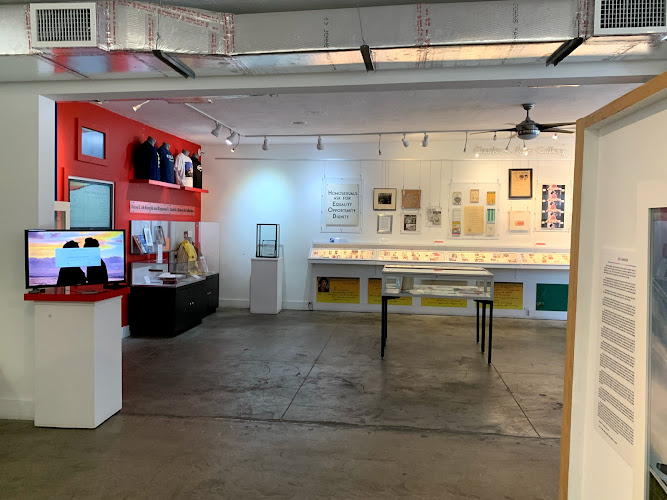
Visitors step directly into a dual gallery and library floor plan where museum exhibitions surround rows of reference and circulating bookshelves. The exhibition spaces, including the Ross Gallery and the Hester Gallery, present rotating thematic displays drawn from the institution’s deep holdings. Curated shows cover topics ranging from the 1969 Stonewall Riots and the Dade County Save Our Children campaign of 1977 to pioneering activists like Edie Windsor, early pulp fiction cover art, and AIDS activism during the 1980s and 1990s. A permanent wall-spanning chronological timeline traces key American LGBTQ+ milestones from the mid-20th century to the present day.
Adjacent to the exhibition walls sits the circulating Stonewall Library, housing more than 28,000 cataloged volumes, films, DVDs, and audiobooks organized using the Library of Congress classification system. While local members can check out books, visiting travelers are welcome to pull first-edition biographies, out-of-print plays, and visual art monographs from the shelves to read at the study tables. Behind the scenes, the climate-controlled Stonewall Archives safeguard over 2,700 linear feet of rare periodicals, organizational records, protest banners, vintage apparel, and personal letters covering the American South and national civil rights movements. Researchers can schedule advance appointments with the archivist to inspect non-circulating primary source boxes.
- Rotating Exhibition Galleries: Two dedicated gallery spaces showcase rotating visual history shows, photography retrospectives, political ephemera, and personal artifacts from icons such as marriage equality pioneer Edie Windsor.
- The 30,000-Item Lending & Reference Library: One of the largest independent LGBTQ+ libraries in the world, featuring fiction, memoirs, historical scholarship, graphic novels, and DVDs open for public browsing.
- The Stonewall Archives & Periodical Vault: Over 2,700 linear feet of archival boxes holding nearly every known LGBTQ+ magazine, underground newsletter, and community newspaper published in the United States since the 1950s.
- Permanent LGBTQ+ History Timeline: A detailed graphic wall installation charting legal victories, protests, cultural shifts, and civil rights landmarks across seven decades of American history.
- Author Talks, Film Screenings & Oral Histories: Regular evening programs including the Movie Nights screening series, Donuts & Conversation community gatherings, and live talks with Pulitzer Prize winners and celebrated authors.
Stonewall National Museum, Archives & Library at a Glance
| Detail | Information |
|---|---|
| Address | 1300 E Sunrise Blvd, Fort Lauderdale, FL 33304 |
| Neighborhood / Area | Victoria Park / Holiday Park (Central Fort Lauderdale) |
| Operating Hours | Mon–Wed & Fri: 11:00 AM–5:00 PM; Thu: 11:00 AM–8:00 PM; Sat–Sun: 11:00 AM–3:00 PM |
| Admission / Price Range | Free general admission ($5 suggested donation); library membership and special author events carry modest fees |
| Recommended Visit Duration | 45 to 90 minutes for galleries and browsing; 2+ hours for archival research |
| Nearest Transit / Parking | Broward County Transit Route 36 (Sunrise Blvd) and Route 11 (NE 15th Ave); free on-site surface parking lot |
| Official Website & Phone | stonewall-museum.org | +1 954-763-8565 |
Visiting Tips, Getting There & Nearby Pairings
General admission to the museum and library is free with a suggested $5 donation at the front desk, making it one of South Florida’s most accessible cultural stops. Thursday afternoons and evenings are ideal for visitors who want extended hours until 8:00 PM, when the museum frequently hosts author readings, film discussions, or gallery receptions—check the official Stonewall calendar before visiting to align your stop with a live program. If you are conducting academic or genealogical research in the closed stacks of the Stonewall Archives, contact the archival staff via email or phone at least one week ahead so boxes can be pulled for the reading table. Photography without flash is permitted in the public exhibition areas.
Getting to the museum by car is straightforward via East Sunrise Boulevard (State Road 838), situated roughly halfway between Interstate 95 and Fort Lauderdale Beach; a free surface parking lot wraps around the building inside the northwest corner of Holiday Park. Public transit riders can take Broward County Transit Bus Route 36 directly along Sunrise Boulevard. The entire single-story facility is wheelchair accessible, featuring designated accessible parking spaces right outside the entrance, automatic step-free entry doors, wide aisles between book stacks, and ADA-compliant restrooms. After touring the exhibits, walk five minutes south through the shaded paths of 90-acre Holiday Park to visit the Parker Playhouse, or drive five minutes north up NE 15th Avenue into Wilton Manors to explore the dining, cafes, and galleries along Wilton Drive and the World AIDS Museum and Educational Center.
Frequently Asked Questions
What are the opening hours and best times to visit Stonewall National Museum?
The museum and library are open Monday, Tuesday, Wednesday, and Friday from 11:00 AM to 5:00 PM, Thursday from 11:00 AM to 8:00 PM, and Saturday and Sunday from 11:00 AM to 3:00 PM. Weekday mornings right after 11:00 AM offer the quietest gallery browsing, while Thursday evenings are best for catching scheduled lectures and film screenings.
How much does admission cost and are reservations required?
Admission to the museum galleries and reading room is free to the public, with a suggested $5 donation to support archival preservation. Walk-ins are welcome during all regular operating hours without a ticket reservation, though advance registration is recommended for evening author talks and required for behind-the-scenes archival research requests.
How much time should I budget for a visit?
Most visitors spend 45 to 90 minutes viewing the two rotating exhibition galleries, reading the permanent historical timeline, and browsing the open library stacks. Scholars and history enthusiasts examining primary documents in the archives or attending an evening screening should plan for two to three hours.
Is the museum wheelchair accessible and suitable for students?
Yes, the museum occupies a single-level former municipal library building with level pavement from the adjacent parking lot, wide gallery pathways, seating areas, and accessible restrooms. High school and university students, educators, and families frequently visit to utilize the civil rights history timeline and educational resources.
When planning your Pembroke Pines travel guide or browsing verified museums in Pembroke Pines, pair this stop with standout local spots including Hollywood Beach, Havana 1957 Cuban Cuisine Pembroke Pines, Tree Tops Park, and Bonnet House Museum & Gardens (2.3 km away).