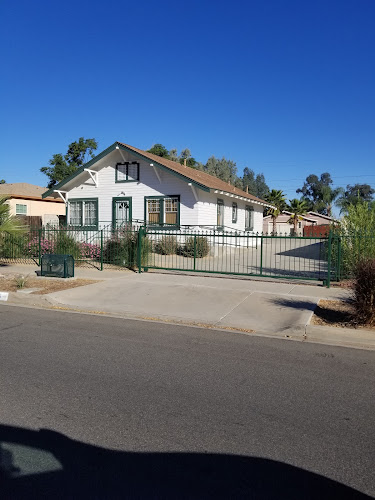
Perris Valley Historical Museum is a local-history museum at 120 W 4th St, Perris, CA 92570, in the city’s historic downtown. Opened in 1964, it explores Perris Valley’s agricultural communities, early residents, and railroad connections inside the former Santa Fe depot. The 1892 station, listed on the National Register of Historic Places in 1994, is itself a principal attraction: a reminder that rail transportation helped shape this inland Southern California town.
What to Expect at Perris Valley Historical Museum
This is a compact community museum rather than a sprawling railway collection. Historical photographs, everyday objects, and locally focused exhibits trace the valley’s development through farming, settlement, and civic life. Agricultural heritage provides useful context for understanding the landscape beyond downtown, while material about residents and community events gives the story a personal scale. The museum also develops educational outreach through travelling collections, including work with the Perris Elementary School District using its Perris Centennial Exhibit Collection.
Spend time outside before entering. The depot’s red-brick construction, prominent corner tower, arched openings, and contrasting architectural details distinguish it from the utilitarian stations associated with many small railroad towns. Its Victorian-era design belongs to the period when the Santa Fe network was expanding across Southern California. Inside, follow the historical photographs and interpretive displays before returning to objects that catch your interest. Ask the attendant about particular buildings or family names; a conversation can add context that a quick circuit of the cases misses.
- 1892 Santa Fe depot: Examine the historic station building as well as the collections housed within it.
- Historic photographs: Compare earlier streetscapes and community scenes with the downtown blocks outside.
- Agricultural heritage: Explore the farming traditions that helped establish Perris Valley’s economy and identity.
- Local residents’ stories: Look for everyday artifacts and exhibits connecting broader changes to individual community experiences.
- Centennial collection outreach: Ask about the museum’s Perris Centennial Exhibit Collection and its educational work; travelling material may be off-site.
Perris Valley Historical Museum at a Glance
| Detail | Information |
|---|---|
| Address | 120 W 4th St, Perris, CA 92570 |
| Neighborhood / Area | Historic downtown Perris, beside the railroad corridor |
| Operating Hours | Saturday and Sunday, noon–4 p.m.; Monday–Friday closed. Call before a special trip. |
| Admission / Price Range | Free general admission; budget-friendly ($). |
| Recommended Visit Duration | 45 to 60 minutes |
| Nearest Transit / Parking | Perris–Downtown station, Metrolink 91/Perris Valley Line; station parking and downtown street parking, subject to posted restrictions. |
| Official Website & Phone | Official museum Facebook page; +1 951-657-0274 |
Visiting Tips, Getting There & Nearby Pairings
Arrive near the noon opening to leave time for the displays, questions, and an exterior circuit before the 4 p.m. close. Check the museum’s official page or telephone for holiday changes, school-group arrangements, and guided-visit possibilities. Perris–Downtown station is a short walk away, but check the official Metrolink timetable for weekend trains reaching Perris and a workable return departure. Drivers should follow station-lot signage or use legal downtown street spaces. Summer afternoons can be hot, so carry water for the outdoor portion.
The exhibition visit centers on the depot’s ground-floor spaces; wheelchair users should call about the entrance route, thresholds, and accessible restroom arrangements before traveling. Keep strollers and bags compact around display cases, and ask before photographing exhibits or using flash. Plan refreshments elsewhere rather than relying on an on-site café. For nearby pairings, walk roughly five minutes to the historic Bank of Perris building at Fourth and D streets, then explore D Street’s older commercial frontage. The City Hall area farther north on D Street is approximately a 10–15-minute walk from the museum.
Frequently Asked Questions
When is the museum open, and when should I arrive?
Regular hours are Saturday and Sunday, noon–4 p.m.; the museum is closed Monday through Friday. Arriving at noon gives you the most flexibility, especially if you want to ask questions or explore downtown afterward.
Is admission free, and do I need a reservation?
General admission is free. For an organized group, school visit, or guided introduction, telephone +1 951-657-0274 beforehand to discuss arrangements.
How long should I allow?
Allow 45–60 minutes for the exhibits and depot exterior. Budget closer to 90 minutes if you enjoy reading photographs closely, discussing local history, or adding a short D Street walk.
Is this a good museum for children and railway enthusiasts?
Its modest scale suits a short family history stop, particularly for children interested in old photographs and everyday objects. Railway enthusiasts should distinguish this historic depot museum from the separate Southern California Railway Museum, which has extensive rolling-stock collections.
When planning your Perris travel guide or browsing verified attractions in Perris, pair this stop with standout local spots including Dora Nelson African American Art and History Museum, Lake Perris State Recreation Area, Sizzler, and Mariscos Playa De Ixtapa (0.4 km away).