Petra Archaeological Park is Jordan’s vast UNESCO-listed Nabataean capital at Petra Visitor Centre, Tourism Street, Wadi Musa 71810, at the edge of Wadi Musa in Ma’an Governorate. Established as a Nabataean trading center from the 4th century BCE and later absorbed into the Roman Empire in 106 CE, the rock-cut city draws travelers for its rose-red façades, ingenious water engineering, desert trails, tombs and temples.
What to Expect at Petra Archaeological Park
The classic approach begins at the Visitor Centre and follows the Bab al-Siq into the narrow Siq, a natural sandstone gorge shaped by water and lined with carved channels that once carried water into the city. After roughly 2 kilometres, the canyon opens onto Al-Khazneh, the Treasury: Petra’s celebrated 1st-century façade, with Corinthian columns, a central tholos and an urn crowning its upper level. It is a tomb, not a treasury, despite the enduring local legend behind its name.
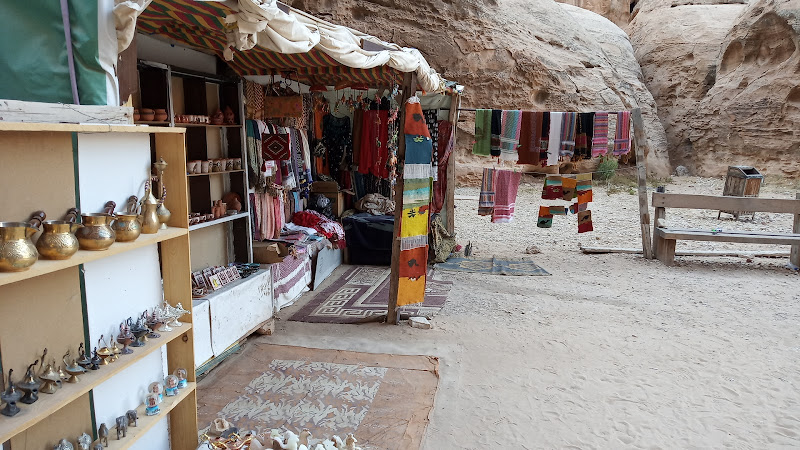
Continue past the 8,500-seat Nabataean Theatre, the Street of Facades and the Royal Tombs to the Colonnaded Street, Great Temple and Qasr al-Bint, one of Petra’s few substantially freestanding Nabataean temples. The Monastery, Ad Deir, rewards the demanding 800-step ascent with a monumental 1st-century façade and broad views. Petra was inscribed as a UNESCO World Heritage Site in 1985; allow time to understand how dams, cisterns and conduits made settlement possible in this arid basin. Licensed guides can be arranged at the entrance, while small cafés and craft stalls appear along the principal route.
- The Siq: A twisting sandstone passage whose water channels, niches and changing light make the walk to the Treasury part of the experience.
- Al-Khazneh (the Treasury): Petra’s signature Hellenistic-influenced rock-cut façade, viewed dramatically at the Siq’s exit.
- Royal Tombs: The Urn, Silk, Corinthian and Palace Tombs rise above the central city, with especially clear afternoon light.
- Great Temple and Qasr al-Bint: Explore the civic and sacred heart of Nabataean Petra beyond the busy Treasury corridor.
- Ad Deir (the Monastery): A huge cliff-carved monument reached by approximately 800 stone steps; plan water and time for the climb.
Petra Archaeological Park at a Glance
| Detail | Information |
|---|---|
| Address | Petra Visitor Centre, Tourism Street, Wadi Musa 71810, Jordan |
| Neighborhood / Area | Wadi Musa, Ma’an Governorate; gateway to ancient Petra |
| Operating Hours | Daily, generally 6am–6pm April–September and 6am–5pm October–March; check seasonal updates before travel. |
| Admission / Price Range | Foreign visitors: 50 JOD one day, 55 JOD two days, 60 JOD three days; Jordan Pass holders enter under its terms. |
| Recommended Visit Duration | 6 to 8 hours for the main route; two days for the Monastery and longer trails. |
| Nearest Transit / Parking | Main visitor parking is beside Petra Visitor Centre; Wadi Musa hotels connect by taxi, shuttle or walk. |
| Official Website & Phone | visitpetra.jo & +962 3 215 6060 |
Visiting Tips, Getting There & Nearby Pairings
Arrive at opening time, particularly from October through April, to walk the Siq before large tour groups and to leave enough daylight for the return from the basin. Buy multi-day entry if you intend to climb to Ad Deir or hike to the High Place of Sacrifice; trying to cover every major monument in one day turns an exceptional site into a race. Wear grippy closed shoes, carry more water than you expect to need, use sun protection, and follow marked paths. Personal photography is widely practiced, but drones require authorization and should not be flown casually.
The main approach through the Siq is long, uneven and occasionally sandy, while the Royal Tombs, High Place and Monastery involve steep stairs and rough rock. Petra is not fully step-free; travelers using wheelchairs or strollers should arrange assistance and discuss the most practical route at the Visitor Centre before entering. Pair the park with the adjacent Petra Museum for archaeological context, then walk five to ten minutes up Tourism Street toward Wadi Musa’s hotel-and-restaurant strip. Little Petra, north of town, is best reached by taxi and makes a worthwhile separate excursion.
Frequently Asked Questions
What are Petra Archaeological Park’s hours, and when is the best time to visit?
Petra generally opens daily at 6am, closing at 6pm in summer and 5pm in winter. Enter at opening for cooler temperatures, quieter views of the Treasury and enough time for the return walk before the gates close.
How much are tickets, and should I book ahead?
Standard foreign-visitor tickets are 50 JOD for one day, 55 JOD for two days and 60 JOD for three days. Purchase through official channels or at the Visitor Centre, and check current requirements if using the Jordan Pass or attending the separate Petra by Night program.
How much time should I budget for Petra?
Allow six to eight hours to walk from the Visitor Centre through the Siq and central city, including the Treasury, theatre, Royal Tombs and Qasr al-Bint. A second day is the better choice for the Monastery, High Place of Sacrifice or slower photography.
Is Petra suitable for families and visitors with limited mobility?
Families can enjoy the Siq and Treasury with steady pacing, shade breaks and plentiful water, although the distances can challenge younger children. The terrain is historic and rugged rather than fully accessible, so step-free travel beyond the main approach is limited and stair routes are unavoidable for the Monastery and High Place.
When planning your Petra travel guide or browsing verified attractions in Petra, pair this stop with standout local spots including Downtown- Wadi Mousa, الحرفيون الأنباط للحجر والمقاولات الأنشائية, Wadi Musa, and Petra Moon Luxury Hotel (0.1 km away).