
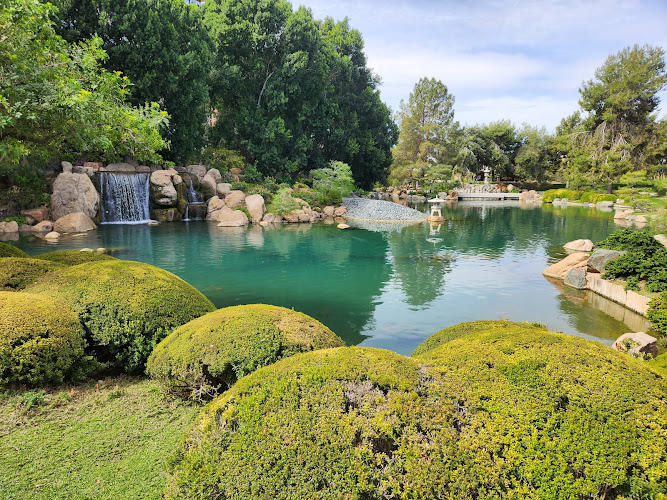
The Japanese Friendship Garden of Phoenix, known as Ro Ho En, is a 3.5-acre Japanese stroll garden at 1125 N 3rd Ave in downtown Phoenix, on the edge of the Willo and Roosevelt Row districts. Created in 1987 as a sister-city gift from Himeji, Japan, it was designed by Nobuo Zenyoji, chief caretaker of Himeji’s Koko-en Garden, and gives travelers a quiet, water-centered escape from the surrounding Arizona desert and city grid.
What to Expect at The Japanese Friendship Garden of Phoenix
Ro Ho En, which translates roughly to “garden of the heron and the crane,” follows the classic stroll-garden model: a winding path guides you past a sequence of composed views rather than one grand vista. Water is the organizing element, and the layout moves from a small pond near the entrance, past a 12-foot waterfall, toward the main koi pond. Pines, bamboo, azaleas, and carefully placed stone represent mountains, rivers, and seas in miniature, an approach that suits the compact site.
At the center of the garden sits the Tea Garden and Japanese teahouse, where cultural programs have long included demonstrations of the tea ceremony. Check the official calendar before you go, because tea events, seasonal festivals, and evening programming vary through the year. The garden also hosts workshops and community celebrations, and the extended Friday through Sunday evening hours make it an unusually pleasant place to visit once the desert heat eases.
- 12-Foot Waterfall: The garden’s signature water feature, set among rock work that feeds the streams running through the grounds and masks the sound of downtown traffic.
- Koi Pond: Large, colorful koi cruise beneath a stone-and-timber bridge, and visitors can buy fish food at the entrance to feed them.
- Tea Garden and Teahouse: The cultural heart of the garden, associated with the Japanese tea ceremony and chado traditions.
- Stroll Path and Stone Lanterns: A looping route past lanterns, pines, and bamboo, with benches set for pausing at deliberate sight lines.
- Himeji Sister-City Heritage: Design details inspired by Koko-en in Himeji, the city that gave Phoenix this garden as a lasting friendship gesture.
The Japanese Friendship Garden of Phoenix at a Glance
| Detail | Information |
|---|---|
| Address | 1125 N 3rd Ave, Phoenix, AZ 85003 |
| Neighborhood / Area | Downtown Phoenix, near Willo and Roosevelt Row |
| Operating Hours | Monday closed; Tuesday to Thursday 9 AM to 4 PM; Friday to Sunday 9 AM to 8 PM |
| Admission / Price Range | Paid admission, $$ tier; current ticket prices and member rates are listed on the official website |
| Recommended Visit Duration | 45 minutes to 1.5 hours |
| Nearest Transit / Parking | Valley Metro Rail and local bus service downtown; on-site and nearby street parking |
| Official Website & Phone | japanesefriendshipgarden.org; +1 602-274-8700 |
Visiting Tips, Getting There & Nearby Pairings
Arrive at opening, 9 AM, for the softest light, the coolest temperatures, and the fewest visitors, especially from May through September when midday heat can be severe. In winter and spring, late afternoon is lovely as the light turns golden over the pond, and the Friday to Sunday evening hours allow a relaxed twilight visit. From the Valley Metro light rail corridor, downtown buses and rideshare drop-offs reach the entrance easily, and visitors driving can use nearby parking off 3rd Avenue. Confirm the current parking arrangement and any special-event closures on the official website.
The paths are compact and mostly level, which suits strollers and wheelchair users, though some surfaces can be gravel or uneven, so call ahead if you need specifics. Pair the garden with a walk through the Willo Historic District’s tree-lined streets and bungalows, an afternoon among the murals and galleries of Roosevelt Row, or a visit to the Heard Museum, roughly a ten-minute drive north, for Native American art.
Frequently Asked Questions
What are the hours and best time to visit?
The garden is closed Mondays, open 9 AM to 4 PM Tuesday through Thursday, and open 9 AM to 8 PM Friday through Sunday. Early morning is best in summer; late afternoon and early evening shine from October through April.
How much does admission cost?
Admission is paid and falls in the $$ tier, with separate pricing for events and tea ceremonies. Check the official website for current rates and to buy tickets in advance for special programs.
How long should I plan to spend there?
Most visitors spend 45 minutes to 1.5 hours walking the loop, feeding the koi, and sitting near the waterfall. Add time if you attend a tea ceremony or festival.
Is the garden accessible and suitable for families?
Yes. The compact grounds and koi feeding make it a good fit for children, and the level main paths work for strollers and many wheelchair users. Keep voices low and stay on the paths to preserve the garden’s quiet atmosphere.
When planning your Phoenix travel guide or browsing verified attractions in Phoenix, pair this stop with standout local spots including Phoenix Art Museum, Hyatt Regency Phoenix, Emily, and Margaret T. Hance Park (nearby).


