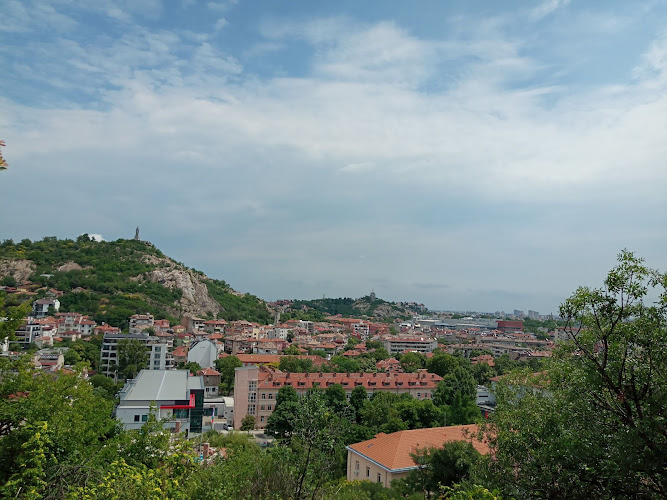
Old Town of Plovdiv is the Bulgarian city’s hillside architectural and historical reserve, combining Roman monuments, fortified ruins, and Bulgarian National Revival houses. The address ul. Saborna 24, 4000 Plovdiv, places you beside the Regional Ethnographic Museum in the Staria Grad neighborhood, rather than at a single entrance gate. Protected as a reserve since 1956, the district rewards travelers with painted merchant mansions, archaeological remains, and views across one of Europe’s oldest continuously inhabited cities.
What to Expect at Old Town of Plovdiv
The reserve spreads across Nebet Tepe, Dzhambaz Tepe, and Taksim Tepe. Follow Saborna Street past projecting timber-framed upper stories, stone courtyard walls, and Hisar Kapia, the surviving gateway within the old fortifications. At Nebet Tepe, archaeological remains reveal successive settlements above the modern city. On the southern slope, the Roman Theatre of Philippopolis preserves marble seating and a reconstructed stage façade; it remains a performance venue, so event preparations can affect sightseeing access.
The house museums explain the prosperity of nineteenth-century Plovdiv. Hindliyan House, completed in 1835, contains painted architectural scenes and an elaborate bathing room. Balabanov House is a 1970s reconstruction of a Revival-period residence and hosts exhibitions and chamber concerts. The Regional Ethnographic Museum occupies the ornate Kuyumdzhioglu House, built in 1847, with displays of regional dress, crafts, and domestic life. For painting, Dr. Stoyan Chomakov’s house holds the permanent Zlatyu Boyadzhiev exhibition. Arrange guided walks through the municipal Old Plovdiv institute; individual museums set their own photography and large-bag rules.
- Ancient Theatre: Roman auditorium overlooking the city, with steep marble seating and an active cultural program.
- Hindliyan House: Richly decorated merchant interiors, landscape murals, and an unusual historic bathroom.
- Hisar Kapia: A stone gateway framed by Revival houses, ideal for understanding the fortified street plan.
- Nebet Tepe: Hilltop ruins and broad views toward Plovdiv’s other hills and surrounding plain.
- Hippocrates Pharmacy Museum: A historic pharmacy displaying pharmaceutical equipment, vessels, and the setting of an earlier dispensary.
Old Town of Plovdiv at a Glance
| Detail | Information |
|---|---|
| Address | ul. Saborna 24, 4000 Plovdiv, Bulgaria; a reference point within the reserve |
| Neighborhood / Area | Staria Grad, central Plovdiv; Nebet, Dzhambaz, and Taksim hills |
| Operating Hours | Outdoor streets: Monday–Sunday, 24 hours. Museums and archaeological attractions have separate seasonal schedules. |
| Admission / Price Range | Outdoor streets free; individual museums and the Roman Theatre charge admission. Overall price tier: $. |
| Recommended Visit Duration | 3 to 4 hours with two museum visits |
| Nearest Transit / Parking | Tunela–sever bus stops on Tsar Boris III Obedinitel Boulevard; paid parking outside the reserve |
| Official Website & Phone | Old Plovdiv official website; use its Contacts section for individual venue telephone numbers |
Visiting Tips, Getting There & Nearby Pairings
Start in the morning with museum interiors, then continue toward Nebet Tepe; sunset is attractive for views but too late for many collections. Spring and autumn make the climbs more comfortable than summer afternoons. Check the official attraction schedules and ticket options before choosing several paid stops, and check theatre performances separately. Public streets need no reservation. Carry water, wear shoes with grip, and keep a payment backup for small purchases.
Arrive by bus at Tunela–sever, or leave a car in signed paid parking around Tsar Boris III Obedinitel Boulevard rather than attempting the restricted old streets. Accessibility is difficult: rounded cobbles, steep gradients, steps, and historic thresholds interrupt step-free travel; museum access varies by building. Wheelchair users and families with strollers should arrange access with each venue beforehand. From the western edge, Dzhumaya Mosque and the exposed Roman Stadium are roughly five to ten minutes away; Kapana’s cafés and craft shops are about ten to fifteen minutes away.
Frequently Asked Questions
What are the opening hours and best visiting time?
The outdoor district is accessible around the clock, while museums and monuments operate separately. Visit in the morning for interiors and cooler walking conditions; save the hilltop views for later.
Is Old Town of Plovdiv free to visit?
Walking the streets and viewing house exteriors is free. Museums and the Roman Theatre require paid admission; consult the official website for current individual and combined-ticket arrangements.
How much time should I allow?
Allow three to four hours for a walk, two interiors, and viewpoints. A full day suits travelers adding the Ethnographic Museum, theatre, galleries, and a relaxed lunch.
Is the reserve suitable for children and wheelchair users?
Children can enjoy the ruins and courtyards, but uneven paving makes a lightweight carrier useful for toddlers. Wheelchair travel requires advance route planning, and the Roman Theatre’s stepped seating presents a substantial barrier.
When planning your Plovdiv travel guide or browsing verified attractions in Plovdiv, pair this stop with standout local spots including Youth Hill, Smokini, Hotel Jägerhof – Plovdiv, and Boutique Hostel Old Plovdiv (nearby).