End of the Oregon Trail Interpretive Center is a history museum at 1726 Washington Street in Oregon City’s Abernethy Green area, northeast of downtown. Opened in 1995, its oversized covered-wagon architecture marks the community recognized as the Oregon Trail’s official western terminus. Travelers come for interactive emigrant-life exhibits, historical interpretation, and films that connect the overland journey with Indigenous history and settlement in the Willamette Valley.
What to Expect at End of the Oregon Trail Interpretive Center
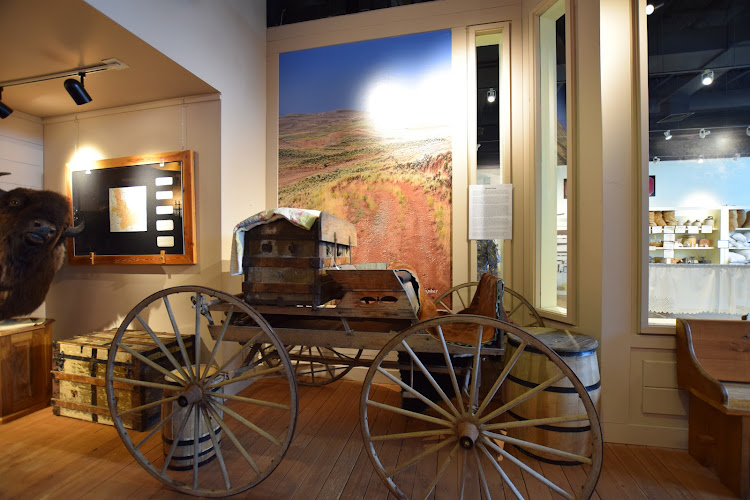
The buildings’ three enormous wagon-shaped profiles make the subject clear before you enter. Inside, interpretation follows the practical challenges of nineteenth-century migration: choosing supplies, traveling by wagon, and establishing a household after arrival. The broader story centers on the roughly 2,000-mile route from Missouri to Oregon Country. Oregon City mattered because emigrants could obtain supplies and conduct land-related business here; reaching the Willamette Valley did not mean every family finished at precisely the same campsite.
Make time for Bound for Oregon and Oregon’s First People, the center’s named films. Together, they broaden a visit beyond wagon travel to include the people whose homelands settlers entered. Interactive displays and staff interpretation make this particularly approachable for school-age children. Outside, the Master Gardener’s Pioneer Garden adds a seasonal, practical dimension to settlement history. The separate visitor center provides regional travel information and shopping; school visits, group tours, and lectures offer more structured interpretation.
- Covered-wagon architecture: Three monumental wagon forms turn nineteenth-century transportation into the site’s defining architectural feature.
- Bound for Oregon: A film introducing the emigrant experience and the westward journey.
- Oregon’s First People: A film bringing Indigenous history into an itinerary otherwise easily dominated by settler narratives.
- Pioneer Garden: A Master Gardener project connecting plants, food production, and everyday historical life.
- Travel Oregon Welcome Center: Regional information and a shop make this a useful first stop for exploring Oregon City.
End of the Oregon Trail Interpretive Center at a Glance
| Detail | Information |
|---|---|
| Address | 1726 Washington St, Oregon City, OR 97045 |
| Neighborhood / Area | Abernethy Green, northeast of downtown Oregon City |
| Operating Hours | Monday–Saturday, 9 a.m.–5 p.m.; Sunday, 10 a.m.–5 p.m. Check current interpretive-center admission times before traveling. |
| Admission / Price Range | Paid interpretive-center admission; $$ sightseeing budget. Current ticket categories and rates are available through the official website. National park passes are not accepted. |
| Recommended Visit Duration | 1.5 to 2 hours; longer for both films and the garden |
| Nearest Transit / Parking | TriMet Line 33 along nearby McLoughlin Boulevard; on-site visitor parking |
| Official Website & Phone | Historic Oregon City; +1 503-657-9336 |
Visiting Tips, Getting There & Nearby Pairings
Arrive in the morning and ask about film times before starting the exhibits; organizing your circuit around a screening avoids unnecessary backtracking. Spring and fall bring school groups, so call ahead if a quieter visit matters. General-admission tickets are sold online and at the visitor center, while organized groups should arrange their visit beforehand. Bring a small bag rather than luggage, and ask staff about photography restrictions and any available guided activities. Oregon weather changes quickly, so carry a waterproof layer for the garden.
Drivers can use the on-site lot. Transit visitors should check TriMet for Line 33 stops on McLoughlin Boulevard and the final walk to Washington Street. The center accommodates wheelchair visits without a tower climb or historic-house staircase; garden surfaces and wet outdoor paths require more care than indoor circulation. Ask staff for the easiest entrance-to-theater route. For a longer outing, walk north toward the Clackamas River Trail or Clackamette Park, approximately 10–15 minutes away depending on your destination; river views provide a useful contrast to the indoor history.
Frequently Asked Questions
What are the hours, and when should I visit?
Listed site hours are 9 a.m.–5 p.m. Monday–Saturday and 10 a.m.–5 p.m. Sunday. Confirm interpretive-center entry and film schedules separately, and favor a morning arrival with time for both exhibitions and screenings.
Do I need advance tickets or a national park pass?
Buy general admission online or in person at the visitor center; advance purchase is an option rather than a requirement. Although this is the official terminus of the National Historic Oregon Trail, it is not a national park and does not accept America the Beautiful passes.
How long should I allow?
Allow 1.5 to 2 hours for exhibits, a film, and a short outdoor look. Add time for a second screening, garden exploration, or detailed conversations with interpreters.
Is the center suitable for families and wheelchair users?
Interactive interpretation suits school-age children, and wheelchair users can visit the center. Families using strollers should allow extra time outdoors, especially when rain makes garden paths less comfortable.
When planning your Portland travel guide or comparing verified attractions and garden in Portland, pair this stop with standout local spots including Kimpton RiverPlace Hotel, The Hotel Zags Portland, Hotel Grand Stark, and Crystal Springs Rhododendron Garden (13.2 km away).