Rising above the traffic lanes and tram lines where Republic Square meets the edge of Old Town, the Powder Tower (Prašná brána) stands as one of the last surviving fragments of Prague’s medieval city fortifications still functioning as an active monument. Built starting in 1475 on the site of an earlier Romanesque gate, this Late Gothic tower was never fully completed to its original ambitious design, yet it remains a working symbol of royal ceremony, civic pride, and stone-carved storytelling that predates the Charles Bridge towers in decorative intensity if not in fame.
The Powder Tower sits at náměstí Republiky in Prague’s Old Town, marking the start of the historic Royal Route to Prague Castle. Built in 1475 in Late Gothic style, it once stored gunpowder and now offers a 44-meter viewing gallery reached via 186 steps. Adult admission runs approximately 200 CZK. Arrive early morning or late afternoon to avoid tour groups; expect a 30-45 minute visit including the climb.
At a Glance
| Category | Details |
|---|---|
| Address | Náměstí Republiky, 110 00 Staré Město, Prague 1, Czech Republic |
| Operating Hours | Daily, 10:00 AM – 6:00 PM (seasonal extensions to 8:00 PM in summer months; confirm current schedule with Prague City Tourism) |
| Price Range / Admission | Adults: ~200 CZK; discounted rate for first opening hour (50% off); reduced tickets for students, seniors, and children; combined tickets available with Old Town Hall Tower |
| Highlights | 186-step climb, viewing gallery at 44m, Gothic stone carvings of Bohemian kings and patron saints, starting point of the Royal Route |
| Transport/Transit Access | Metro Line B (Yellow) to Náměstí Republiky station, Exit toward Palladium; Trams 5, 6, 8, 15, 26 stop at Náměstí Republiky |
Deep Origins, Architectural Evolution & Cultural Significance
The Powder Tower’s construction began in 1475 under King Vladislav II Jagiellon, replacing an older Romanesque-era gate that had guarded this eastern entrance into Old Town since the 11th century. The architect Matěj Rejsek, who also worked on the Old Town Hall astronomical clock, designed the tower deliberately to echo the older Old Town Bridge Tower near Charles Bridge, creating a visual pairing at either end of the coronation route used by Bohemian kings. This was not a purely defensive structure from its inception; it carried deep symbolic weight as a ceremonial gate through which royal processions passed on their way to St. Vitus Cathedral for coronation.
Construction stalled when King Vladislav relocated his royal court to Prague Castle, abandoning the nearby Royal Court palace that once stood adjacent to the tower. Funding dried up, and the tower was left without its planned spire and much of its intended sculptural program for centuries. It earned its current name in the 17th century when it was repurposed as a gunpowder storage facility by the town garrison, a practical but undignified fate for a structure originally intended as a monument to Bohemian kingship. An explosion in 1757 during the Prussian siege of Prague damaged the tower significantly, and it fell into disrepair for over a century.
The tower’s dramatic neo-Gothic restoration between 1875 and 1886, led by architect Josef Mocker (who also worked extensively on St. Vitus Cathedral), gave the Powder Tower much of its current decorative appearance. Mocker’s team added the elaborate sculptural program depicting Bohemian kings, patron saints, and allegorical figures that now cover the tower’s façade, working from historical records and stylistic precedent rather than original medieval plans, since so little of the original decorative scheme survived. This means visitors today are seeing a 19th-century interpretation of a 15th-century structure, a fact that architectural historians debate but which does not diminish the tower’s role as an authentic and continuously significant piece of Prague’s urban fabric.
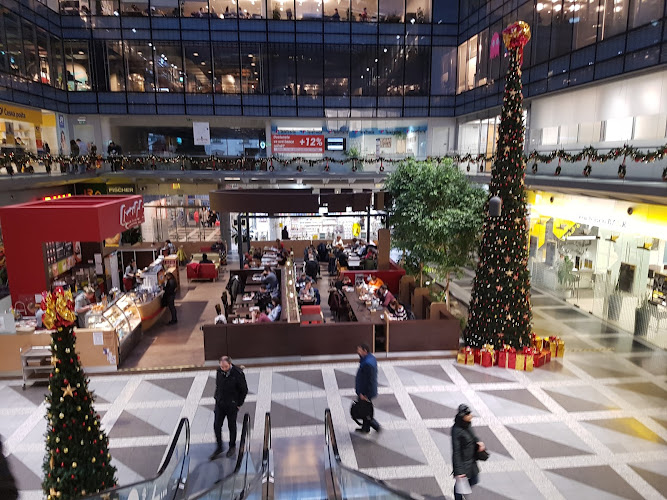
Culturally, the tower’s positioning at the boundary between Old Town and what was once the New Town creates a symbolic threshold that Praguers have crossed for over 500 years. Its survival through Habsburg rule, two World Wars, and the Communist era, largely untouched structurally despite the upheavals around it, gives the tower a quiet permanence that contrasts with the more commercially developed square it borders today, home to the glass-and-steel Palladium shopping center just steps away.
Signature Highlights & Detailed Offerings
The primary draw for visitors is the climb itself: 186 narrow, worn stone steps spiral upward through three distinct floors before reaching the viewing gallery at 44 meters. Along the way, small exhibition rooms display information panels (in Czech and English) covering the tower’s construction history, the 1757 explosion, and Mocker’s 19th-century restoration work, including archival photographs showing the tower’s condition before renovation.
The exterior sculptural decoration is the tower’s most photographed feature. Carved figures include Bohemian kings such as Vladislav II and Charles IV, various patron saints including St. Wenceslas and St. Vitus, and allegorical representations of virtues. These carvings, though largely 19th-century reproductions rather than medieval originals, follow documented iconographic traditions and reward visitors who bring binoculars or a zoom lens, since detail is difficult to appreciate from ground level given the tower’s 65-meter total height.
At the top, the viewing gallery offers a 360-degree panorama that differs meaningfully from the more famous views atop the Old Town Hall Tower or the Astronomical Clock. From the Powder Tower, visitors get a clear sightline down Celetná Street toward Old Town Square, a rooftop-level view of Municipal House’s Art Nouveau dome directly adjacent, and a wider vista east toward Wenceslas Square and the National Museum. This eastern-facing vantage point is genuinely underused by tourists compared to the Old Town Hall Tower’s more crowded platform.
Sensory & Spatial Walkthrough
Entering the tower’s base, visitors immediately notice the cool, damp stone air characteristic of enclosed medieval masonry, a marked contrast to the open square outside. The interior stairwell is narrow, roughly one person wide in sections, with worn sandstone steps that have been smoothed by centuries of foot traffic. Natural light enters sparingly through small window slits, creating pools of illumination against otherwise dim stone corridors, an atmosphere that feels appropriately medieval rather than sanitized for tourism.
Acoustically, the stairwell amplifies footsteps and voices, creating an echo chamber effect that makes the climb feel more dramatic than its modest height might suggest. By late morning, this acoustic quality mixes with the chatter of ascending and descending visitors passing each other on the narrow steps, since the stairwell lacks separate up and down routes.
At the top, the sensory experience shifts entirely. Wind exposure is significant even on calm days, given the height and open-air gallery design with only waist-high stone parapets and metal grating for safety. Morning light around 9-10 AM bathes the Municipal House’s golden mosaic façade in warm tones visible from the gallery, while late afternoon light around 5-6 PM creates long shadows across Celetná Street, ideal for photography. The stone underfoot on the gallery level is uneven in places, worn by generations of visitors, requiring sensible footwear.
Insider Visitor Strategy & Pro Tips
- Arrive within the first hour of opening (10:00-11:00 AM) to take advantage of the documented 50% discount on admission and to beat tour groups arriving from Old Town Square around midday.
- Avoid weekend afternoons between June and August, when cruise-tour groups and school trips create bottlenecks on the narrow stairwell.
- There is no elevator; visitors with mobility limitations, heart conditions, or claustrophobia should carefully consider the narrow, enclosed 186-step climb before purchasing tickets.
- Large backpacks and rolling luggage are discouraged given the tight stairwell width; a small daypack or crossbody bag is manageable.
- For photography, position yourself on the northeast corner of the viewing gallery for the clearest unobstructed shot of the Municipal House dome and Celetná Street below.
- Purchase tickets on-site rather than pre-booking online, as the tower rarely sells out compared to Prague Castle or the Astronomical Clock tower, though combined tickets with Old Town Hall Tower offer modest savings for visitors planning to see both.
- Weekday early evenings around 5:00-6:00 PM in shoulder season (April-May, September-October) offer the best combination of golden-hour light and minimal crowds.
Curated Half-Day Neighborhood Pairing Itinerary
Begin at the Powder Tower around 9:30 AM to catch the early-hour discount and soft morning light for photography. After descending, walk directly next door (under two minutes) to the Municipal House (Obecní dům), Prague’s finest Art Nouveau building, where you can view the ornate Smetana Hall lobby, mosaic facade, and café interior even without booking a full guided tour; the on-site Kavárna Obecní dům serves excellent coffee and pastries in a genuinely opulent Art Nouveau room, a strong stop for a mid-morning espresso around 30-45 CZK.
From Municipal House, walk west along Celetná Street, one of Prague’s oldest thoroughfares, for roughly 8-10 minutes, passing independent jewelry shops, the House at the Black Madonna (a Cubist architecture landmark worth a five-minute photo stop), toward Old Town Square. This walk takes you past several small artisan shops selling Bohemian crystal and garnet jewelry, worth browsing but not essential.
Arrive at Old Town Square by approximately 11:00 AM to see the Astronomical Clock’s hourly mechanical show and explore the Church of Our Lady before Týn, whose twin Gothic spires dominate the square’s skyline. This entire circuit, from Powder Tower to Municipal House to Old Town Square, covers roughly 15 minutes of walking distance and fits comfortably into a three-hour morning itinerary, ending with lunch options around Old Town Square such as Café Neruda or the more budget-friendly Bakeshop Praha for pastries and sandwiches.
Practical Logistics & Universal Accessibility
The Powder Tower is reached most efficiently via Prague Metro Line B (Yellow Line) to Náměstí Republiky station, taking the exit signed toward Palladium shopping center, which puts visitors within a two-minute walk of the tower entrance. Tram lines 5, 6, 8, 15, and 26 also stop directly at Náměstí Republiky, useful for visitors coming from Prague Castle or Wenceslas Square without transferring metro lines.
Unfortunately, the tower itself offers no step-free access to the viewing gallery given its narrow medieval stairwell design; there is no elevator or accessible alternative route to the top. The ground-floor entrance area and information displays are accessible, but the climb itself excludes wheelchair users and visitors with significant mobility restrictions.
Nearby parking is limited and expensive given the tower’s central Old Town location; the closest option is the Palladium shopping center underground garage, charging approximately 60-80 CZK per hour, with most visitors better served by public transit or walking from nearby accommodations. No dress code applies for entry, and payment is accepted via card or cash at the ticket window, with contactless payment increasingly standard across Prague’s cultural sites in 2026.
Frequently Asked Questions
How long does it take to visit the Powder Tower?
Most visitors spend 30-45 minutes total, including the climb up 186 steps, time at the viewing gallery, and the descent.
Is the Powder Tower worth visiting compared to the Old Town Hall Tower?
Yes, particularly for the less crowded eastern-facing views over Municipal House and Celetná Street; many visitors combine both towers using discounted joint tickets.
Can strollers or wheelchairs access the tower?
No, the narrow spiral stairwell has no elevator, making the viewing gallery inaccessible to wheelchairs and difficult for strollers.
What is the current admission price in 2026?
Standard adult admission is approximately 200 CZK, with a 50% discount typically offered during the first hour after opening; discounted rates apply for students, seniors, and children.
Is the Powder Tower connected to Prague’s Royal Route?
Yes, it marks the historical starting point of the Coronation Route that Bohemian kings traveled from Old Town toward Prague Castle for coronation ceremonies.
What is the best time of day to photograph the tower’s exterior?
Late afternoon light, roughly 4:00-6:00 PM, illuminates the western facade and carved figures most dramatically, while morning light suits interior gallery photography facing east.