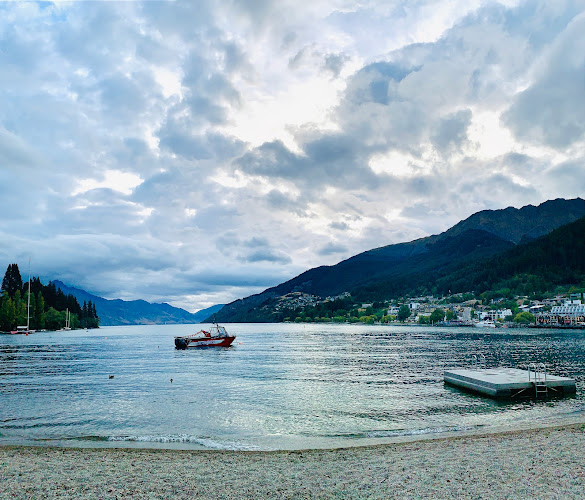
New Zealand Moa Statue is an outdoor wildlife sculpture on Beach Street, Queenstown 9300, New Zealand, in the town centre’s Lake Wakatipu waterfront area. Depicting one of New Zealand’s extinct flightless birds, it connects a busy lakeside promenade with the country’s remarkable natural history. Travelers stop here for photographs, a brief introduction to moa, and an easy addition to a walk around Steamer Wharf and Queenstown Bay.
What to Expect at New Zealand Moa Statue
The sculpture’s long neck, compact body and substantial legs make the moa’s unusual proportions immediately apparent. Its metal surface and feather detailing reward a closer look, while the surrounding waterfront gives photographers room to include Lake Wakatipu and the mountain skyline. This is a standalone public artwork rather than a museum: there are no indoor galleries, guided tours, ticket desk or associated café. Its appeal lies in encountering a representation of a vanished animal in the middle of everyday Queenstown.
Moa were native only to New Zealand. Scientists recognise nine species, ranging from relatively small forest birds to giant moa whose largest females could reach roughly 3.6 metres with their necks extended. Unlike ostriches, moa had no wings at all. They disappeared following Polynesian settlement, principally through hunting and habitat change, by approximately the fifteenth century. The statue offers a useful starting point for discussing that history with children, although it is not a fossil display or a reconstruction of an excavated skeleton.
- Moa silhouette: The elongated neck and powerful legs introduce a bird family very different from modern New Zealand wildlife.
- Surface detail: Look closely at the sculpted plumage and feet rather than treating the artwork only as a distant photo stop.
- Lake Wakatipu setting: Frame the bird with the lake and surrounding mountains, adjusting your position for pedestrians and changing light.
- Steamer Wharf connection: The nearby historic waterfront links the sculpture stop with Queenstown’s lake-cruise and steamship heritage.
- Free public access: There is no admission charge or booking process, making a short visit easy to fit between other activities.
New Zealand Moa Statue at a Glance
| Detail | Information |
|---|---|
| Address | Beach Street, Queenstown 9300, New Zealand; no numbered street address |
| Neighborhood / Area | Central Queenstown, Lake Wakatipu waterfront near Steamer Wharf |
| Operating Hours | Monday–Sunday: open 24 hours |
| Admission / Price Range | Free; $ budget category |
| Recommended Visit Duration | 10 to 20 minutes |
| Nearest Transit / Parking | Camp Street town-centre bus stops; paid parking at Man Street car park |
| Official Website & Phone | Queenstown Lakes District Council; +64 3 441 0499, general council enquiries rather than a statue ticket office |
Visiting Tips, Getting There & Nearby Pairings
Visit early in the morning for fewer people in your photographs, or approach in late afternoon when the lakefront light can be softer. Wind off Lake Wakatipu can make even a short stop chilly, so keep a layer handy. From the Camp Street bus stops, allow approximately five to ten minutes on foot through the centre. Orbus route 1 connects Queenstown with Frankton and the airport; consult official Orbus information for current stops and timetables. Drivers can use the paid Man Street car park, then walk downhill toward Beach Street; the return climb is worth considering for limited mobility.
The statue is viewed from the paved public waterfront, with no doorway or admission barrier. Wheelchair and stroller users can approach along the lakefront rather than the steeper inland streets; restaurant furniture and pedestrian crowds can narrow the usable space. Waterfront seating offers opportunities to rest. Pair the stop with Steamer Wharf and the TSS Earnslaw departure area, about five minutes away, or continue along Queenstown Bay. The entrance to Queenstown Gardens is roughly a ten-to-fifteen-minute waterfront walk, extending the outing into established trees and lakeside paths.
Frequently Asked Questions
What are the opening hours, and when should I visit?
The statue is accessible outdoors 24 hours a day, every day. Daylight is best for examining its details, while early morning usually offers more space for photographs.
Do I need tickets or a reservation?
No tickets, reservations or admission payments are required. Nearby cruises, restaurants and parking have separate charges and arrangements.
How long should I spend at the moa statue?
Allow 10 to 20 minutes to examine the sculpture and take photographs. Budget around an hour if you also want a relaxed waterfront walk toward Queenstown Gardens.
Is the statue suitable for wheelchairs and children?
The paved lakefront approach makes this a straightforward stop for wheelchairs, strollers and families. Supervise children beside the waterfront and treat the sculpture as artwork to view, not climbing equipment.
When planning your Queenstown travel guide or browsing verified attractions in Queenstown, pair this stop with standout local spots including Angel Divine Queenstown, Arcadium Queenstown, Blue Kanu, and Earnslaw Park (nearby).