
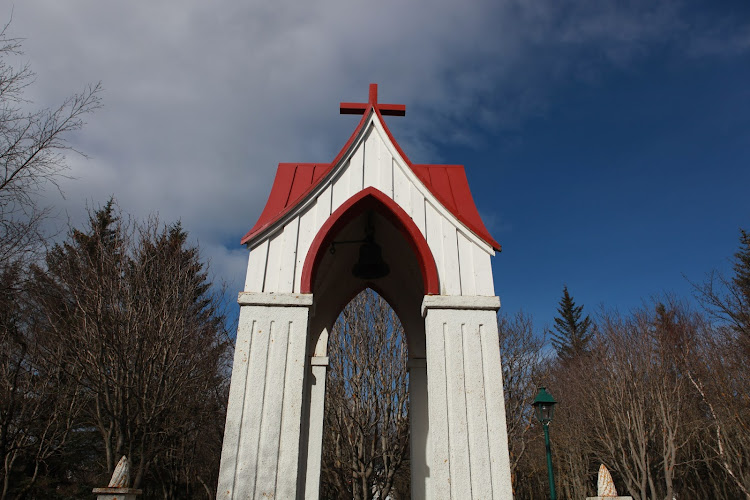
Hólavallagarður is Reykjavík’s historic cemetery on Suðurgata, 101 Reykjavík, Iceland, beside the University of Iceland area on the edge of Vesturbær. Established in 1838 after Reykjavík outgrew its older burial ground, it is a working graveyard and an evocative record of 19th- and early-20th-century Icelandic life. Travelers come for the weathered headstones, cast-iron memorials, mature trees and the graves of nationally important writers, politicians and cultural figures, all encountered on a quiet self-guided walk.
What to Expect at Hólavallagarður
This is not a museum with galleries or a ticket desk. Its “collection” is the cemetery itself: tightly arranged family plots, carved stone markers, crosses, railings and inscriptions that trace Reykjavík’s growth from a small town into a capital. Many of the older memorials lean or carry thick moss and lichen, while the large deciduous trees create a shaded canopy in summer and expose the cemetery’s formal pattern of graves in winter. Please remain on established paths and treat every plot as an active place of remembrance.
Look for the graves of poet and naturalist Jónas Hallgrímsson, poet and clergyman Matthías Jochumsson, who wrote the words of Iceland’s national anthem, and statesman Hannes Hafstein, Iceland’s first minister. The cemetery’s appeal lies in these personal markers rather than a signed trail: pause to read inscriptions, study the ironwork and notice how older stonework contrasts with later granite monuments. There is no prescribed route, so a slow circuit from the Suðurgata entrance and back through the tree-lined interior works well.
- 1838 burial ground: One of central Reykjavík’s most significant historic landscapes, created when a new cemetery was needed for the growing town.
- Notable Icelanders’ graves: Seek out memorials to Jónas Hallgrímsson, Matthías Jochumsson and Hannes Hafstein.
- Historic ironwork: Cast-iron crosses, fenced family plots and decorative gates are among the most distinctive details.
- Mature urban woodland: Tall trees, moss and seasonal foliage give the grounds their hushed character.
- Self-guided exploration: Walk the narrow paths at your own pace; there is no visitor centre, exhibition route or indoor collection.
Hólavallagarður at a Glance
| Detail | Information |
|---|---|
| Address | Suðurgata, 101 Reykjavík, Iceland |
| Neighborhood / Area | Vesturbær, beside the University of Iceland and a short walk west of the city centre |
| Operating Hours | Open 24 hours daily; visit in daylight for safer footing and easier grave-reading |
| Admission & Ticket Prices | Free public admission; no reservations or tickets |
| Recommended Visit Duration | 45 to 60 minutes |
| Nearest Transit / Parking | Háskóli Íslands bus stop; limited paid or regulated street parking around Suðurgata, subject to posted restrictions |
| Official Website / Phone | Reykjavík City information; +354 411 1111 |
Visiting Tips, Getting There & Nearby Pairings
Arrive in the morning or in the hour before sunset, when there is enough light to read carved lettering and photograph details without disturbing other visitors. Summer offers the fullest tree cover; in winter, choose daylight hours because paths can be icy and the cemetery is not illuminated as a visitor attraction. There is nothing to book and no admission desk. Keep voices low, avoid climbing on monuments, and do not treat graves as photo props.
The closest practical public-transport stop is Háskóli Íslands on Suðurgata; use the live Strætó journey planner for current routes and departures. Drivers should not expect a dedicated visitor car park: use legal street spaces only and check the signs carefully. The main entrance is at street level, but internal routes are narrow, uneven and partly gravel or earth, with roots, slopes and soft ground; wheelchairs and strollers may manage only sections near the entrance with assistance. Combine a visit with the nearby Landakotstún Park, Reykjavík Pond and the cafés and restaurants around Tjörn and the Old Harbour, each roughly 5 to 15 minutes away on foot.
Frequently Asked Questions
When is Hólavallagarður open, and when should I go?
The cemetery is open 24 hours a day. Daylight is strongly preferable, particularly from autumn through spring, when uneven paths, ice and low light can make walking difficult. Early morning is the calmest time for a reflective visit.
Does Hólavallagarður charge admission or require reservations?
No. Entry is free and there are no timed tickets, guided-tour reservations or on-site ticket sales. Visitors should enter respectfully and follow any notices posted at the gates.
How much time should I budget for the cemetery?
Allow 45 to 60 minutes for a thoughtful circuit, time to find notable graves and a few pauses for photography. A shorter 20-minute walk is possible if you are passing between the university area and central Reykjavík.
Is Hólavallagarður suitable for children and wheelchair users?
Families are welcome when children understand cemetery etiquette, but there are no play facilities or toilets. Wheelchair users should expect limited access beyond the entrance because of narrow, irregular gravel-and-earth paths, tree roots and seasonal ice; a companion is advisable.
When planning your Reykjavik travel guide or browsing verified attractions in Reykjavik, pair this stop with standout local spots including Rauðhólar, Nebraska — Clothing Shop & Restaurant, Arnarhóll, and Landakotstún Park (0.3 km away).


