Bakarabrekka, literally “Bakery Slope,” is a small but resonant piece of central Reykjavík rather than a conventional park destination. Set by Lækjargata and the Lækjartorg area, it marks a rise in the old commercial core and preserves a name tied to the city’s early bakery history. It is the kind of stop that rewards noticing the street beneath your feet: a short pause where Reykjavík’s compact scale, changing grades and long-lived place names become unusually legible.
Most visitors encounter Bakarabrekka while walking between the harbour-side centre, Austurstræti, Bankastræti and the routes toward Tjörnin. The name recalls Bernhöftsbakarí, a bakery operating here from 1834, and the slope was once identified by that bakery rather than by today’s street name. There is no attraction complex to “do” here; its appeal is as a free, quick historical waypoint within some of Reykjavík’s most useful and walkable streets.
Standout Highlights & What Not to Miss
Give Bakarabrekka a few unhurried minutes rather than treating it as a pin to tick off. Look at how the slope gathers routes from Lækjartorg toward Bankastræti, then use it to orient yourself before continuing into the older centre. Its value is contextual: the history, the street relationship and the ease with which it fits into a wider city walk.
- Read the name as local history: “Bakery Slope” retains the memory of Bernhöftsbakarí and its 1834 beginnings, even though the bakery is not a visitor facility at this spot.
- Notice the upward connection toward Bankastræti. The modest climb is a useful visual cue to Reykjavík’s topography and to the shift from Lækjartorg into the shopping streets.
- Use Lækjartorg as an orientation point. From here, the harbour-side centre, Austurstræti, Austurvöllur and the route toward Tjörnin are all easy to connect on foot.
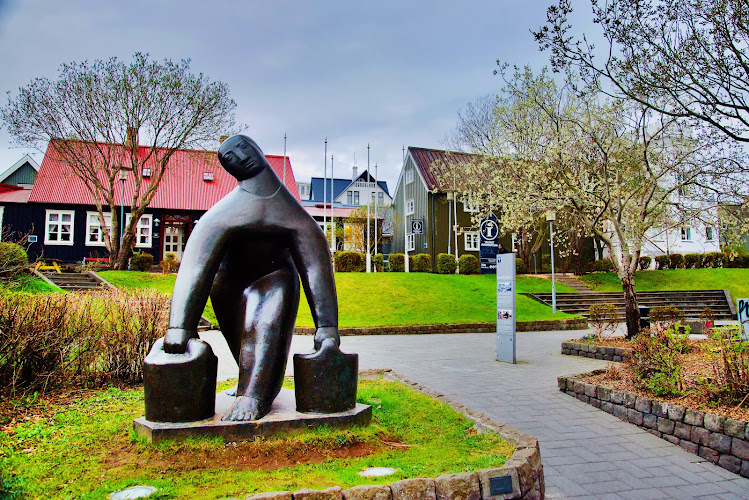
- Pause for street-scale photographs rather than expecting a landmark vista. Details such as the incline, façades, pedestrians and changing weather better convey the place than a single formal sightline.
- Pair the stop with a slow walk through the old centre. Bakarabrekka works best as a transition between sights, shops, cafés and civic spaces, not as a standalone excursion.
Visitor Strategy & Planning Snapshot
| Planning Factor | What to Expect | Practical Strategy |
|---|---|---|
| Ideal Arrival Window | The slope is easiest to appreciate when you are already exploring the centre and can linger without rushing. | Build it into a morning or afternoon walk between nearby landmarks; daylight helps with street detail and wayfinding. |
| Typical Time Needed | This is a brief stop, generally suited to a 10-to-20-minute pause rather than a dedicated visit. | Allow extra time only if you are photographing, reading the surrounding streets or using it as a rest point. |
| Booking / Queue Reality | There is no ticketed attraction, formal entry process or on-site visitor programme associated with the slope. | Do not schedule around reservations. Simply add it as a flexible link in a self-guided old-centre route. |
| Terrain & Accessibility | It is reached from public sidewalks, but the incline can be difficult for wheelchair users and strollers; winter ice adds another challenge. | Choose the gentlest available approach, move carefully in wet or icy conditions, and consider a flatter parallel route if needed. |
| Weather / Seasonal Fit | As an outdoor street stop, the experience depends heavily on wind, rain, snow and winter darkness. | Keep it flexible. In cold or stormy weather, make it a short passage between indoor stops rather than a lingering break. |
Honest Trade-Offs: Best For vs. Who Might Skip
Bakarabrekka is best for first-time visitors building a mental map of central Reykjavík, history-minded walkers interested in place names, solo travellers on a flexible stroll and families who want a small point of interest between bigger stops. It offers a genuine thread to the city’s commercial past without demanding time or money. The trade-off is straightforward: there are no dedicated exhibits, lawns, playgrounds, toilets, café seating or programmed activities here. Visitors seeking a museum, a scenic destination, a substantial green park or an accessible level promenade should regard it as a passing historical reference, not a primary destination. Its modesty is precisely the point, but only if it is folded into a larger walk.
Neighborhood Context & How to Pair Your Visit
Start around Lækjartorg, pause at Bakarabrekka to follow the rise toward Bankastræti, then continue through the central shopping streets toward Austurvöllur and the older civic quarter. From there, Tjörnin offers a calmer waterside counterpoint to the busier commercial streets. In the other direction, the harbour-side centre makes an easy continuation for a waterfront walk. This compact circuit is best done on foot, with Bakarabrekka serving as a small historical hinge rather than the day’s headline stop. Keep your route adaptable: Reykjavík’s weather can change quickly, and the surrounding centre has plenty of opportunities to duck indoors before resuming the walk.
When planning your Reykjavik travel guide or browsing verified parks in Reykjavik, pair this stop with standout local spots including Art67, Dalur Guesthouse, Midgardur by Center Hotels, and The Icelandic Punk Museum (nearby).